What’s In This Guide
- What Records Should You Keep When Selling a Home With Solar Roof Shingles?
- Why Do Solar Roof Shingle Records Matter to Buyers in Poughkeepsie?
- Owned vs. Financed Solar Roof Shingles: What Changes at Closing?
- Which Permit and Interconnection Records Should Sellers Keep?
- How Does Solar Warranty Transfer Work for a Home Sale?
- How Should Sellers Hand Over the Solar Monitoring Account?
- How Do You Build a Seller Solar Document Packet?
- What Can Affect the Timing and Cost of Preparing Solar Records Before Listing?
- When Should You Call a Roofing Professional Before Listing?
- Frequently Asked Questions
- Ready to Document Your Solar Roof Before You List in Poughkeepsie?
A buyer’s agent asks for the solar paperwork, and the folder in your kitchen drawer is missing half of it. That scene plays out often when a home with solar roof shingles goes on the market in Poughkeepsie, NY. Buyers see a roof that also makes electricity, and they want proof of who owns it, how it was installed, and what it has produced.
Selling a house with solar shingles goes smoother when four records are ready before the first showing: ownership and financing documents, solar warranty transfer terms, monitoring account access, and permit and interconnection approvals.
Quick Facts
- Owned vs. financed: a loan balance or lease changes what the buyer receives
- Warranty transfer: roofing, power output, and workmanship coverage carry separate terms
- Monitoring handoff: buyers need their own portal account, not the seller’s login
- Permits and interconnection: building permit sign-offs and utility approval prove the system was inspected and connected
- Home value: documented output supports solar roof home value, though no study guarantees a price
What Records Should You Keep When Selling a Home With Solar Roof Shingles?
Keep seven categories: proof of ownership, installation date and installer, warranty documents, permits and utility approval, monitoring access, production history, and service records. Together, these show a buyer who owns the system, how old it is, what coverage remains, and how it has performed.
The U.S. Department of Energy lists questions buyers should ask about a home’s solar system, including system age, inverter type, installer, warranty status, energy production, battery presence, and ownership structure. Your seller packet should answer each one before a buyer has to ask.
|
Record |
What It Tells the Buyer |
Where to Look |
|
Ownership or financing agreement |
Whether the system is owned, financed, leased, or under a PPA |
Closing folder, installer contract, loan or lease paperwork |
|
Installation date and installer details |
System age and who stands behind the work |
Final invoice, completion paperwork |
|
Warranty documents |
What is covered and for how long |
Manufacturer registration, contractor paperwork |
|
Permits and utility approval |
That the system was inspected and connected |
Municipal building department, utility approval letter |
|
Monitoring account details |
How to view live and past output |
Manufacturer or installer portal |
|
Production history |
Actual energy output over time |
Portal exports, utility bills |
|
Service and inspection records |
Roof and electrical condition over time |
Contractor invoices, inspection reports |
Why Do Solar Roof Shingle Records Matter to Buyers in Poughkeepsie?
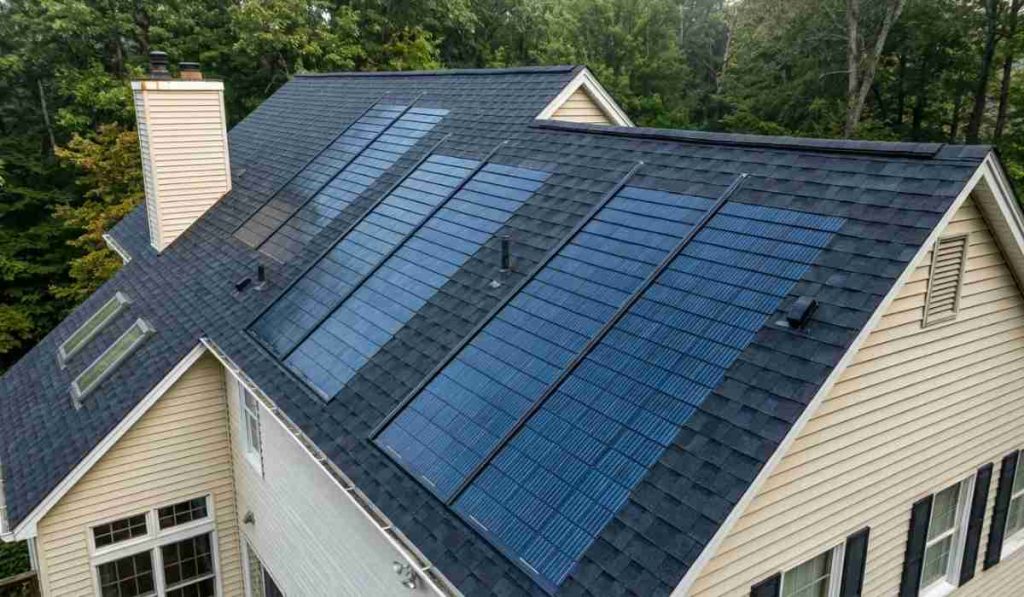
Buyers treat a solar roof as two systems in one: a roof and a power source. Clear records answer questions about age, coverage, and ownership before those questions stall negotiations, and they give a buyer’s home inspector a reliable starting point.
Hudson Valley weather tests roofs year-round, so ice and water protector placement at eaves and valleys belongs in installation records. Dutchess County buyers want proof that shingles, flashing, and wiring have held up through local seasons.
Records also support the conversation about solar roof home value. A Berkeley Lab study of solar home sale price premiums found buyers consistently paid more for homes with owned solar systems across eight states. The data covers rooftop systems sold from 2002 to 2013, not solar roof shingles specifically, so it cannot predict one home’s price.
Owned vs. Financed Solar Roof Shingles: What Changes at Closing?
Ownership structure decides what a buyer receives. An owned system transfers with the home, a financed system may leave a loan balance to settle, and a leased or power purchase agreement (PPA) system usually requires the buyer to assume the agreement. Confirm the structure in writing before listing.
Selling a home usually does not cancel remaining payments on a solar loan, lease, or PPA. Some solar companies allow buyers to assume those payments if they meet certain requirements, according to New York Attorney General guidance on going solar.
- Owned outright: the contract, warranty, and installation records are what transfer
- Financed with a loan: the homeowner owns the system, but the remaining loan balance must be settled with the lender as part of the sale
- Lease or PPA: the solar company owns the equipment, so the buyer may need to meet its requirements to assume the agreement
Ask your attorney and real estate agent to review the agreement before you list, since buyout and assignment terms vary.
Which Permit and Interconnection Records Should Sellers Keep?
Keep the building permit, inspection sign-offs, and utility interconnection approval. Together, these records show the solar roof was inspected and approved to send power to the grid. Request copies from the municipal building department and your electric utility.
Poughkeepsie addresses fall under either the City of Poughkeepsie or the Town of Poughkeepsie, so confirm which building department holds the file. Utility interconnection approval is a separate document from the building permit, so request both.
- Building permit and final inspection sign-off
- Utility interconnection approval, which allows the system to operate and send power to the grid
- NY-Sun or other incentive paperwork, if you received any
How Does Solar Warranty Transfer Work for a Home Sale?
Solar warranty transfer depends on the manufacturer, the warranty tier, and who registered the coverage. Roofing coverage, power output coverage, and installer workmanship coverage are separate documents, so confirm each transfer rule in writing before you list.
GAF Energy Timberline Solar® systems provide a clear example. According to the GAF Energy enhanced warranty comparison chart for Timberline Solar, enhanced roofing warranties transfer for up to 20 years when completed by the new owner. Coverage requires installation and registration by a GAF Energy Solar Certified Contractor.
The solar warranty addendums carry their own terms, including a base service fee for claims. Read those documents separately from the roofing warranty. Notes from the final roof walkthrough completed at project closeout may show when the warranty paperwork was delivered. Other manufacturers may set different rules.
What Should You Confirm With the Warranty Provider?
Confirm who registered the warranty, what each coverage type includes, and how the new owner completes the transfer.
- Who registered the warranty, and on what date
- Which document covers the roofing, which covers power output, and which covers workmanship
- Whether the new owner must file the transfer, and by what deadline
- Whether any transfer or claim fee applies
How Should Sellers Hand Over the Solar Monitoring Account?

Buyers need their own monitoring account, not a shared seller login. Export the production history first, then ask the installer or manufacturer how to move the account to the new owner at closing. GAF Energy has a homeowner portal for tracking production, and other manufacturers and installers offer their own apps or portals.
What Should the Handoff Include?
The handoff should give the buyer working access and the data behind it. Production figures alone cannot confirm system performance or establish actual energy savings, so pair them with service records.
- Monthly production export covering the period for which records are available
- Instructions for creating or transferring the account
- Written confirmation from the installer or manufacturer that access moved to the new owner
- Your personal login details removed after the transfer
Which Production and Service Records Add the Most Value?
Dated records help buyers evaluate the system’s history during negotiations. They can compare production figures with energy claims in your listing and review maintenance records, including any repairs for ponding water on adjoining flat roof sections, alongside the inspector’s findings.
- Electric utility bills showing grid purchases and any recorded export credits, where applicable
- Roof inspection reports and maintenance invoices
- Notes on storm checks, flashing or roof deck repairs, and any inverter service
How Do You Build a Seller Solar Document Packet?
Build the packet in five steps: gather contracts, request permit and interconnection copies, confirm warranties, arrange the monitoring handoff, and add service records. Finish before the listing goes live.
Step 1: Gather the Contracts, Financing Papers, and Invoices
Pull the purchase contract, financing or lease agreement, and final invoice. Scan paper copies so you can share digital files with the buyer’s agent.
The invoice also matters for taxes. A tax professional may need it to decide whether a roof replacement counts as a capital improvement, and IRS guidance on how improvements affect a home’s basis explains why improvement records matter. This is general information, not tax advice.
Step 2: Request Permit and Interconnection Copies
Contact the correct Poughkeepsie building department and your electric utility. Ask for the permit, final inspection sign-off, and interconnection approval.
Step 3: Confirm Warranty Status in Writing
Contact the manufacturer or installer and request written confirmation of registration, coverage terms, and the transfer process.
Step 4: Arrange the Monitoring Handoff
Export the production history, then confirm how the buyer will receive portal access at closing.
Step 5: Add Service Records and Brief Your Agent
Include every inspection report, repair invoice, and storm check. If the roof has never been inspected, a current report gives the buyer a baseline. Share the finished packet with your agent and attorney so disclosure forms, the listing description, and the purchase contract match the documents.
What Can Affect the Timing and Cost of Preparing Solar Records Before Listing?
Preparation costs depend on missing records. Complete files require minimal setup, while missing paperwork may require official requests, inspections, or repairs. An itemized estimate based on your specific roof provides the best budget and accounts for how roof pitch affects roofing project costs.
- Missing paperwork: time spent requesting records from installers, manufacturers, or municipal offices
- Roof condition: age, flashing, decking, and storm exposure
- System layout: roof planes, valleys, and equipment locations
- Access: roof pitch, height, and attic or equipment access
- Repairs needed: shingle, flashing, or electrical items found during inspection
- Timing: listing date, weather, and crew availability
When Should You Call a Roofing Professional Before Listing?

Call a roofing professional when records are missing, the roof shows storm damage or leaks, or a buyer’s inspector may question the solar roof. A qualified contractor can document the current condition before negotiations begin.
When warranty registration or installation records are missing, a contractor offering solar shingle installation and evaluation in the Hudson Valley can inspect the roof and document its condition.
- The original installer is unknown or no longer in business
- Water stains, lifted shingles, or flashing gaps appear after a Hudson Valley winter or storm
- Warranty registration status is unclear
- Past repairs lack invoices or photos
- A buyer requests an inspection of the roof deck or attic
Do not attempt to inspect a solar roof yourself. Leaks can stem from flashing, decking, or ventilation issues that require a roofing professional, while inverter and electrical issues require a licensed electrician.
Frequently Asked Questions
Can I remove solar roof shingles before selling my home?
Solar roof shingles are both the roofing material and the power source, so removing them means replacing roofing sections and safely disconnecting electrical components. Most sellers leave the system in place, and a qualified contractor and real estate attorney can help with unusual cases.
Do I need to disclose known solar roof problems when selling a house with solar shingles?
Most sellers of one- to four-family homes in New York must deliver a Property Condition Disclosure Statement, and known defects should be answered accurately. Requirements vary by transaction, so confirm your obligations with a New York real estate attorney.
Will solar roof shingles affect my home’s value or appraisal?
They may. An appraiser can consider an owned solar roof system when evaluating a property’s features and market value. The effect depends on ownership, condition, remaining useful life, and comparable sales. Leased systems and PPAs may receive different treatment.
Can a buyer request a separate solar roof inspection?
Yes. Buyers can request a specialized solar roof inspection. A roofing professional inspects components like kickout flashing where roof edges meet walls, while an electrician evaluates the solar equipment.
Should I promise a buyer tax credits or incentives?
No. Sellers can provide records of incentives previously received, but should not guarantee that a buyer qualifies for new tax credits or rebates. Buyers should confirm details with a tax professional.
Ready to Document Your Solar Roof Before You List in Poughkeepsie?
Lyndsey Roofing, LLC is a locally owned roofing contractor in Poughkeepsie, NY, serving Dutchess, Orange, Putnam, and Eastern Ulster Counties. We are a GAF Energy-certified solar roofing contractor, hold GAF Master Elite® certification, have earned GAF President’s Club 2-Star recognition, and maintain a BBB A+ rating.
Schedule a roof inspection to learn where your solar roof stands before buyers start asking.
Related Posts