What’s In This Guide
- What Is the Correct Nailing Pattern for Asphalt Shingles?
- Why Fastener Placement Determines Roof Longevity
- Common Nailing Mistakes That Compromise a Roof
- The Standard Nailing Pattern for Asphalt Shingles
- How to Check Whether Your Shingles Were Nailed Correctly
- Nailing Quality Comparison: What Each Outcome Means for Your Roof
- What Affects Nailing Quality on a Hudson Valley Roof
- When Should You Call a Professional Roofer?
- Frequently Asked Questions
- Looking for Roofers Near Me in the Hudson Valley?
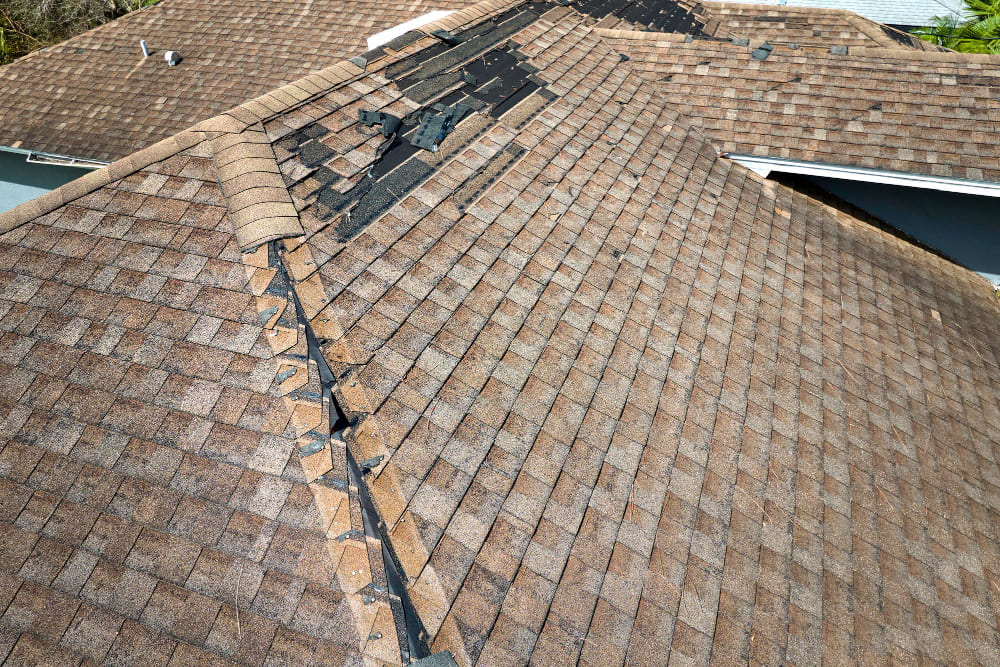
A roof can fail prematurely if fasteners are installed improperly. Homeowners searching for roofers near me after a severe storm, an unexpected ceiling leak, or a failed home inspection may be dealing with installation issues, including fasteners placed outside the manufacturer’s mandatory specifications.
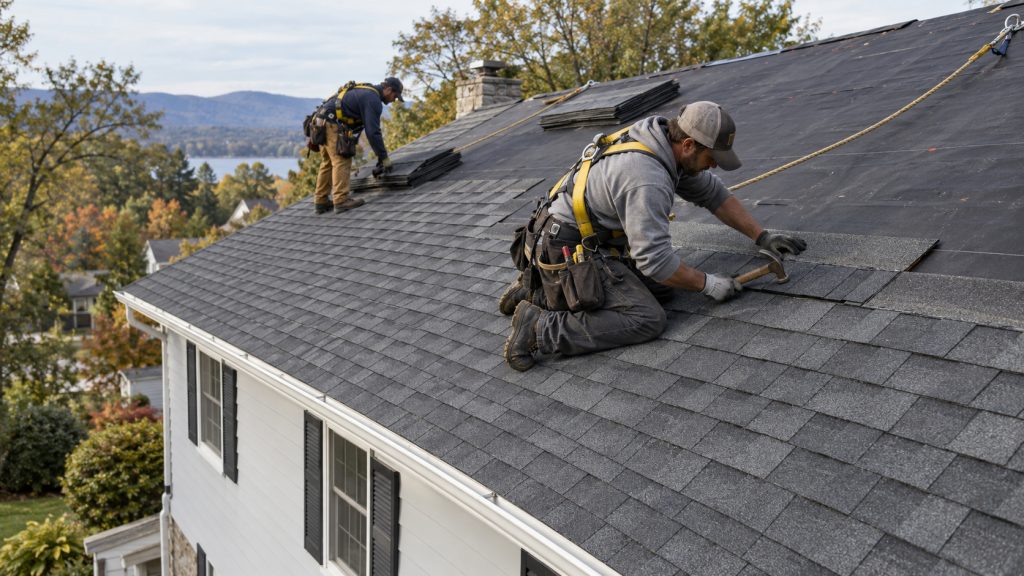
Nail placement is far more than a minor technical detail. It is a key factor that determines whether a shingle remains securely anchored to the roof deck during a harsh Hudson Valley nor'easter or peels back during high winds. Understanding what correct placement looks like empowers homeowners in Poughkeepsie, NY, to ask informed questions when hiring local roofing contractors and recognize early warning signs on an existing roof.
Quick Facts
- Four nails per standard 3-tab or laminate shingle are typical for standard slope installations under regular building conditions; six nails may be required based on manufacturer instructions, high-wind warranty specifications, steep slopes, or local building code provisions.
- Nails must achieve at least 3/4 inch of penetration into sound wood sheathing, or extend completely through thinner decking materials such as 7/16-inch OSB or plywood.
- High-nailing, placing nails above the specified nail line, can reduce wind resistance and increase the potential for premature shingle blow-offs.
- Overdriven nails cut through the shingle mat and compromise holding strength; underdriven nails stick up, preventing proper sealing and risking puncture to overlying shingles.
- Adhering to the manufacturer’s precise nailing instructions is typically a key warranty requirement, and improper placement can compromise or void wind coverage.
What Is the Correct Nailing Pattern for Asphalt Shingles?
Correct nail placement means every fastener sits inside the manufacturer's designated nailing zone, commonly referred to as the nail line or strike zone. On many modern shingles, this zone is indicated by printed lines or textured target strips positioned on the shingle face.
Placing a nail accurately inside this designated zone allows the nail head to seat flat against the surface while providing the intended holding strength. Fasteners placed outside the specified zone can reduce holding strength or create leak risks, depending on their location and the shingle design.
Why Fastener Placement Determines Roof Longevity
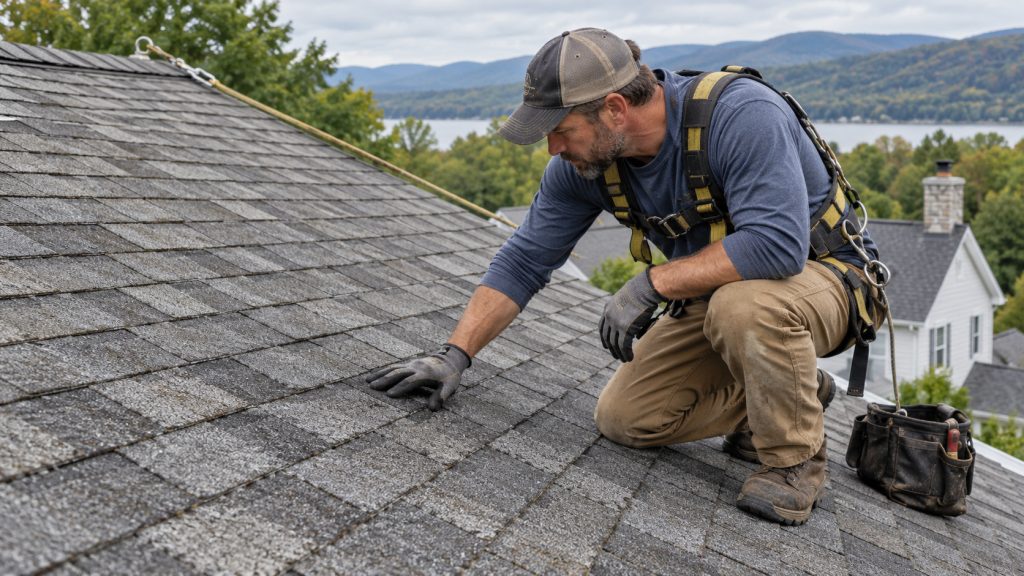
Fastener placement directly affects wind uplift resistance and can influence leak risk. Incorrect fastening can reduce roofing-system performance regardless of the grade or brand of shingle used.
Wind Resistance
Wind resistance depends on every shingle staying anchored through its full nail count and proper thermal seal activation. When fasteners sit outside the designated nailing zone, the holding strength of the attachment is severely compromised. Placing fasteners above the designated zone, called high-nailing, reduces wind resistance, per InterNACHI's roof inspection training materials, dramatically increasing the risk of blow-offs.
Leak Risk
Incorrectly placed or poorly driven nails do not always cause immediate water intrusion, but over time, thermal expansion, freeze-thaw cycles, and wind action can loosen exposed or crooked nail heads, creating potential pathways for wind-driven rain. By the time water stains appear on interior ceilings or attic rafters, underlying wood decking may already have suffered moisture damage.
Common Nailing Mistakes That Compromise a Roof
Common fastening defects generally fall into four primary categories. Identifying these mistakes helps homeowners discuss concerns accurately when requesting a professional roof inspection.
High-Nailing
High-nailing occurs when a nail is driven above the manufacturer’s specified target area. Because upper shingle courses overlap and hide these fasteners, high-nailing is invisible from the ground. Remediation methods depend on the extent of the defect and roof condition; options range from re-nailing in the strike zone and hand-sealing with roofing cement to section or full replacement.
Overdriven Fasteners
Pneumatic nailers operating at excessively high pressure can easily overdrive nails deep into the asphalt mat. When the nail head cuts into or tears through the reinforced fiberglass mat, the fastener loses its ability to clamp the shingle down, making the roof vulnerable to blow-offs.
Underdriven Fasteners
An underdriven nail is not driven flush, leaving the nail head protruding above the shingle surface. Over time, these raised heads push against overlying shingles, wearing holes or preventing the sealant strip from adhering properly, which creates potential leak points.
Wrong Nail Count or Angled Fasteners
Using fewer nails than required or driving fasteners at slanted angles significantly diminishes holding strength. Angled nails dig into the shingle on one side while leaving the other side elevated, preventing the nail head from seating flat and reducing wind uplift resistance.
The Standard Nailing Pattern for Asphalt Shingles
Fastener count and placement rules are established by shingle manufacturers and reflected in New York State building codes based on roof pitch, exposure, and regional wind requirements.
Standard Four-Nail Pattern
On standard slope installations in typical wind regions, standard asphalt shingles generally utilize four nails spaced evenly across the designated nailing line, positioned in accordance with manufacturer guidelines to ensure proper wind uplift resistance.
When a Six-Nail Pattern Is Required
Some asphalt shingle products require six nails for specific high-wind applications, enhanced wind warranty coverage, steep slopes, or local code requirements. Six nails are not universally required, so the correct shingle nailing pattern must follow the manufacturer's instructions for the specific product. When a six-nail pattern is required, the additional fasteners help increase resistance to wind uplift.
Nail Length and Penetration Depth
Fastener length matters as much as placement. Nails should penetrate a minimum of 3/4 inch into the sheathing, or fully through the decking if thinner materials are present, in alignment with standard building codes. Longer fasteners may be needed when shingles are installed over an existing layer or when fastening ridge cap and ridge vent shingles.
READ MORE: Why Roof Leak Repair Costs Start With an Inspection
How to Check Whether Your Shingles Were Nailed Correctly
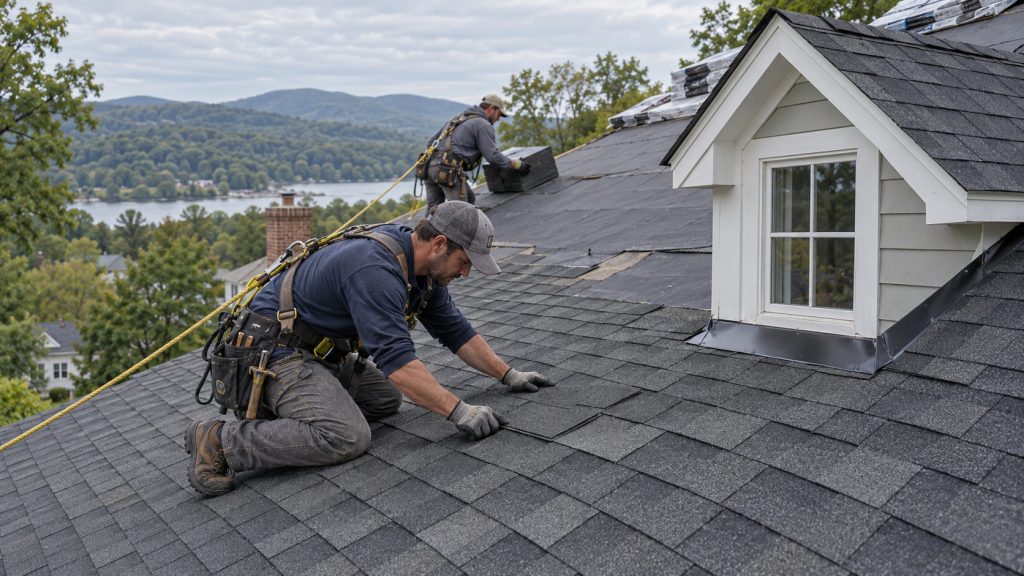
Homeowners do not need to walk steep roofs to spot potential installation issues. Use this step-by-step checklist to safely identify warning signs from ground level before contacting a professional.
- Inspect the roof surface from the ground with binoculars. Scan for shingle courses that appear crooked, lifted, or misaligned across the roof plane.
- Check for exposed nail heads. Uncovered nail heads corrode rapidly and create direct water paths into the roof deck. Visible metal anywhere on open shingle courses indicates improper placement.
- Look for shifted or missing shingles after high winds. Shingles that slide down or blow off during moderate storms can indicate high-nailing or under-fastening.
- Review installation contracts and warranty documents. Verify that the scope of work specifies brand-compliant fastener schedules and designated shingle nailing patterns.
- Schedule a hands-on professional inspection. Critical defects like overdriven nails or high-nailing require physical evaluation by an experienced roofing professional.
Nailing Quality Comparison: What Each Outcome Means for Your Roof
|
Nailing Condition |
Wind Resistance Impact |
Leak Risk |
Typical Correction |
|
Correct placement, proper depth |
Supports intended wind rating |
Low |
None required |
|
High-nailed or above nail line |
Can reduce wind resistance |
Variable |
Re-nail in strike zone, hand-seal, or replace affected courses |
|
Overdriven nails |
Reduced, shingle mat is damaged |
Variable |
Shingle replacement or proper re-fastening per manufacturer guidance |
|
Underdriven nails |
Can reduce wind resistance |
Variable |
Reseat the fastener or replace the damaged shingle as appropriate |
|
Incorrect nail count or missing high-wind schedule |
May not achieve high-wind rating |
Variable |
Add fasteners to meet required schedule |
What Affects Nailing Quality on a Hudson Valley Roof
Several site-specific variables dictate how consistently a roofing crew can apply proper fastening techniques, directly impacting repair requirements.
- Roof pitch and accessibility: Steep slopes require safety staging, which can affect pneumatic nailer handling if crew members lack specialized experience.
- Temperature during installation: Cold weather slows thermal sealant activation; in late fall or winter, manufacturers often specify manual hand-sealing with asphalt roofing cement.
- Decking condition: Soft or deteriorating wood decking prevents fasteners from achieving the required hold, leading to loose nails.
- Existing roof layers: Installing shingles over an existing roof layer may require longer fasteners to ensure proper deck penetration.
- Local wind exposure: Properties situated on elevated ridges or near open areas in Poughkeepsie may require enhanced fastening schedules to meet wind warranty or local building requirements.
Correcting installation defects on an existing roof depends on the overall scope of damage, roof pitch, material availability, and deck condition. An experienced contractor can provide a detailed assessment after conducting a thorough physical inspection.
When Should You Call a Professional Roofer?
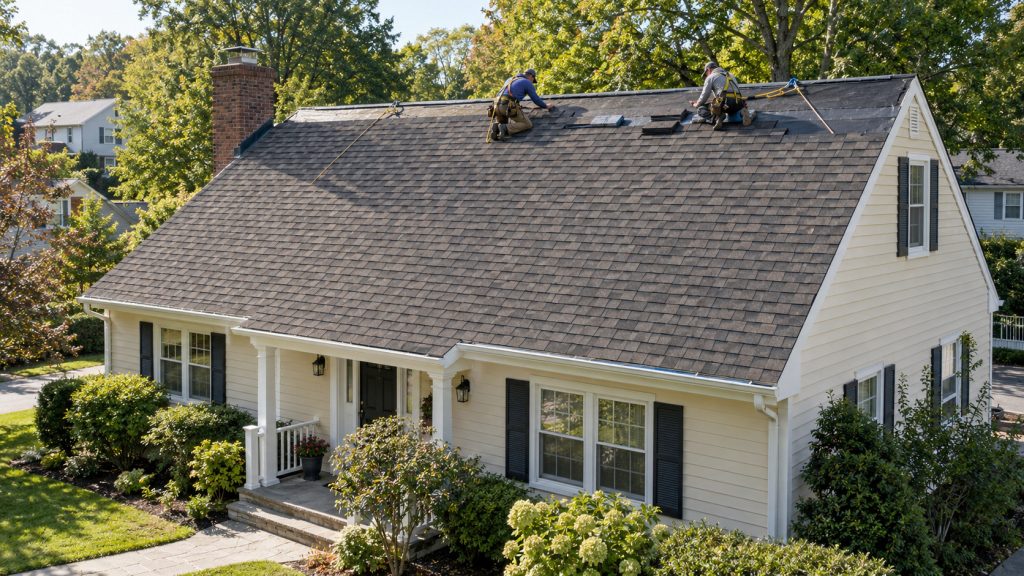
Nailing defects require expert diagnosis and professional repair. Contact a licensed roofing contractor immediately when you observe any of the following:
- Shingles have lifted, creased, shifted, or blown off after windstorms
- You spot exposed or rusting nail heads across main shingle courses
- Visible wave patterns or uneven courses appear on a newly installed roof
- Interior water stains or attic moisture develop without an obvious roof opening
- You need an installation audit or official inspection for home sale negotiations or insurance claims.
Frequently Asked Questions
Can overdriven nails affect a shingle warranty?
Yes. Asphalt shingle manufacturers require fasteners to sit flush without tearing the mat. Overdriven nails cut the fiberglass reinforcement, violating installation guidelines and potentially voiding manufacturer warranty coverage.
Can improper nailing cause shingles to blow off even if the roof is new?
Yes. New shingles are vulnerable to blow-offs if fasteners miss the designated strike zone, are overdriven, or lack the required nail count for regional wind conditions. Proper installation is critical to achieving the shingle’s intended wind performance.
Are roofing nails supposed to be visible after installation?
No. On primary roof slopes, all nail heads must be covered completely by overlapping shingle courses. Exposed nails are acceptable only at specific flashings or final ridge cap overlaps, where they must be sealed with high-grade roofing sealant.
Can loose or lifted shingles be repaired without replacing the whole roof?
Often, yes. Isolated nailing mistakes can be repaired by carefully replacing damaged shingles, re-nailing in the proper target zone, and hand-sealing tabs. However, if high-nailing or overdriving is widespread across the entire deck, broader repairs may be required.
Does roof pitch change where shingles should be nailed?
The defined nail line remains the primary target zone, but steep slopes often require additional fasteners or specialized installation techniques, such as manual hand-sealing per manufacturer guidelines, to ensure adequate holding power and prevent slipping before thermal sealant bonds.
Looking for Roofers Near Me in the Hudson Valley?
Proper nail placement is a fundamental detail that distinguishes a long-lasting roof built to withstand Hudson Valley weather from one prone to premature failure. Lyndsey Roofing, LLC delivers precise, manufacturer-compliant installation and inspection services throughout Poughkeepsie, NY, and surrounding communities.
If you are searching for roofers near you to inspect a recent installation or evaluate signs of nailing damage, a professional assessment is the most reliable next step.