What's in This Guide
- What Is Ice and Water Shield, and How Does It Work?
- Where Does Ice and Water Shield Go on a Hudson Valley Roof?
- What Does NY Building Code Require at the Eaves?
- How Far Up the Roof Does Ice and Water Shield Need to Go?
- Does Ice and Water Shield Prevent Ice Dams?
- How Does Ice and Water Shield Compare With Synthetic Underlayment?
- When Should You Add or Upgrade Ice and Water Shield?
- Frequently Asked Questions
- Ready to Protect Your Eaves Before the Next Thaw?
Ice and water shield is the layer you never see once a roof is finished. It is often the layer that decides whether a January thaw ends at the gutter or inside your ceiling. In the Hudson Valley, snow melts, runs to a cold eave, and refreezes. This self-adhering membrane gives the roof deck a waterproof backup right where backed-up water does the most damage.
With winter starting, here is where it goes, how far up the roof it needs to reach, and how it differs from the synthetic underlayment covering the rest of the deck.
Quick Facts
- Ice barrier is required along the eaves in areas where ice has formed before.
- The membrane must reach at least 24 inches inside the exterior wall line.
- On many roofs that works out to 4 feet or more measured up the slope.
- Synthetic underlayment cannot stand in for ice and water shield at the eaves.
- Ice and water shield does not cure ice dams, because proper insulation and ventilation are what stop them.
What Is Ice and Water Shield, and How Does It Work?
A Self-Adhering Waterproof Membrane
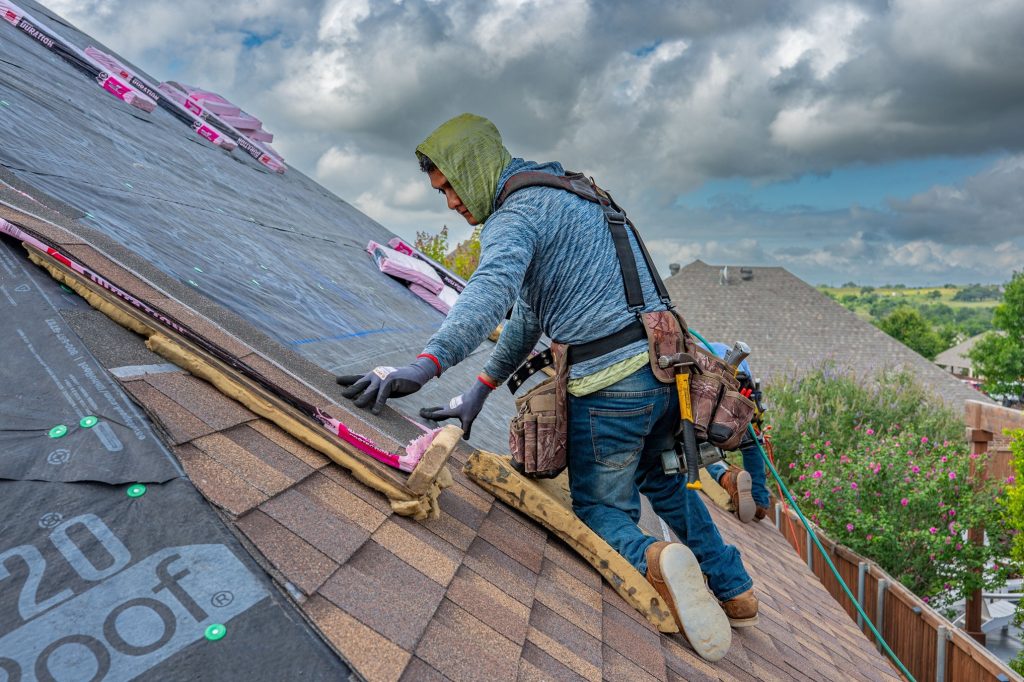
Ice and water shield is a rubberized asphalt sheet, technically a self-adhering polymer-modified bitumen membrane, with a peel-off backing. It bonds directly to the roof deck before the rest of the roofing system goes on. Building codes call it an ice barrier, and you may also hear it called a leak barrier or eave protection. The names vary, but the job is the same.
It Seals Around Roofing Nails
Every shingle nail passes through the layers beneath it. The membrane grips each fastener, so meltwater or wind-driven rain that works under the shingles has a harder time following those nail holes into the deck. Standard underlayment is fastened to the deck but does not seal around the nails the same way.
A Backup, Not the First Line of Defense
Shingles shed water. The membrane catches what gets past them. That distinction matters most at the roof edge, where ice can hold water against the shingle courses long enough for it to travel upslope.
Where Does Ice and Water Shield Go on a Hudson Valley Roof?
Placement follows the spots where water collects, slows down, or finds a seam. Exact coverage depends on roof pitch, layout, and the shingle manufacturer’s instructions.
Eaves
The lower roof edge sits above the warm, conditioned part of the house. Heat escaping through the ceiling melts snow higher up, and the meltwater refreezes as it reaches the colder overhang. This is the zone the code regulates most directly.
Valleys
Two roof planes drain into one channel, so water volume concentrates. The code requires a valley lining installed according to the manufacturer’s instructions, and self-adhering membrane is a permitted lining option. Many installers choose it because valleys hold snow and ice.
Penetrations and Wall Transitions
Chimneys, skylights, vent pipes, and dormer sidewalls interrupt the shingle field. Manufacturer instructions commonly call for a membrane around these openings before flashing goes in. Older Hudson Valley homes with additions and dormers tend to have more of these transitions than a simple gable roof, and failing flashing at the chimney is a typical reason homeowners look into chimney flashing repair for Hudson Valley roofs.
Low-Slope Sections
Porch roofs and shallow dormer sections drain slowly, which gives water more time to work under shingles. Manufacturers typically require added protection on lower slopes, and a contractor extends coverage to match the product’s instructions.
What Does NY Building Code Require at the Eaves?

The Eave Rule
The Residential Code of New York State follows IRC Section R905.1.2. Where ice has a history of forming along the eaves and backing water up, an ice barrier must replace normal underlayment. That means a self-adhering polymer-modified bitumen sheet, or at least two layers of underlayment cemented together. It must run from the lowest roof edge to at least 24 inches inside the exterior wall line.
Which Code Edition Applies
New York replaced its 2020 codes with the 2025 Residential Code, effective December 31, 2025, so permit applications filed now fall under the 2025 edition. A roofer should confirm the exact section wording with the code your municipality enforces, since details can shift between editions.
Your Local Building Department Has the Final Word
The code is triggered by a local history of ice at the eaves, and Hudson Valley winters fit that description. Your city or town building department confirms how the rule is applied and whether your project needs a permit, which roof replacements commonly do.
How Far Up the Roof Does Ice and Water Shield Need to Go?
The "24 inches" is a horizontal measurement from the wall line, not a distance measured along the roof surface. Once you add the eave overhang and the pitch, the real distance up the slope is usually longer than one standard roll is wide.
Installers work it out in four steps.
- Locate the exterior wall line. Note where the wall sits relative to the roof edge.
- Measure the overhang. Take the horizontal distance from the drip edge to the wall.
- Add 24 inches. This gives the required horizontal run.
- Convert to slope distance. Multiply by the pitch factor to find how far up the roof the membrane must reach.
Does Ice and Water Shield Prevent Ice Dams?
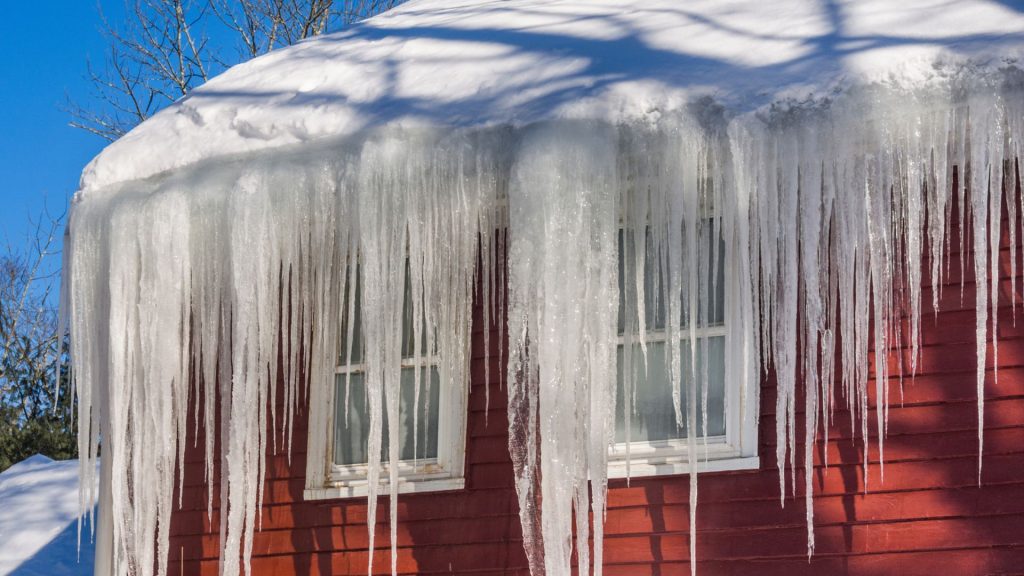
Not by itself. It is ice dam protection, not ice dam prevention. The U.S. Department of Energy’s ice dam prevention brief explains that dams form when the roof deck is above freezing while the outdoor air is below freezing. Meltwater then refreezes at the colder roof edge. The fixes it describes are an airtight ceiling plane, strong insulation, and ventilation of the roof deck’s underside.
The membrane handles the other half of the problem. When a dam forms anyway, it keeps ponded water from reaching the deck through nail holes and shingle laps. The most durable approach combines them: stop the heat loss in the attic, weigh ridge vent vs box vent options for roof ventilation, and protect the eaves in case ice still builds.
How Does Ice and Water Shield Compare With Synthetic Underlayment?
Both sit between the deck and the shingles, but they do different jobs.
|
Feature |
Ice and Water Shield |
Synthetic Underlayment |
|
Attachment |
Self-adhering to the deck |
Mechanically fastened |
|
Seals around fasteners |
Yes |
No |
|
Typical placement |
Eaves, valleys, penetrations, low slopes |
Remaining deck field |
|
Qualifies as an ice barrier under code |
Yes |
No, not on its own |
|
Main role |
Waterproof backup at high-risk zones |
Secondary weather layer across the deck |
Synthetic underlayment resists tearing and UV exposure better than traditional felt, which helps during multi-day installs. It cannot stand in for the membrane at the eaves, because the code specifies a self-adhering sheet or cemented layers there. On a well-built roof, the membrane covers the risk zones, and synthetic underlayment covers the broad field.
When Should You Add or Upgrade Ice and Water Shield?
During a Roof Replacement
Tear-off exposes the deck, which is the practical moment to install or correct eave coverage. Homeowners comparing materials at this stage, including cedar shake cost and lifespan for Hudson Valley homes, can plan membrane coverage alongside the new roof. The membrane bonds to the sheathing, so it cannot be added properly beneath existing shingles.
After Leaks or Stains Near the Eaves
Ceiling stains along exterior walls, wet attic insulation near the eaves, or repeated icicle buildup can point to water backing up under the shingles. These are signs the eave detail, the attic, or both deserve a closer look.
Before Winter Settles In
If ice dams formed last winter, an inspection now lets you plan. GAF’s technical bulletin on GAF’s guidance on shingle installation in cold weather notes there is no practical lower temperature limit when precautions are taken, though temperatures above 40°F are recommended for easiest handling and hand-sealing may be needed. Many homeowners schedule full replacements for spring through fall, and a winter inspection gives you time to line that up.
Frequently Asked Questions
Does ice and water shield affect my shingle warranty?
Manufacturers publish installation requirements for the whole roofing system, and following them is part of keeping coverage intact. Warranty terms vary by product and system, and specialty roofs raise their own questions, including warranty coverage when a solar shingle is not working. Ask for the written terms and confirm which components they cover.
Does homeowners insurance cover ice dam leaks in New York?
It depends on your policy and the cause of the damage. Sudden water damage may be covered, while problems tied to wear or deferred maintenance often are not. Review your policy or ask your carrier, and keep photos and inspection records. Those records also come up when selling a home with solar roof shingles or other specialty roofing. Pairing ice dam prevention in the attic with proper eave protection also helps reduce the risk of a claim.
Can you install ice and water shield yourself?
It is possible, but the details are easy to get wrong. NY building code at the eaves depends on wall-line measurements, overhang, and pitch, and the membrane must bond to a clean, dry deck. A professional roofer can also account for permits, manufacturer instructions, and warranty requirements.
Do metal roofs need ice and water shield?
The code’s ice barrier language lists specific roofing types, and metal panel systems follow the manufacturer’s installation instructions. Many installers still use self-adhering membrane at eaves, valleys, and penetrations on metal roofs. Your contractor can confirm what the chosen system and local code call for.
How long does ice and water shield last?
It is generally designed to perform beneath the roof covering for years, but lifespan varies by product, installation quality, and exposure. Heat and moisture trapped in the attic can shorten it. A roof inspection or tear-off is the reliable way to check its condition.
Ready to Protect Your Eaves Before the Next Thaw?
Hudson Valley roofs face the same cycle every winter: snow, melt, refreeze. A properly sized membrane at the eaves, valleys, and penetrations is one of the least visible and most useful parts of a new roof.
Lyndsey Roofing, LLC is a GAF Master Elite® and President’s Club 2-Star Certified Contractor serving Dutchess, Orange, Putnam, and Eastern Ulster Counties. Our team, led by Bill Reilly, who has worked in roofing since 1987, plans membrane coverage around code minimums, manufacturer instructions, and the specific layout of your roof, and we review attic conditions at the same time.
Learn more about our roof replacement services in Poughkeepsie and the Hudson Valley.
Related Posts