What’s In This Guide
- What a Roof Contractor Does Next
- Why Rotten Roof Decking Is a Bigger Problem Than It Looks
- What Tear-Off Exposes: Common Signs of Hidden Wood Rot
- How a Roof Contractor Handles Rotten Decking
- What Affects the Cost and Timeline of Roof Decking Replacement
- When to Call a Roof Contractor Before Tear-Off Even Begins
- Frequently Asked Questions
- Ready to Address Roof Decking Concerns in Poughkeepsie, NY?
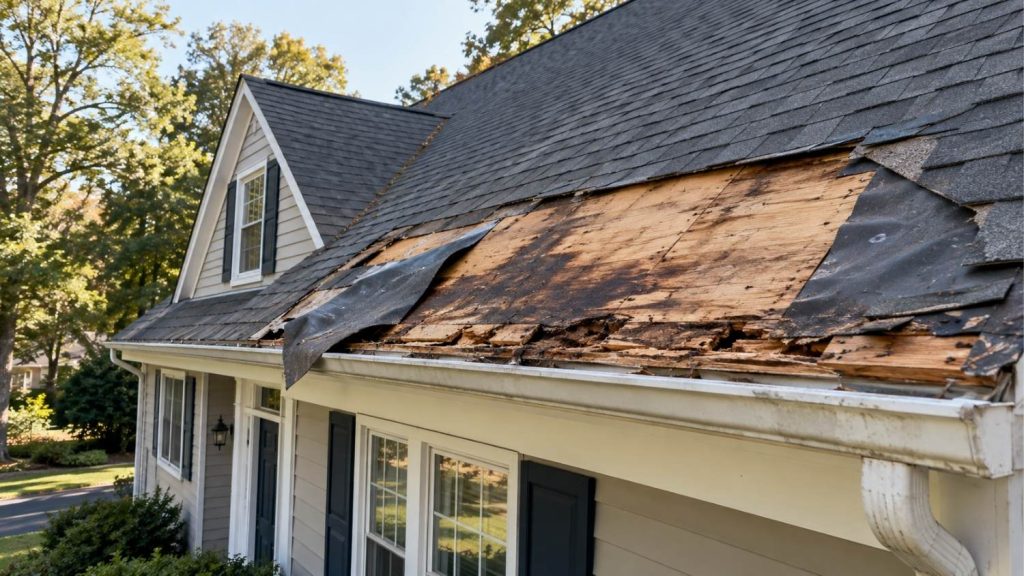
A roof tear-off usually follows a planned sequence: old roofing materials are removed, the roof deck is inspected, and new materials are installed if the underlying surface is sound. Sometimes, however, a roof contractor removes the shingles and underlayment and finds soft, discolored, or crumbling decking underneath. That discovery can change the scope of work, and understanding what happens next helps homeowners in Poughkeepsie, NY, prepare for a possible roof decking replacement.
Quick Facts
- Tear-off provides the most direct view of the roof decking. Shingles and underlayment can conceal moisture damage that may not be fully visible during an exterior or attic inspection.
- InterNACHI states that wood starts to rot and becomes susceptible to mold when its moisture content reaches 35 to 50%.
- Installation should pause in the affected area once rot is found. New shingles should not be installed over a roof deck that cannot hold fasteners securely.
- When rot is isolated, the affected roof decking can often be replaced without removing the entire roof deck.
- A written proposal should explain how unexpected roof decking replacement will be priced before work begins, so homeowners understand how added costs will be handled if rot is discovered.
What a Roof Contractor Does Next
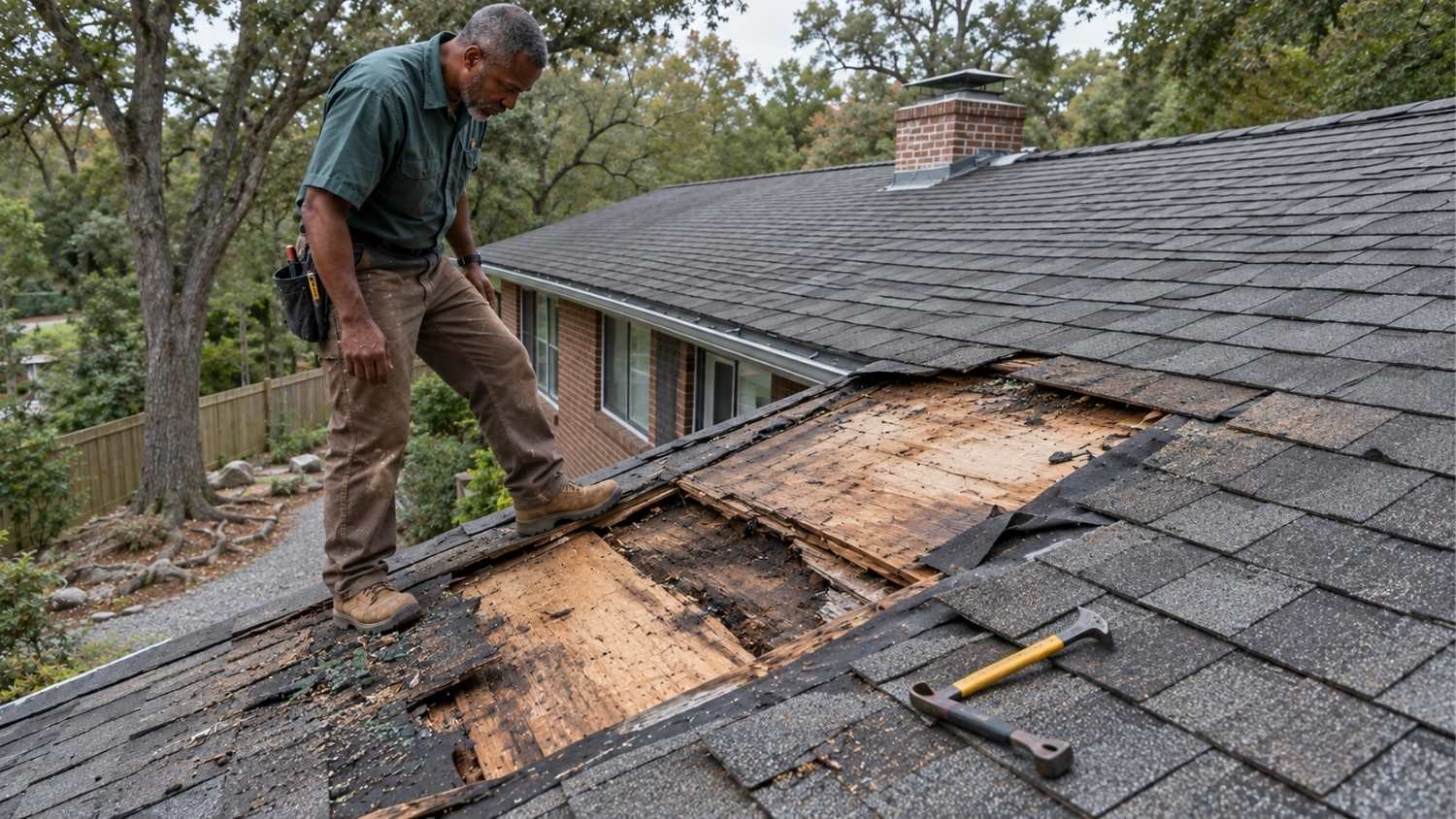
A roof contractor pauses installation in the affected area and inspects the surrounding decking before roofing work continues. Rotted plywood or oriented strand board (OSB) may no longer provide a reliable fastening surface or safe footing. The contractor documents the damage, determines the extent of the roof decking replacement, and reviews any added scope with the homeowner before continuing.
Hidden decking damage can be difficult to confirm before tear-off, even after a pre-project inspection. Homes with a history of leaks, condensation, or repeated moisture exposure may reveal additional damage once the roofing materials are removed.
Why Rotten Roof Decking Is a Bigger Problem Than It Looks
Rotted decking compromises the structural base that every other roofing component depends on. Shingles, underlayment, and flashing all rely on solid roof sheathing to stay fastened and weathertight.
A roof deck is the structural sheathing installed over the roof framing, commonly using plywood or OSB panels. It helps transfer roof loads and gives roofing fasteners a solid surface to grip.
When that layer softens or delaminates from prolonged moisture exposure, the affected area may no longer provide a sound substrate for the roofing system. According to InterNACHI’s guidance on moisture meters for home inspectors, wood starts to rot and becomes susceptible to mold when its moisture content reaches 35 to 50%.
In Poughkeepsie and the surrounding Dutchess County area, seasonal weather can worsen existing roof leaks or moisture problems, making it important to address the source of water intrusion before new roofing materials are installed.
Left unaddressed, decking rot can lead to:
- Fasteners that no longer hold shingles securely against wind
- Soft or spongy spots that create walking hazards for future service work
- Moisture migration into rafters, insulation, and ceiling drywall
- A shortened lifespan for the new roofing system installed above it
What Tear-Off Exposes: Common Signs of Hidden Wood Rot
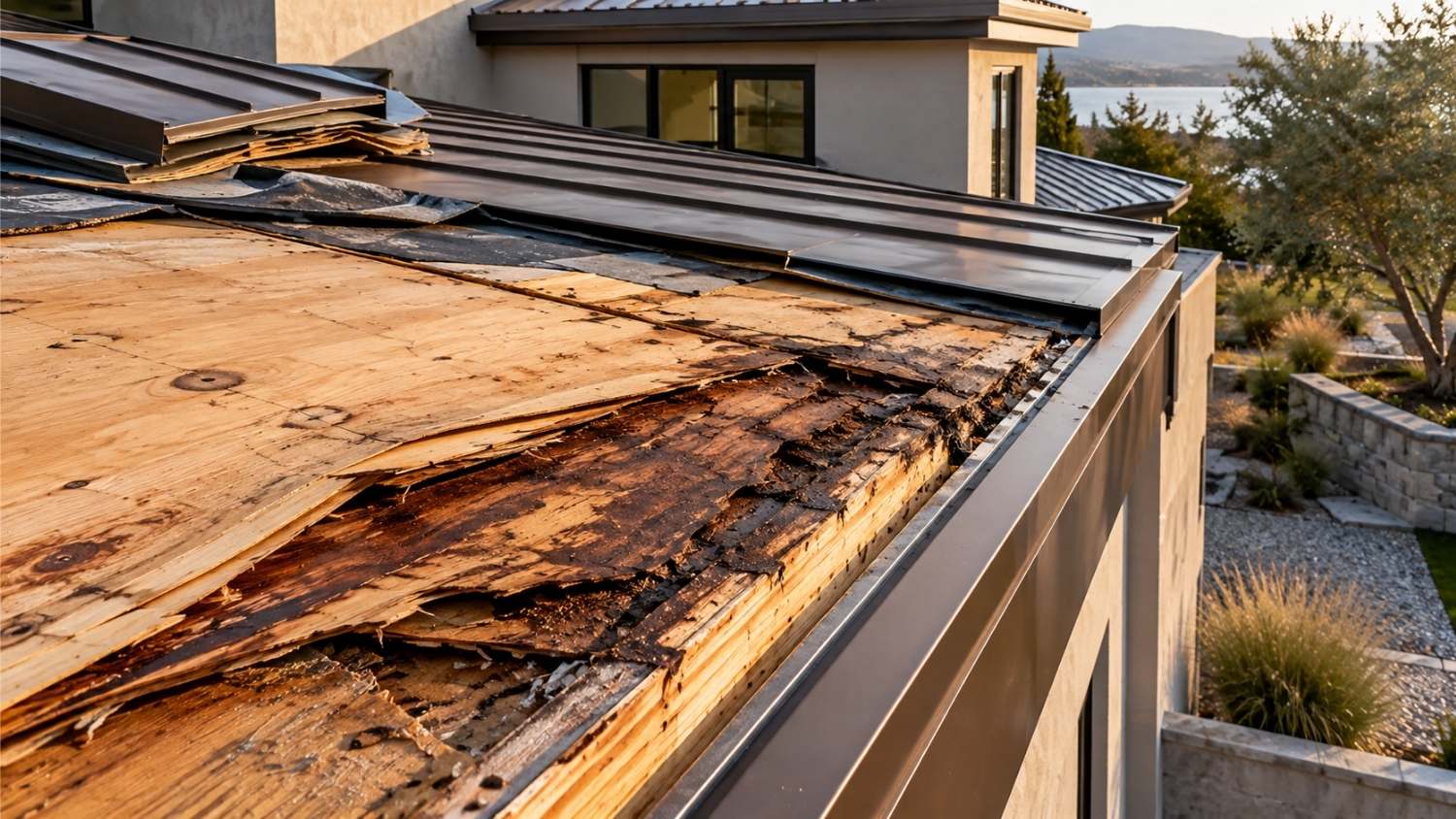
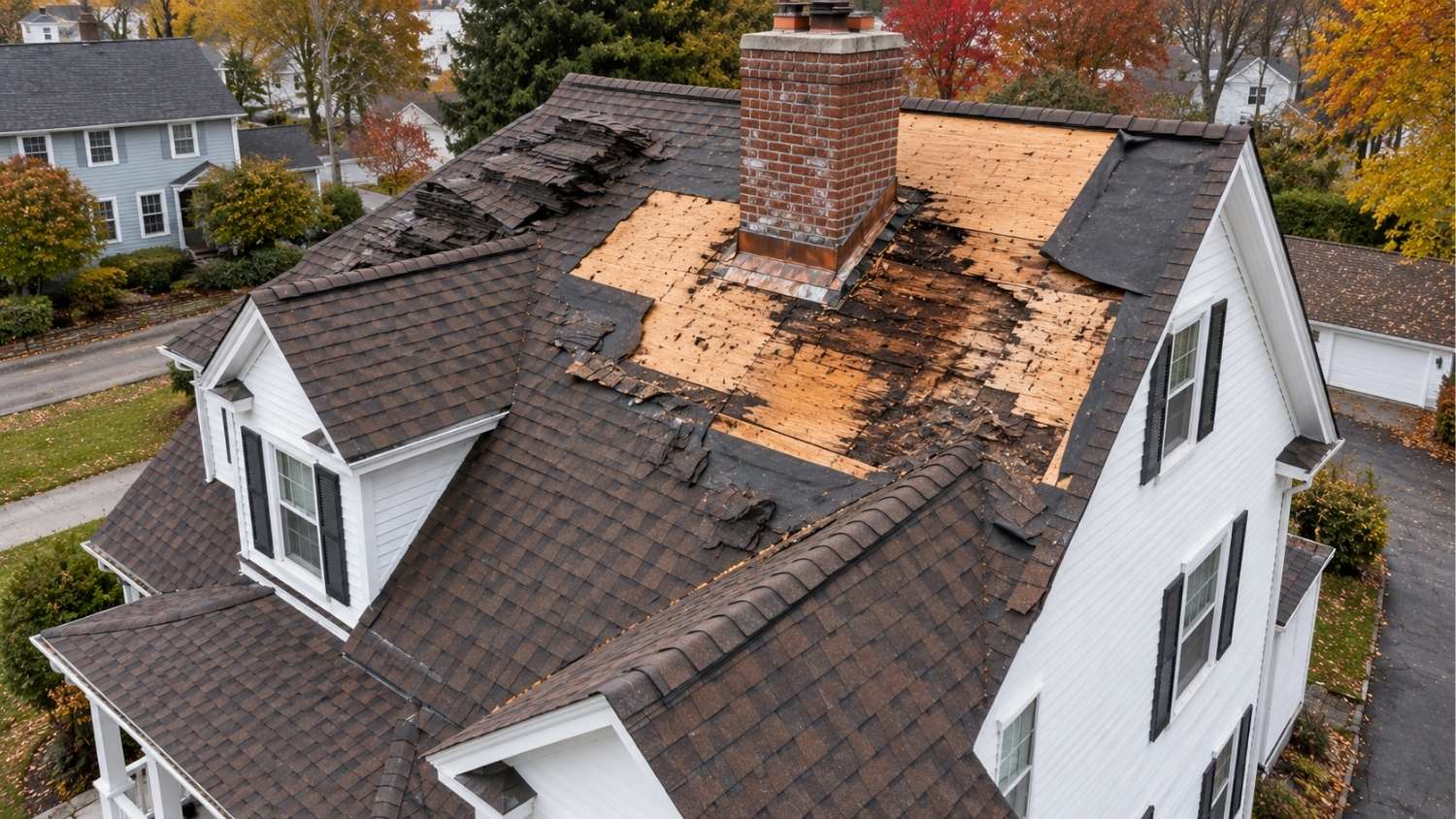
Tear-off can reveal decking problems that may not be fully visible during an exterior inspection. Once the shingles and underlayment are removed, a roof contractor can inspect the roof sheathing directly and identify damaged areas that may require repair or replacement.
Common indicators found during this phase include:
- Discoloration or dark staining, often concentrated around chimneys, skylights, or roof valleys where flashing details, penetrations, or concentrated runoff can increase the risk of moisture intrusion
- Soft or spongy sections that flex or give slightly under foot pressure
- Delamination, where plywood layers begin separating from long-term moisture exposure
- Visible fastener pull-through, where the fastener head has pulled through the sheathing
- Sagging between rafters, which can indicate weakened sheathing, inadequate support, or other framing concerns that require closer evaluation
Some of these signs overlap with attic-side symptoms homeowners may have already noticed, such as daylight through the roof boards or musty odors near the eaves.
READ MORE: What Happens During a Roof Replacement? A Hudson Valley Homeowner's Step-by-Step Guide
How a Roof Contractor Handles Rotten Decking
Handling decking rot typically follows a documented sequence, although the exact response depends on the extent and location of the damage. Each step helps protect the integrity of the finished roof and keeps the homeowner informed about changes to the project scope.
Step 1: Pause Installation at the Affected Section
Work should stop in the affected section once rot is confirmed. Installing new materials over compromised roof sheathing can lead to poor fastener holding and may conflict with manufacturer installation requirements or warranty coverage.
Step 2: Photograph and Document the Damage
The contractor photographs the exposed decking, notes the affected square footage, and records the location relative to chimneys, valleys, or plumbing vents. This documentation supports the estimate and gives the homeowner a clear record of what was found.
Step 3: Determine the Extent of the Damage
A contractor checks adjacent sheets and framing members to determine whether the rot is isolated or has spread. Decay that has reached the rafters requires a different response than damage limited to the decking and may call for evaluation beyond standard roofing scope.
Step 4: Present Findings and Confirm Scope With the Homeowner
The contractor should review any added work and cost with the homeowner before proceeding. A written change order or updated scope should document the approved roof decking replacement before new materials are installed.
Step 5: Replace the Affected Sheathing
When the damage is isolated, the roof contractor removes the compromised roof sheathing while preserving surrounding material that remains sound. Replacement panels should be compatible with the existing roof deck and properly supported and fastened to the framing.
Step 6: Resume Standard Installation
Once new sheathing is fastened and confirmed solid, installation continues with underlayment, ice barrier, flashing, and shingles following the original project sequence.
What Affects the Cost and Timeline of Roof Decking Replacement
Decking replacement cost depends on the amount of affected sheathing, the framing condition beneath it, and how accessible the damaged area is. There is no single flat rate, since every roof and every rot pattern is different.
Several factors typically influence the final scope:
- Number of sheets requiring replacement, since isolated rot costs less to address than widespread decay
- Roof pitch and accessibility, which affect labor time and safety setup
- Rafter or framing damage, if decay has spread beyond the sheathing itself
- Material type and thickness, since matching existing panel specifications matters for structural consistency
- Disposal and cleanup, which can add time when older layered roofing systems are involved
Roof decking replacement costs vary based on the extent and location of the damage. A written, itemized estimate helps clarify the added materials, labor, and scope for the specific project. A roof contractor should explain in the original proposal how unexpected decking replacement will be priced, whether by sheet, area, or another defined unit, so the homeowner understands how added work will be handled if damage is found during tear-off.
When to Call a Roof Contractor Before Tear-Off Even Begins
Certain warning signs justify a professional roof inspection before a project reaches the tear-off stage. Identifying possible moisture or decking problems early can help homeowners plan for repairs, added costs, and potential schedule changes.
Homeowners should schedule an inspection if they notice:
- Sagging visible from the ground or attic
- Musty odors or visible mold near the roofline
- Water stains on ceilings or upper walls
- Daylight through roof boards when viewed from the attic
- A history of repeated roof leaks, recurring moisture intrusion, or previous repairs in the same area
A qualified roof contractor can evaluate the roof decking from accessible areas, such as the attic, before a full tear-off begins. That preliminary inspection may identify warning signs, although the full condition of concealed roof sheathing may not become clear until the existing roofing materials are removed.
Frequently Asked Questions
What causes roof decking to rot underneath shingles?
Roof decking usually deteriorates after repeated or prolonged moisture exposure. Potential sources include roof leaks, failed flashing, condensation, ventilation problems, or water entering around penetrations such as chimneys and vents. Identifying the moisture source is important so new sheathing is not exposed to the same problem.
Can rotten roof decking be replaced from inside the attic?
Roof decking replacement is generally performed from the roof side because the damaged sheathing must be removed from the framing before new panels can be properly installed. Attic access can still help a contractor identify staining, sagging, or other warning signs before tear-off begins.
How long does decking replacement add to a roofing project?
The additional time depends on how many sheets need replacement, where the damage is located, and whether decay has reached the framing. Isolated decking repairs may be handled during the existing tear-off process, while widespread damage can extend the project schedule.
Is rotten roof decking covered by homeowners insurance?
Coverage depends on the cause of the damage. Sudden covered events may qualify for coverage, while gradual deterioration, aging, or deferred maintenance may be excluded. Homeowners should review their policy and confirm coverage directly with their insurer.
Should replacement roof decking match the existing thickness?
Replacement sheathing generally needs to be compatible with the existing roof deck and structural requirements. Panel thickness, material, framing spacing, and applicable code or manufacturer requirements should be confirmed before damaged sections are replaced.
Ready to Address Roof Decking Concerns in Poughkeepsie, NY?
Lyndsey Roofing, LLC has served Poughkeepsie and the greater Hudson Valley since 2015, handling roof replacements in which the condition of the roof deck can affect the installation process and finished roofing system. When hidden wood rot is discovered during tear-off, a written, itemized scope can document the roof decking replacement or repairs needed before installation continues.
If a roof replacement is on the horizon, or if attic signs already point to a possible problem, a professional assessment is the clearest next step.