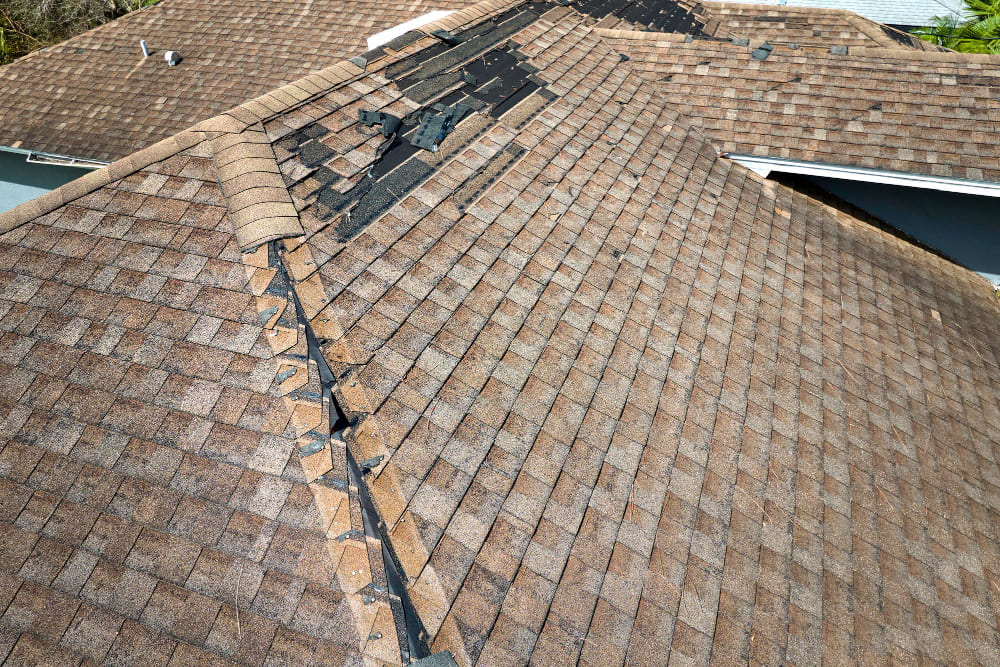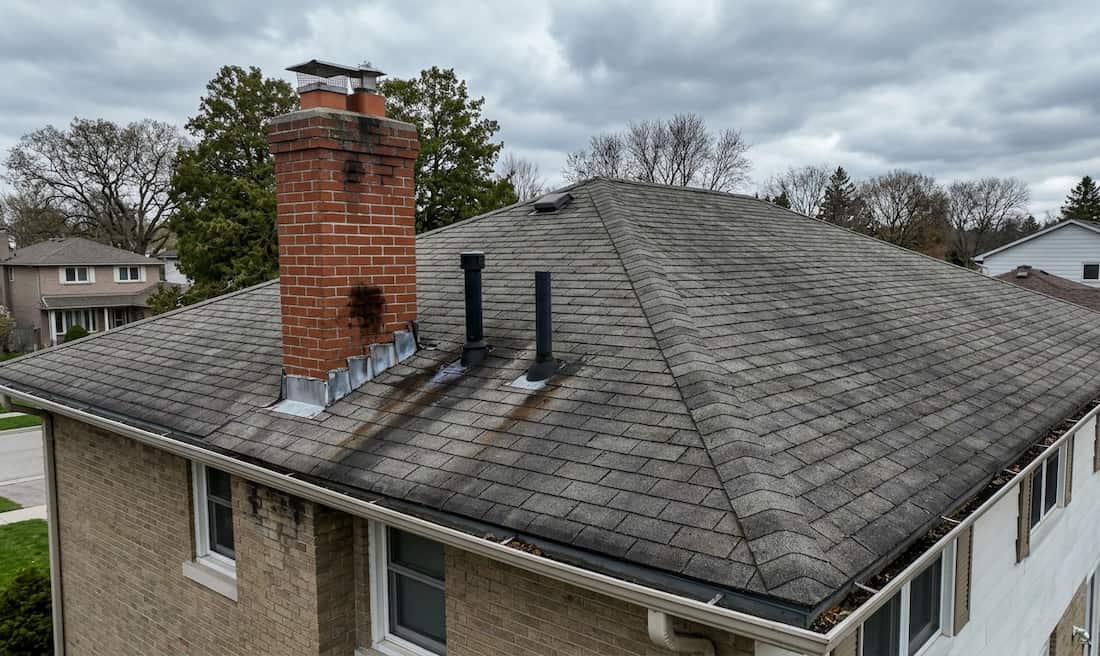
Most roof leaks in Hyde Park don’t start in the middle of a shingle field. They start at the edges, at every point where a pipe, chimney, or metal strip meets the roofing material. These transitions, called penetration points and flashings, are where water finds its way in, especially after the freeze-thaw cycles and heavy rainfall that define Dutchess County winters and springs.
If you’ve noticed a water stain on your ceiling, musty attic air after a rainstorm, or visible rust streaks near your chimney, the leak often traces back to one of three areas: the chimney, a roof vent, or deteriorated flashing.
WHAT’S IN THIS GUIDE
QUICK FACTS
 Most roof leaks come from chimneys, vents, and flashing, not shingles. Chimney counter flashing is a common leak source on Hyde Park homes. Vent pipe boots typically last 10–15 years before cracking. Ceiling stains often appear downhill from the actual leak. Small flashing issues can lead to deck rot if ignored.
Why Penetration Points Fail First in Hyde Park's Climate
Hyde Park sees an average of over 47 inches of precipitation per year, along with sustained periods below freezing from November through March.
That combination matters because:
- Freeze-thaw cycling: It expands and contracts every material at a different rate. Metal flashing, mortar, rubber pipe boots, and asphalt shingles all move independently, which progressively opens up seams and gaps.
- Ice damming: This common Hudson Valley problem forces water backward under shingles and into those same seams.
- Spring rainstorms: They drive water sideways and upward, exploiting any gap that winter left behind.
The result: by the time a homeowner notices a ceiling stain in April, the actual entry point may have been compromised since January.
How Chimneys Cause Roof Leaks
Chimneys are one of the most common roof leak sources on Hyde Park homes, and for good reason. A chimney is essentially a masonry column punching through your roofline, and that junction requires multiple layers of protection to stay watertight, each of which can fail independently.
Chimney Flashing
Chimney flashing typically consists of two layers: step flashing (L-shaped metal pieces woven into the shingle courses alongside the chimney) and counter flashing (metal embedded into the chimney’s mortar joints and folded down over the step flashing).
When counter flashing pulls away from the mortar, which it does as masonry expands and contracts, water flows directly between the two layers.
A deteriorated chimney crown (the sloped concrete cap on top of the masonry) compounds this problem. Cracks in the crown let water into the chimney structure itself, which then migrates into the roof deck from the inside out, making the leak appear well away from the chimney.
What to Look For
From the ground or a safely accessible attic, watch for:
- Rust staining on the roof deck or ceiling below the chimney
- White efflorescence (mineral deposits) on the chimney’s brick face
- Cracked or spalling mortar at the base of the flashing
- Daylight visible between counter flashing and masonry
If you can access your attic safely after a rain, check for wet insulation, stained rafters, or dark wood directly adjacent to the chimney’s interior framing.
Roof Vents and Pipe Penetrations
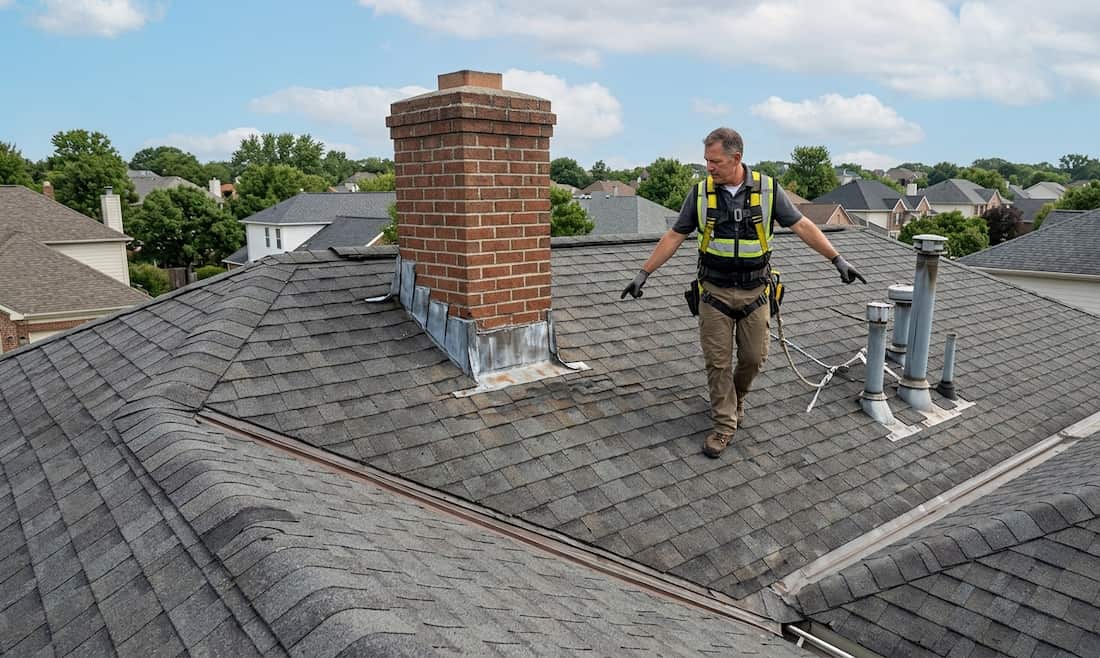
Every plumbing stack, bathroom exhaust fan, ridge vent, and HVAC penetration on your roof creates another opportunity for water entry. On most Hyde Park homes, particularly the Colonial, Cape Cod, and split-level styles common in the area, there are often several vent penetrations on a typical roof.
Plumbing Vent Boots
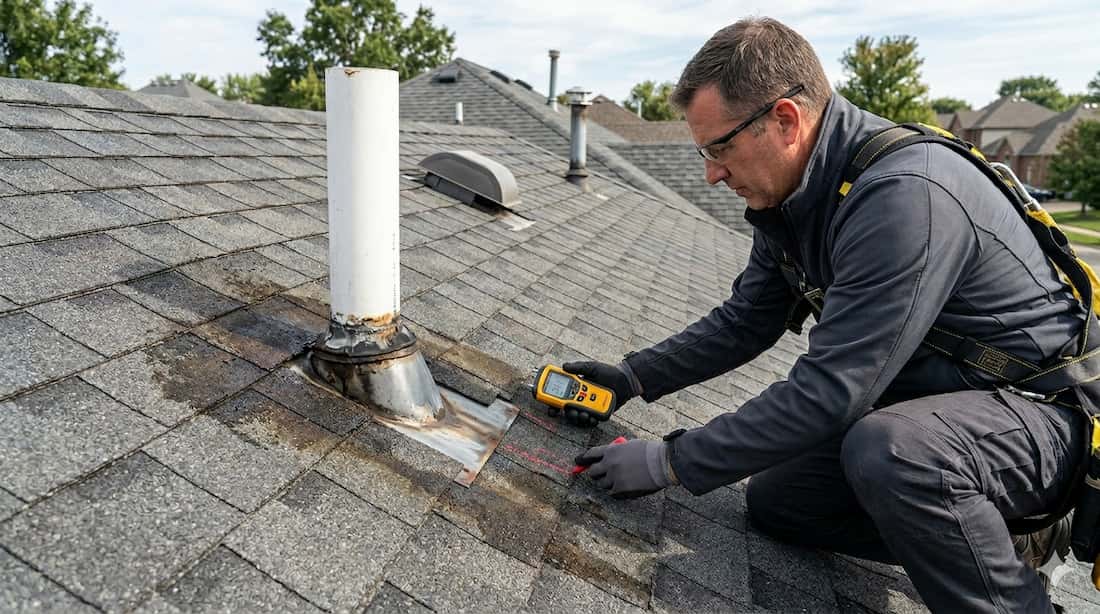
The most common failure point is the vent pipe boot, the rubber or plastic collar that seals around plumbing stacks. Neoprene boots have a practical service life of roughly 10–15 years before UV exposure and temperature cycling cause cracking.
When the boot cracks, water runs straight down the pipe and into the ceiling assembly below, often appearing on a first-floor ceiling far from the actual roof penetration.
Signs of a failing vent boot include:
- Visible cracking or separation at the base of the pipe
- A collar that has lifted or rotated away from the shingles
- Deteriorated caulk at the boot’s perimeter.
If you are searching for roof leak repair near me after noticing a stain below a bathroom or utility area, a vent boot should be one of the first items checked.
Attic and Ridge Vents
Properly installed ridge vents and soffit vents are critical for Hyde Park homes because attic ventilation reduces ice dam formation that plagues the region.
However, a poorly sealed or animal-damaged vent can allow both water and wildlife into your attic. Screening inspections and ensuring vents are free of debris is a basic but frequently skipped part of roof maintenance.
Flashing: The Most Common Overlooked Leak Source
Roof flashing is the term for the thin metal — typically galvanized steel or aluminum — installed at every transition on your roof. This includes:
- Step flashing: Along dormers and roof-to-wall transitions
- Valley flashing: In the V-shaped channels where two roof planes meet
- Drip edge: Along the eaves and rakes
- Skylight flashing: Around the perimeter of any skylight frame
Flashing failures are responsible for a large share of all residential roof leaks, yet they’re often invisible until significant water damage has already occurred. Nails backing out, corrosion, improper overlaps, and dried-out sealant are all common failure modes.
On older Hyde Park homes, many of which date back 40 to 70 years, original galvanized flashing may be near or past its usable life. When a roof replacement is done without replacing the flashing, the new shingles are being asked to compensate for a compromised metal system, which they cannot do reliably.
How to Trace a Roof Leak: A Step-By-Step Approach
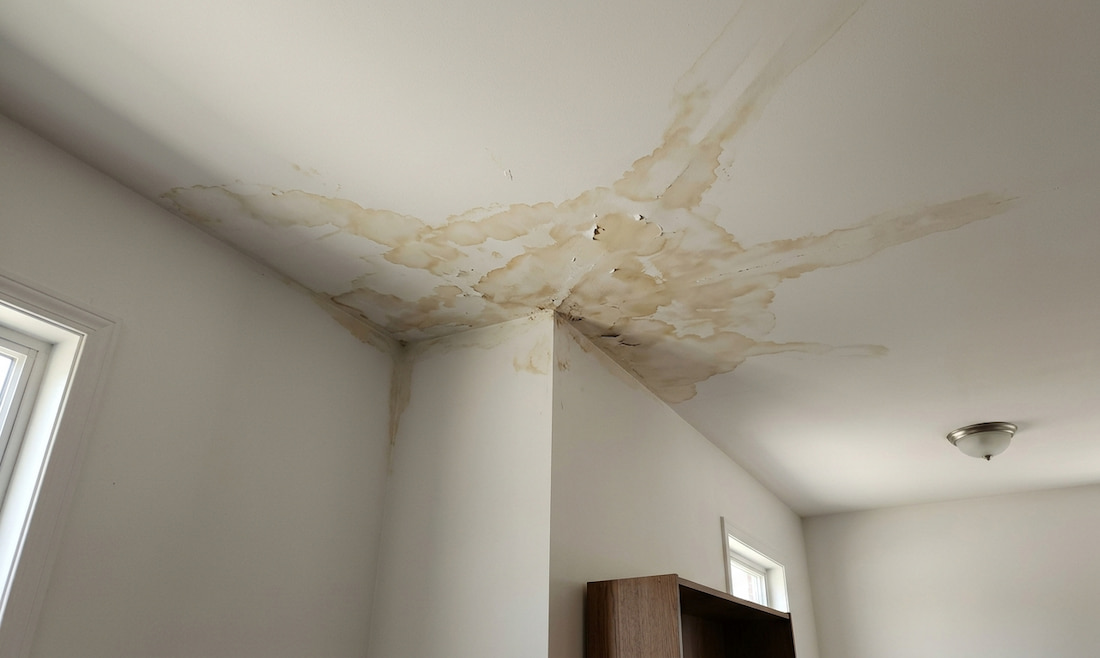
Locating the actual source of a leak requires patience, because water rarely enters and exits in the same spot. It typically enters at a high point and travels along rafters, sheathing, or insulation before it appears on your ceiling.
This interior check can help narrow the problem before scheduling professional Hyde Park leak detection.
This process is for interior inspection only. Do not walk on a wet roof, climb a ladder in rain or ice, or attempt to access a steep roof without proper safety equipment.
When in doubt, call a professional.
Step 1: Wait for Active Rain or Use a Hose
The leak is easiest to trace when active. If you’re inspecting after a storm, mark where the stain or drip appears on the ceiling.
Step 2: Access the Attic
Using a flashlight, enter the attic as soon as it is safe. Look for:
- Wet or dark spots on the underside of the roof deck
- Water stains on rafters or ceiling joists (older stains appear as gray rings; fresh ones are darker)
- Daylight coming through the deck
Step 3: Follow the Water Uphill
Because water runs downhill, the actual entry point is always higher than where the stain appears. Trace the wet wood or staining toward the ridge, toward a vent, or toward the chimney.
Step 4: Mark and Measure
Measure the distance from the wet spot to the nearest gable end or wall. This lets you translate the attic location to a corresponding point on the roof surface above.
Step 5: Inspect the Corresponding Exterior Zone
From the ground (using binoculars if necessary), check the area of the roof that corresponds to your attic finding. Look for lifted shingles, missing flashing, cracked boots, or visible gaps at the chimney base.
Step 6: Document and Call
Photograph every finding. If you identify a likely source but cannot confirm without walking the roof, document what you’ve found and provide that information to your roofing contractor. It speeds diagnosis and reduces inspection time.
When Roof Leak Detection Becomes a Repair Job
Not every leak requires a full roof replacement. Many chimney flashing failures, cracked vent boots, and isolated step flashing issues can be repaired efficiently and cost-effectively. The key is acting before the water reaches the wood.
When water sits on roof sheathing long enough, it causes rot. A rotted deck section can turn a minor flashing repair into a much larger partial deck replacement, and if the rafters are affected, costs escalate further.
In Hyde Park’s wet springs and snowy winters, the window between “minor leak” and “structural damage” is shorter than most homeowners realize.
Repair is typically appropriate when:
- The leak is isolated to a single penetration point
- The surrounding shingles and decking are in sound condition
- The flashing is the only compromised element
Replacement becomes the better investment when:
- Multiple penetration areas are showing simultaneous failures
- The roof system is more than 20 years old
- The decking is soft, stained, or delaminated in multiple areas
Before choosing a leaking roof repair near you, confirm whether the damage is limited to flashing, a vent boot, or a single penetration point.
Frequently Asked Questions (FAQs)
How do I know if my chimney flashing is causing a roof leak?
You can usually spot a chimney flashing leak by ceiling stains near the chimney, rust streaks on the exterior brick at the roofline, or flashing that has separated from the masonry. In the attic, check for wet insulation or darkened rafters beside the chimney framing. These signs often point to counter flashing pulling away from the mortar joint.
Can a vent pipe cause a roof leak?
Yes. A cracked or separated vent pipe boot can let water run down the pipe and into the ceiling below. These rubber boots often wear out over time, especially with UV exposure and freeze-thaw cycles. Because water can travel, the ceiling stain may appear several feet from the actual leak source.
What is roof flashing and why does it fail?
Roof flashing is thin metal, often aluminum or galvanized steel, installed where the roof meets chimneys, valleys, skylights, dormers, vents, and eaves. It can fail when nails loosen, metal corrodes, sealant dries out, or expansion and contraction pull it away from the surface. On older homes, flashing should be a priority inspection item.
How far can a roof leak travel from its entry point?
A roof leak can travel several feet from where water enters before it shows up indoors. Water often follows rafters, insulation, and roof sheathing before staining a ceiling. That’s why the visible stain may not be directly below the problem area. Inspect the attic uphill from the stain.
Should I repair flashing or replace the whole roof?
Flashing repair makes sense when the issue is isolated, such as one cracked vent boot, a small flashing gap, or counter flashing that needs to be reset. Roof replacement may be smarter if the roof is over 20 years old, several penetration points are failing, or the roof deck has rot or delamination in multiple areas. Replacing shingles without fixing bad flashing can lead to repeated leaks.
Schedule a Leak Inspection Before the Next Rain Season
If you’ve identified warning signs: ceiling stains, musty attic air, visible rust at the chimney base, or cracked vent collars, don’t wait for the damage to reach your living space.
Lyndsey Roofing, LLC serves homeowners across Hyde Park and Dutchess County with professional roof leak detection, flashing repair, chimney flashing replacement, and full roof inspections.
Contact us today.