1. Dented or Missing Shingles
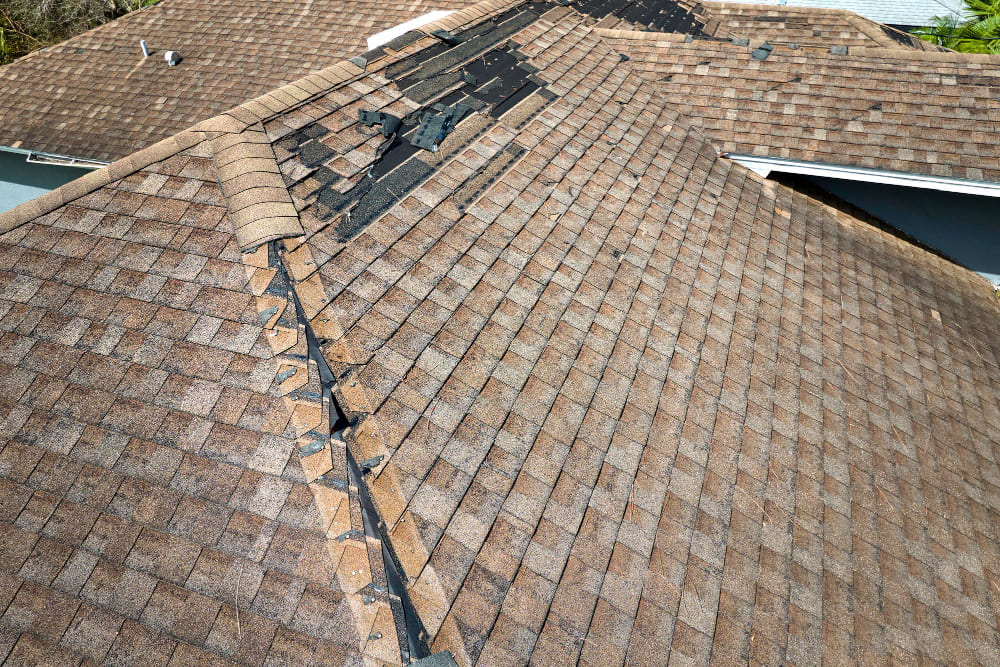
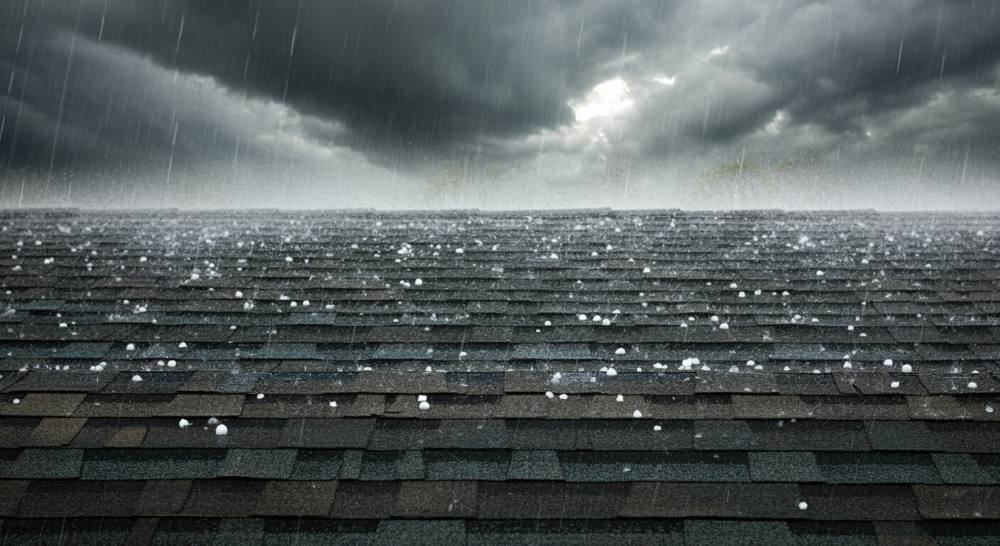
Shingles form the first line of defense on a roof and are often the most visibly affected when a hailstorm hits. Because of their direct exposure, they frequently bear the brunt of hail impact. Its severity can vary depending on the hail size, wind speed, and roofing material.
Damaged shingles may seem like a minor issue, but they often signal more extensive hail damage on a roof. When in doubt, it’s safer—and often more cost-effective—to evaluate the entire roofing system rather than settle for patchwork fixes.
Common Hail Damage on a Roof Shingle
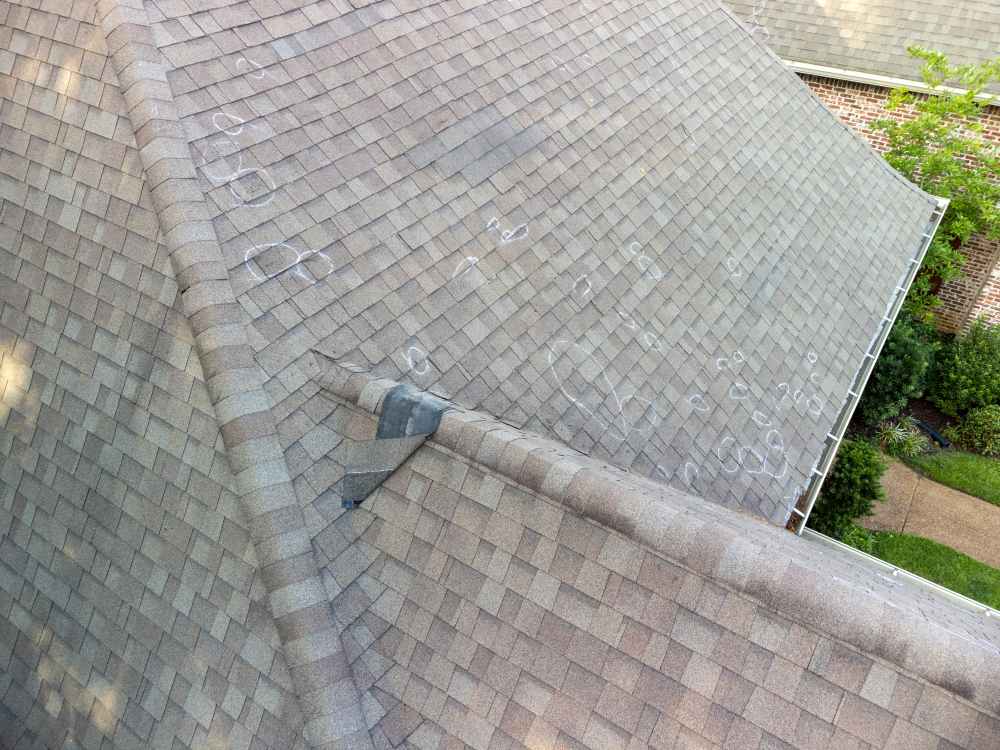
- Dents and Bruises: Shingles may show circular dents or soft spots where hailstones have struck. These areas can compress the layers beneath the surface, even if no cracks are visible, leading to early deterioration.
- Cracked or Split Shingles: High-velocity hail can cause shingles to fracture. Cracks may form in a spiderweb pattern or straight line and expose the underlayment to water.
- Granule Loss: Protective granules shield asphalt shingles from UV rays and weathering. Hail impact can knock these granules off, resulting in dark or bald patches that are highly vulnerable to sunlight and moisture.
- Missing Shingles: In more intense storms, shingles may be completely torn from the roof. This creates immediate exposure to rain, increasing the risk of leaks and insulation damage.
- Shingles Curling or Lifting at Edges: Impact can cause the adhesive seal to break, lifting shingles at the corners or edges. This compromises their ability to stay watertight and withstand future winds.
Why These Issues Shouldn’t Be Ignored
- Undetected Structural Damage: Beneath the visible surface, bruised or cracked shingles can result in compromised decking and underlayment. Without timely intervention, these issues can develop into widespread roof failure.
- Insurance Challenges: Ignoring early signs can complicate claims later. Insurers are more likely to approve coverage for hail damage roof replacement if the damage is documented and addressed promptly.
- Decreased Home Value: Damaged shingles can significantly lower curb appeal and deter buyers, especially in areas prone to severe weather.
- Future Storm Vulnerability: Once shingles are damaged, they’re more likely to fail during the next storm, making hail damage roof repair or replacement essential for long-term protection.
What Homeowners Should Do
- Inspect After Every Storm: Walk the property (safely from the ground) and look for obvious shingle damage or granules in the gutters.
- Schedule a Professional Inspection: Certified roofers can identify signs not visible to the untrained eye and help determine whether hail damage roof replacement is needed.
- Document Everything: Taking photos and noting storm dates helps with filing an insurance claim and provides evidence for reimbursement.
2. Soft Spots or Discoloration
Not all roof damage is immediately visible after a hailstorm. In fact, some of the most serious problems start beneath the surface. A frequent homeowner question is, “What does hail damage look like on a roof?”—and the answer often includes soft spots and discolored areas that develop over time.
Understanding what hail damage looks like on a roof goes beyond visible cracks. These softer, subtler clues often signal deeper concerns that should be evaluated by professionals.
Key Visual and Physical Indicators
- Circular Dark Patches: These spots form where granules have been knocked off the shingles, exposing the black asphalt underneath. They typically resemble bruises and may increase UV exposure and water absorption.
- Soft or Spongy Areas: When walked on, these spots may compress or feel unstable, signaling a broken bond between layers. This is a red flag that the shingle mat has been fractured, even if the surface appears intact.
- Subtle Surface Deformation: Hail impact can distort shingles just enough to cause lifting or warping, which may not be immediately obvious from the ground. These areas are more prone to future damage.
- Water Retention in Damaged Zones: Minor surface indentations may collect moisture, encouraging mold or algae growth and accelerating deterioration.
Risks of Ignoring These Signs
- Trapped Moisture: When water infiltrates soft spots, it can lead to decay, mildew, or compromised insulation in the attic.
- Progressive Structural Weakening: Discoloration might be cosmetic at first, but it often hints at underlying layers losing cohesion and strength.
- Missed Insurance Deadlines: Failing to recognize and report these subtle signs could result in denied claims for hail damage roof replacement.
What Homeowners Should Do
- Use Binoculars or Drones for Visual Checks: From a safe distance, look for circular patches or uneven shingle coloring.
- Hire Certified Inspectors with Infrared Tools: Thermal imaging can detect moisture trapped beneath the shingles that isn’t visible to the naked eye.
- Request a Comprehensive Damage Report: If multiple soft or discolored areas exist, replacement is typically more reliable than isolated hail damage roof repair.
3. Roof Leaks or Water Stains
Leaks are often the first interior clue that something is seriously wrong above. While hail damage on a roof doesn’t always cause immediate leaking, over time, the compromised roofing system will allow moisture to penetrate.
Interior Signs of Roof Failure
- Ceiling or Wall Stains: Yellow, brown, or gray water stains usually appear where leaks are recurring. These are often directly linked to compromised shingle layers from hail impact.
- Peeling Paint or Bubbling Drywall: Moisture entering the home can loosen paint and cause drywall to warp or separate, indicating water infiltration from above.
- Musty Odors in Attic or Rooms: A persistent damp smell signals mold or mildew caused by hidden leaks originating from hail damage roof issues.
- Mold Spots or Growth: Excessive moisture creates an ideal environment for mold colonies, which can pose health risks if not addressed quickly.
Why Leaks Suggest Deeper Problems
- Failure of the Underlayment: Hail can puncture both shingles and the waterproof underlayment. Once this layer is breached, water flows freely into the structure.
- Widespread Water Intrusion: If multiple leaks appear in different areas, the damage is likely extensive, requiring more than basic hail damage roof repair.
- Hidden Mold Behind Walls or Insulation: Water travels through materials over time, making it difficult to trace the original leak without full removal of compromised sections.
Recommended Action Steps
- Don’t Delay Professional Inspection: The longer a leak persists, the more costly the internal repairs will become, including rot remediation and insulation replacement.
- Get Roofing and Interior Evaluations Together: A coordinated inspection ensures that the source of the leak is correctly identified and addressed.
- Consider Full Replacement When Repairs Stack Up: For recurring or widespread leaks, a full hail damage roof replacement is a safer long-term investment than continuous patchwork.

4. Damaged Flashing or Dented Gutters
While most people focus on shingles when assessing hail impact, the roof’s metal components often provide the earliest and clearest signs of hail damage on a roof. Flashing, gutters, vents, and chimney covers are highly exposed and typically made from thin metal, making them easy targets for hailstones.
If multiple non-shingle elements are impacted, it’s a strong signal that the whole roofing system should be professionally assessed, often resulting in the recommendation of a full hail damage roof replacement.
Common Metal Component Damage
- Dented Flashing Around Vents and Chimneys: Flashing serves as a barrier between joints and seams. When dented, it can loosen or warp, allowing water to seep underneath and into the structure.
- Crushed or Bent Gutter Systems: Gutters often show visible dents, dings, or even separation from the fascia after a hailstorm. These are not just cosmetic issues—damaged gutters can disrupt proper drainage.
- Loose or Shifted Metal Vent Caps: Hail can loosen caps covering attic ventilation points, creating new paths for water intrusion and pests to enter the attic.
- Warped Drip Edges or Fascia Trim: These small yet critical edges along the roof perimeter can sustain hail damage that allows moisture to creep under the roof decking.
Why Fixing This Damage Matters
- Indirect Proof of Broader Roof Compromise: If thin metals are visibly dented, the impact on shingles, though less obvious, could be just as serious or worse.
- Drainage Disruption Risks: Malfunctioning gutters and downspouts can allow water to pool near the roof or foundation, leading to rot, mold, and structural instability.
- Insurance Claim Validation: Photos of dented gutters or flashing can serve as supporting evidence in an insurance claim for hail damage roof replacement.
- Overlooked Damage Can Spread: Failing to fix these components leads to secondary damage like fascia board rot and attic leaks—issues that a simple hail damage roof repair may not fully resolve.
How to Take Action
- Document Damage Immediately After a Storm: Metal elements are easier to spot damage on, making them an ideal place to start when inspecting the roof after hail.
- Don’t Rely on Cosmetic Repairs Alone: Replacing a bent vent cap won’t fix the compromised roof deck beneath it. A comprehensive evaluation is key.
5. Aged Roof or Repeated Repairs
Even the best roofing materials degrade over time. If a roof is nearing or past the 15- to 20-year mark, it becomes significantly more vulnerable to hail. In older systems, even a minor hail impact can cause accelerated failure due to material fatigue—raising an important question for homeowners: what does hail damage look like on a roof?
Understanding the intersection between storm damage and roof age is critical. Rather than investing in another round of hail damage roof repair, long-term peace of mind often comes from committing to a complete, modern roof replacement.
Warning Signs from Older Roofing Systems
- Visible Wear and Tear: Curling shingles, granule loss, and brittle flashing are typical in aging roofs, and hail will only make these issues worse.
- Patching History: If the roof has already undergone hail damage roof repair in the past, it likely has multiple weakened areas that compound after each storm.
- Worsening Leak Frequency: More frequent leaks or interior water stains after smaller storms may point to the end of the roof’s service life.
- Outdated Materials: Some older roofing products are no longer manufactured, making it difficult to find compatible replacements or patching materials.
Why Replacement Becomes Necessary
- Diminished Structural Integrity: Roofing systems lose flexibility with age, making them prone to cracking under even moderate impact. A full hail damage roof replacement restores the strength needed to protect the home.
- Higher Cost of Ongoing Repairs: Eventually, the cost of multiple spot repairs outweighs the one-time investment in a full roof replacement, which also comes with new warranties.
- Reduced Energy Efficiency: Older roofs often lack proper insulation or reflective properties. Replacing them allows homeowners to upgrade to more efficient systems while resolving hail damage.
- Home Value Considerations: A newly replaced roof is a strong selling point in real estate and can offer reassurance to buyers in storm-prone areas.