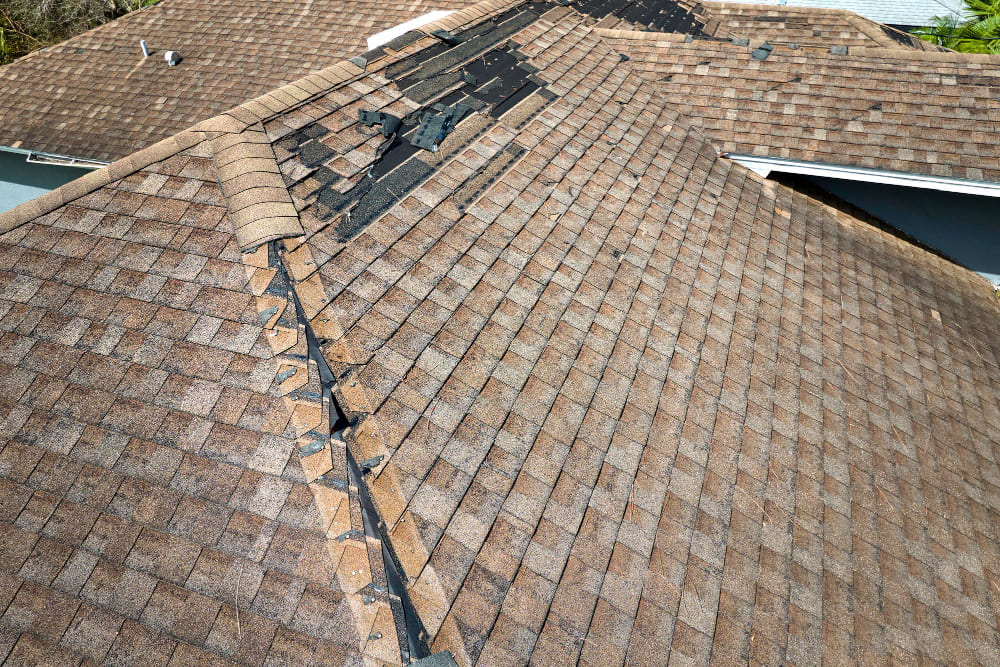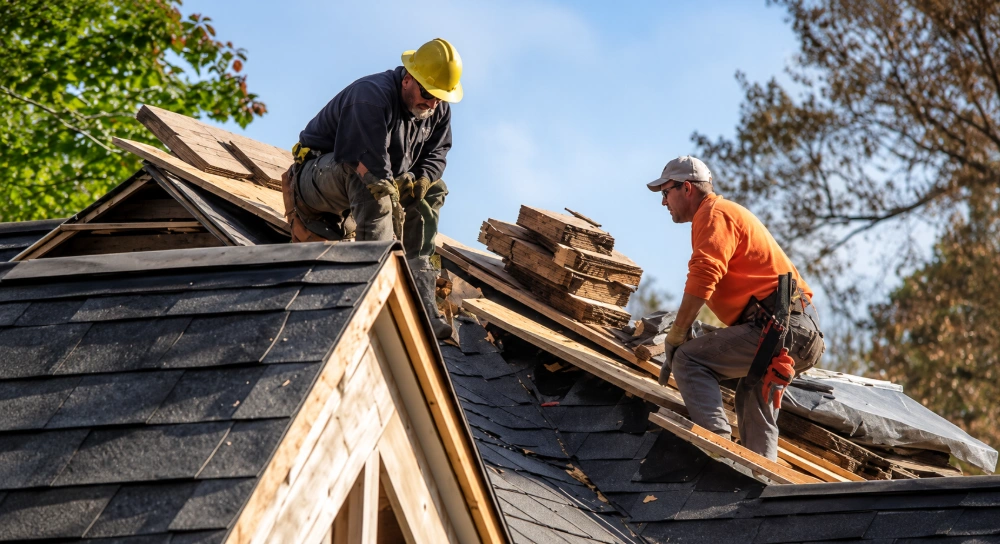
Most Poughkeepsie homeowners don't think about their roof until something goes wrong. Maybe it is a water stain on the ceiling after a nor’easter, granules clogging the gutters after a hailstorm, or a flashing gap that turns a cold January into an expensive one. When those moments arrive, the first question is almost always the same: do I fix this or replace it?
That decision isn't always obvious, and the wrong call in either direction costs real money. A patch job on a roof that needs full replacement just delays the inevitable. A full replacement on a roof that only needed a repair is money that didn't need to leave your wallet.
The right answer depends on your roof’s age, the extent of the damage, the condition of the decking, and how well the system is holding up against Hudson Valley weather.
What’s In This Guide
- Why Poughkeepsie Roofs Take a Harder Hit Than Most
- Roof Repair vs. Replacement: How to Tell the Difference
- Roof Replacement Options: What Actually Works in the Hudson Valley
- How to Choose the Right Roof Replacement for Your Home
- Don’t Skip These Before You Sign Anything
- Frequently Asked Questions (FAQs)
- Ready to Make the Right Call on Your Roof? Start Here
Quick Facts
- Repair small damage; replace older or widespread damage.
- Asphalt shingles are one of the most practical options for many homes.
- Metal roofing can offer strong long-term value.
- TPO and EPDM suit flat/low-slope roofs.
- Ventilation, flashing, and ice shield matter.
Why Poughkeepsie Roofs Take a Harder Hit Than Most
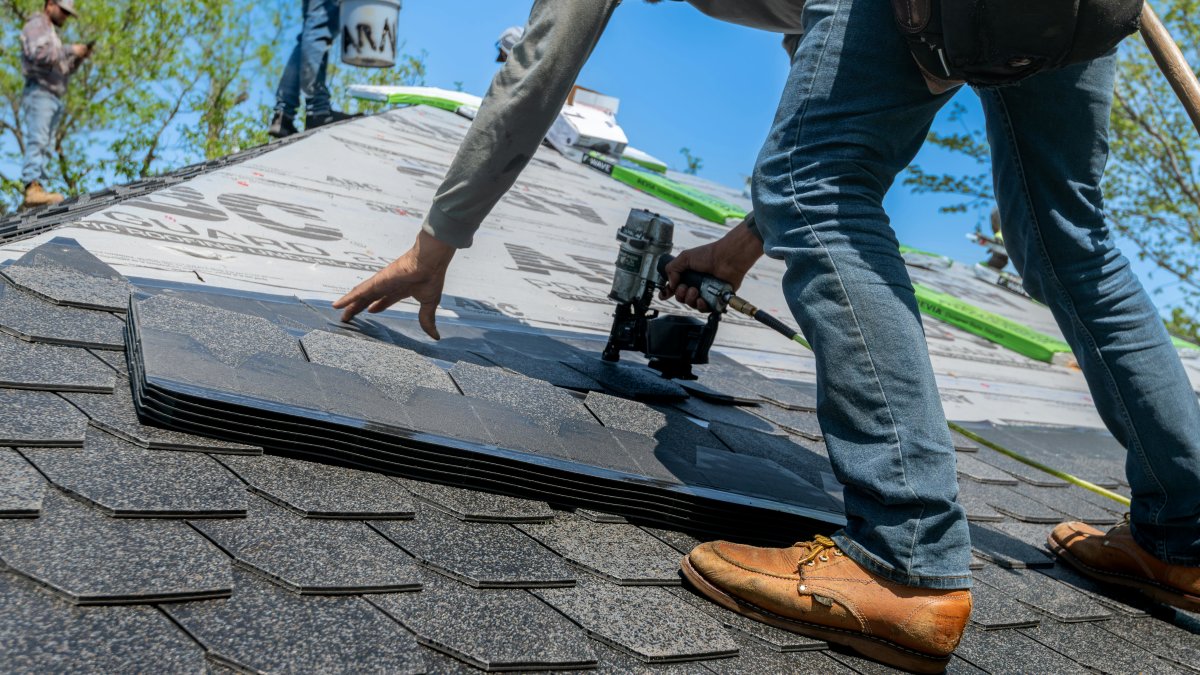
Before comparing roof replacement options, it helps to understand what you’re up against.
Heavy Snow and Freeze-Thaw Cycles
Poughkeepsie sees its heaviest snowfall in January, with average monthly snowfall reaching approximately 10.8 inches. More damaging than the snow itself are the freeze-thaw cycles that follow, where temperatures swing repeatedly across the freezing point from winter through early spring. Water expands as it freezes, forcing its way into any compromised shingle seal, flashing gap, or cracked underlayment it can find.
Year-Round Moisture Exposure
It doesn’t stop in winter. Spring rain, summer humidity, and periodic severe thunderstorms keep moisture pressure on the roofing system throughout the year, leaving little margin for deferred maintenance or minor unaddressed damage.
Aging Housing Stock
Many homes in Poughkeepsie and Dutchess County are older properties with rooflines that include valleys, dormers, chimneys, additions, and low-slope sections. Some are approaching or well past the end of their original roofing system’s useful life, which makes material selection and proper installation even more critical for this market.
Roof Repair vs. Replacement: How to Tell the Difference
This is the core decision, and it’s one homeowners get wrong more often than you’d expect. The answer depends on several factors working together, not any single one in isolation.
When Repair Is the Right Call
Repair makes sense when:
- The roof is under 15 years old, and the damage is clearly isolated
- A single storm event caused localized shingle loss or flashing damage
- Less than 25% to 30% of the roof surface is affected
- The underlying deck is solid, with no signs of rot or soft spots
When Replacement Is the Better Move
Replacement makes more structural and financial sense when:
- The roof is 20 to 25 years old or older (asphalt shingles typically carry a useful life of 20 to 30 years)
- Leaks are occurring in multiple locations or have recurred after prior repairs
- Granule loss, curling, or buckling is widespread across the roof surface
- Sagging, soft spots, or decking damage points to structural compromise beneath the shingles
- Repair costs are approaching half the cost of replacement
The right roof repair or replacement decision comes down to balancing the roof’s age, extent of damage, structural condition, and long-term cost value.
Roof Replacement Options: What Actually Works in the Hudson Valley
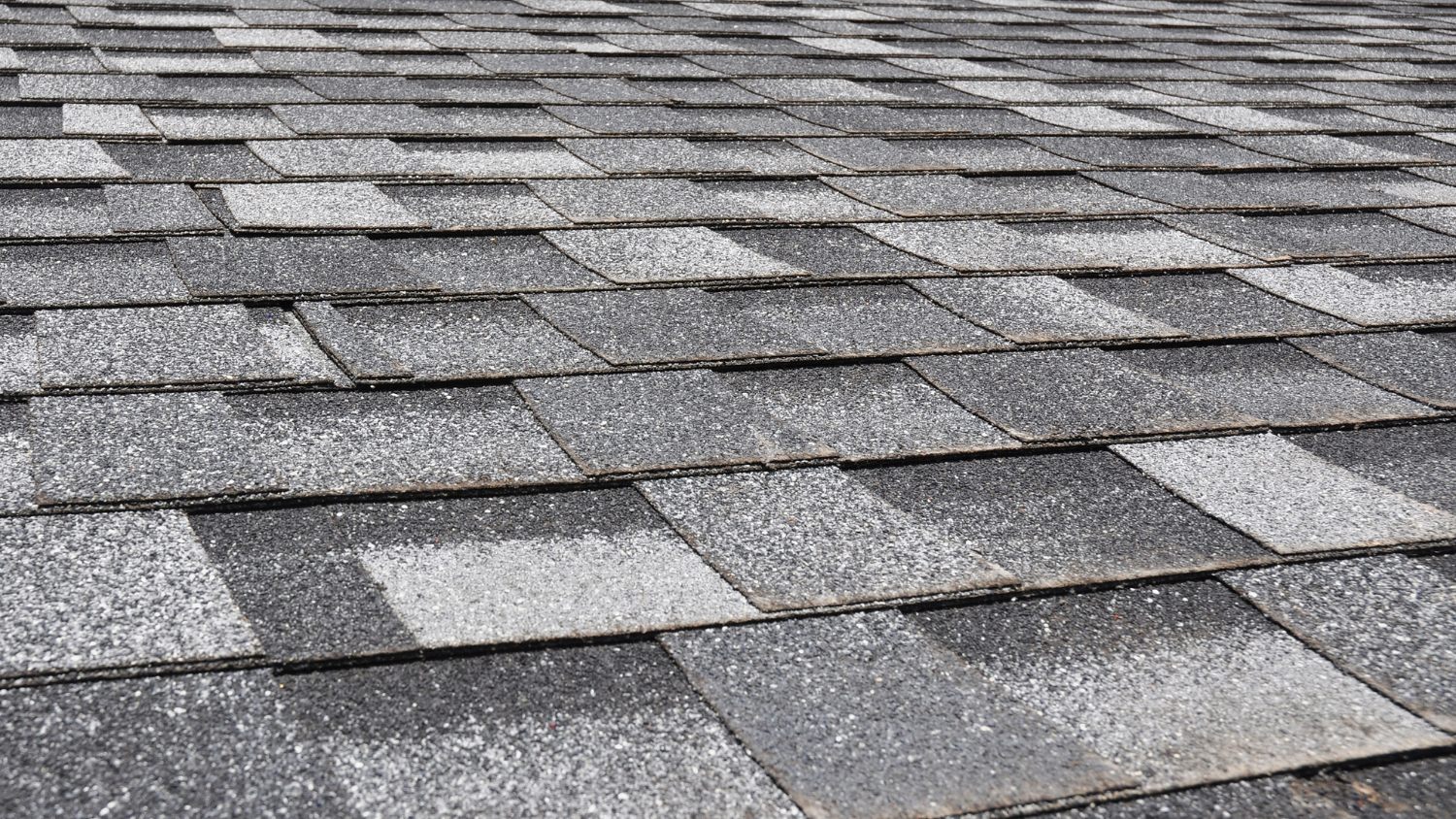
Once replacement is the right choice, the next step is choosing the right system for your home’s structure, slope, budget, and expected timeline. Below is a practical breakdown of what holds up best in this region, what each material offers, and where each one has limits.
Asphalt Shingles
Architectural asphalt shingles are one of the most common roof replacement options for Poughkeepsie homes. They’re cost-effective, widely available, and compatible with the steep-slope profiles common on Poughkeepsie’s older housing stock.
Types
3-Tab Shingles
The older, thinner format. Flat in profile, lighter in weight, and more vulnerable to wind uplift and impact. Less ideal for a region with heavy snow loads and high-wind storm events.
Architectural (Dimensional) Shingles
A better-performing option for this climate. Their layered profile adds thickness, durability, and resistance to the conditions the Hudson Valley delivers regularly. This is the format most contractors default to for full roof replacements today.
Key Features
- Class 4 impact-resistant options provide added protection against hail and wind debris
- Some homeowners’ insurance carriers may offer premium discounts for Class 4-rated systems
- Compatible with ice and water shield installation, which is required in New York State eave zones
Best Fit
Most residential homes in Poughkeepsie and Dutchess County, budget-conscious replacements, and homeowners with a 10 to 20-year ownership horizon.
Metal Roofing
Metal roofing can be a strong option for homeowners who want a longer-lasting system and lower maintenance over time. Metal can also shed snow more easily than asphalt, which may help reduce ice buildup at the eaves.
Types
Standing Seam
The premium format for residential metal roofing. Raised, interlocking seams run vertically along the roof plane, keeping fasteners concealed and providing a tight, water-resistant surface. This is the most common metal roof replacement choice for steep-slope residential applications.
Exposed Fastener Metal Panel
A more cost-accessible metal option, typically used on lower-slope sections, garages, or agricultural structures. Fasteners are visible, which introduces more maintenance points over time compared to standing seam.
Key Features
- Sheds accumulated snow more readily than asphalt, directly reducing ice dam risk at the eaves
- Highly resistant to wind uplift, making it a strong option in storm-prone areas
- Can often be installed over existing roofing in some cases, reducing tear-off labor and disposal costs. A proper deck inspection should always come first.
Best Fit
Long-term homeowners, properties with low-slope roof sections, and anyone prioritizing minimal maintenance over the next several decades.
Flat and Low-Slope Systems
Many Poughkeepsie homes include flat or low-slope sections, whether that’s a garage, a porch cover, or an addition off the main structure, and these areas need different materials than steep-slope roofs. Shingles are not the right fit for areas where water drains slowly.
Types
TPO (Thermoplastic Polyolefin)
A single-ply membrane with heat-welded seams that create a continuous, watertight surface. TPO reflects UV radiation well, which helps with heat management on flat sections, and holds up reliably through the moisture and temperature swings of the Hudson Valley.
EPDM (Ethylene Propylene Diene Monomer)
A rubber-based membrane with a long and well-documented track record through freeze-thaw cycles. EPDM is flexible, durable, and a practical option for low-slope residential applications where a proven system matters more than aesthetics.
Key Features
- Both systems handle moisture reliably when installed with the correct underlayment and drainage design
- Seam integrity is the most critical installation factor for both formats
- EPDM is available in adhered, mechanically fastened, and ballasted configurations
Best Fit
Additions, garages, porch covers, and commercial-adjacent residential structures with flat or near-flat roof geometry.
MORE ON THIS TOPIC: 6 Best Roofing Options for Historic Homes in Poughkeepsie, NY
How to Choose the Right Roof Replacement for Your Home
Choosing a roof is not only about price. The better question is: which system fits your home, your local weather exposure, and your timeline?
Step 1: Get a Professional Inspection Before Committing to Anything
A thorough inspection establishes the actual baseline. A contractor should evaluate shingle condition, granule retention, flashing integrity, deck condition, ventilation, and attic moisture. Without that, you’re making a major financial decision with incomplete information.
Step 2: Know Your Home’s Roof Profile
Pitch, total square footage, number of valleys, and transition points between slopes all affect material viability and installed cost. A standing seam metal system installs differently on a steep 8/12 pitch than it does on a low-slope 3/12 section.
Step 3: Build a Realistic Budget That Covers the Full Scope
The material cost is only part of the number. A proper roof replacement estimate should include tear-off, underlayment, flashing, ice barrier, ventilation corrections, decking repairs if needed, cleanup, disposal, and permit handling.
Step 4: Think in Timelines, Not Just Price
Planning to sell in 5 to 7 years? A quality architectural asphalt replacement delivers reliable protection at a manageable cost.
Staying for 20+ years? The premium for metal roofing frequently justifies itself through avoided maintenance and replacement cycles.
Step 5: Get a Written, Itemized Estimate
Reputable contractors provide written scopes of work with line-item pricing. Confirm that the estimate covers permit pulling, underlayment, full tear-off, flashing replacement, and cleanup. In many cases, roof replacements require permits in Dutchess County and the City of Poughkeepsie. Your contractor should handle this as part of the project.
Don’t Skip These Before You Sign Anything
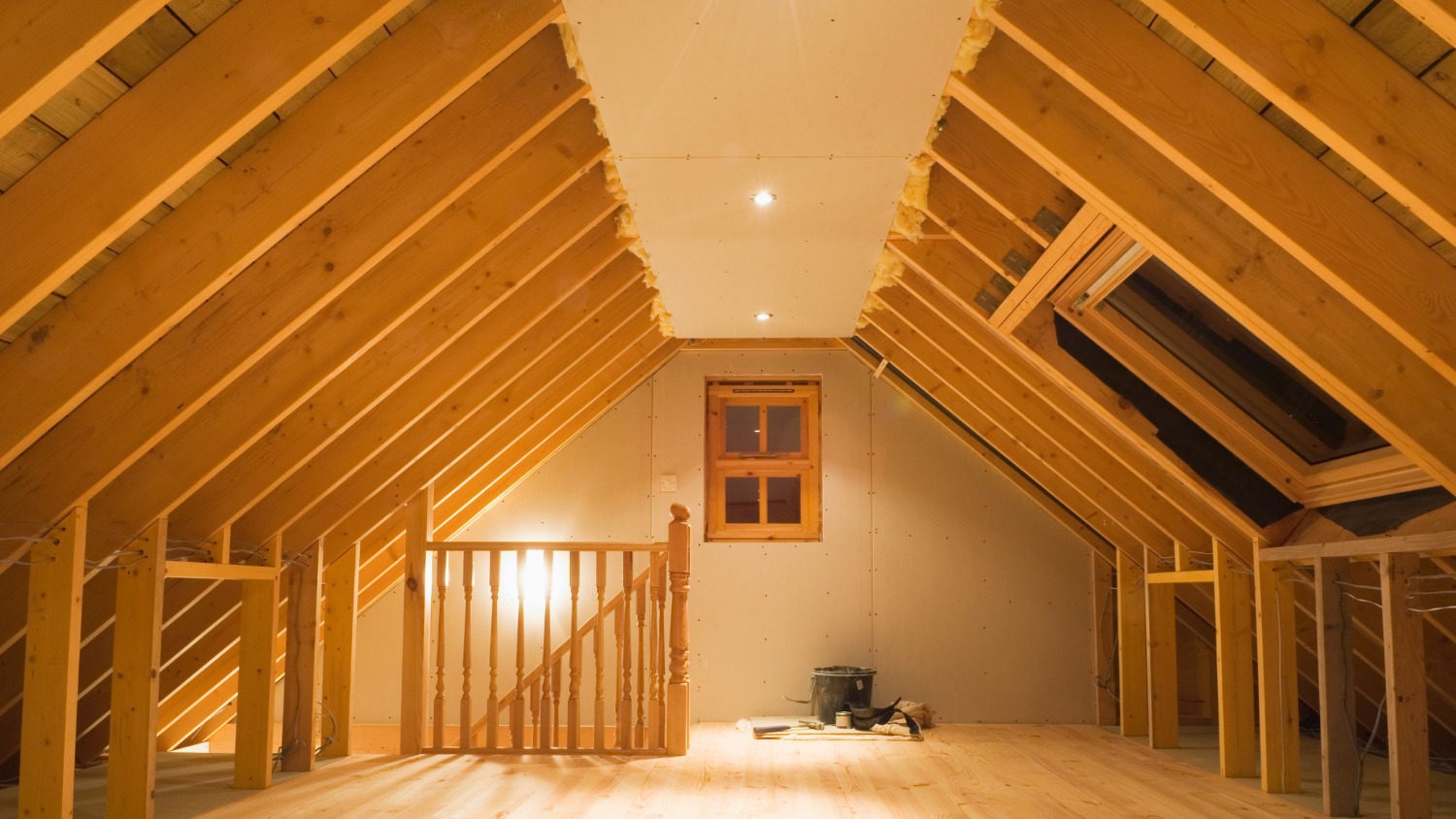
Several factors can compromise a new roof before it ever has a chance to perform, especially if the hidden parts of the system are ignored.
Attic Ventilation
Inadequate ventilation causes heat and moisture to build up beneath the roofing system, accelerating shingle degradation and creating conditions for rot in the decking. A roof replacement that doesn't address ventilation deficiencies is a partial fix.
Ice and Water Shield
New York State residential building code requires ice barrier protection in areas where ice forming along the eaves has been known to occur. This membrane provides a secondary moisture barrier at the areas most vulnerable to ice dam infiltration, which is a real and recurring concern for Poughkeepsie homes through the winter months.
Flashing at Penetrations and Transitions
Many leaks start around chimneys, skylights, pipe boots, valleys, and roof-to-wall transitions. Any replacement that leaves old or compromised flashing in place may leave common failure points unaddressed.
Frequently Asked Questions (FAQs)
How much does a roof replacement cost in Poughkeepsie, NY?
Roof replacement cost depends on roof size, slope, material, decking condition, tear-off needs, and flashing details. Always get a written, itemized estimate that covers underlayment, flashing, tear-off, and permit fees before agreeing to any work.
Does homeowners' insurance cover roof replacement in New York?
It depends on the cause of damage. Insurance may cover sudden damage from covered events such as wind, hail, or falling debris. Age-related deterioration and wear are not covered.
What time of year is best for roof replacement in the Hudson Valley?
Late spring through early fall is the most favorable window for asphalt shingle installation. Shingles require temperatures above 40 to 45 degrees Fahrenheit for the adhesive strip to activate and seal correctly.
Do I need a permit for a roof replacement in Poughkeepsie?
Yes, in most cases. Replacing or installing a roof is among the projects that typically require a permit in New York. Requirements vary by municipality, so confirm specifics with the City or Town of Poughkeepsie building department directly.
What is the difference between a roof overlay and a full tear-off replacement?
An overlay installs new shingles directly over the existing layer without removing old materials. A full tear-off removes everything down to the deck before new underlayment and shingles are installed.
Ready to Make the Right Call on Your Roof? Start Here
If you're not sure where your roof stands, the most useful first step is an honest professional assessment. Lyndsey Roofing, LLC has served homeowners across Poughkeepsie, NY, and Dutchess County with straightforward guidance and quality work built for this region's demands.
Get a clear assessment, review your roof replacement options, and choose the solution that fits your home.