What’s In This Guide
- How Long Does a Roof Actually Last Before Replacement Is Needed?
- Roof Repair vs Replacement? How Do You Know When the Line Has Been Crossed?
- How Do You Inspect Your Roof to Know Which Decision Is Right?
- What Does the Roof Replacement Near Me Process Look Like in Poughkeepsie?
- How Do You Maintain a New Roof?
- Frequently Asked Questions
- Replace Your Roof Before Small Problems Become Costly Repairs
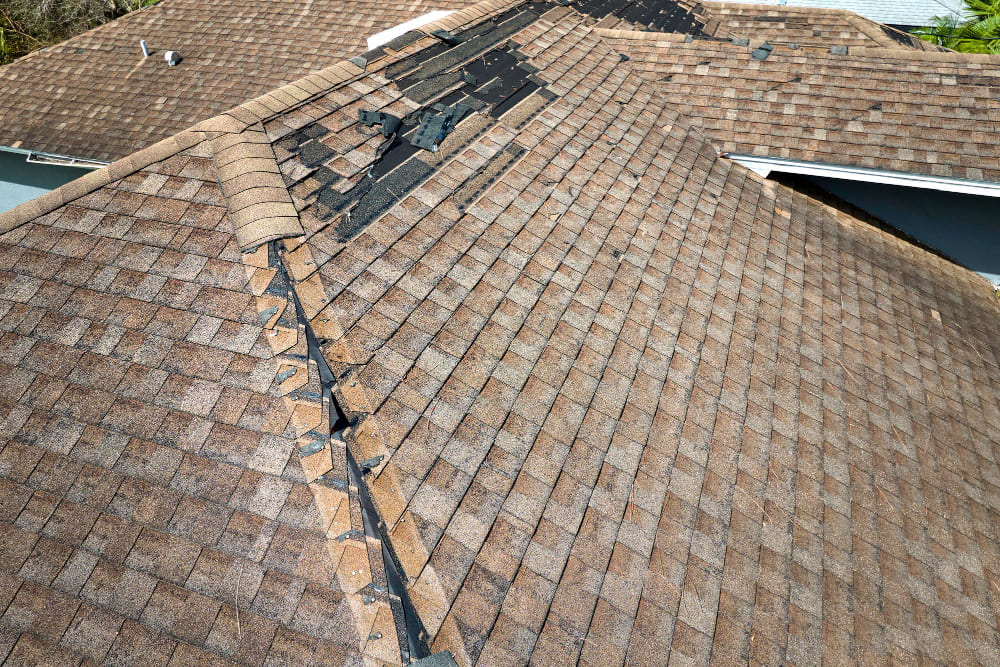
A roof requires replacement when it is 20 or more years old, has experienced repeated leaks across multiple seasons, or shows structural failure at the decking level. Continued repairs under those conditions delay the cost without restoring protection. These three triggers indicate the roofing system has exceeded its serviceable life.
Most repair calls on roofs past the 20-year mark are delaying an inevitable decision. Hudson Valley homeowners dealing with recurring leaks, aging shingles, or deteriorating systems near their rated lifespan are approaching that line.
Here’s exactly where the threshold sits, what to look for, and how to act on the findings.
Quick Facts
Deciding between roof repair and roof replacement comes down to a few clear signals:
- Roofs 20 years or older are approaching the end of their serviceable life
- When repair costs reach 50% of replacement value, replacement is the smarter investment
- Recurring leaks, decking damage, and widespread shingle deterioration are replacement indicators, not repair ones
- A licensed professional inspection is the only way to know for certain
How Long Does a Roof Actually Last Before Replacement Is Needed?
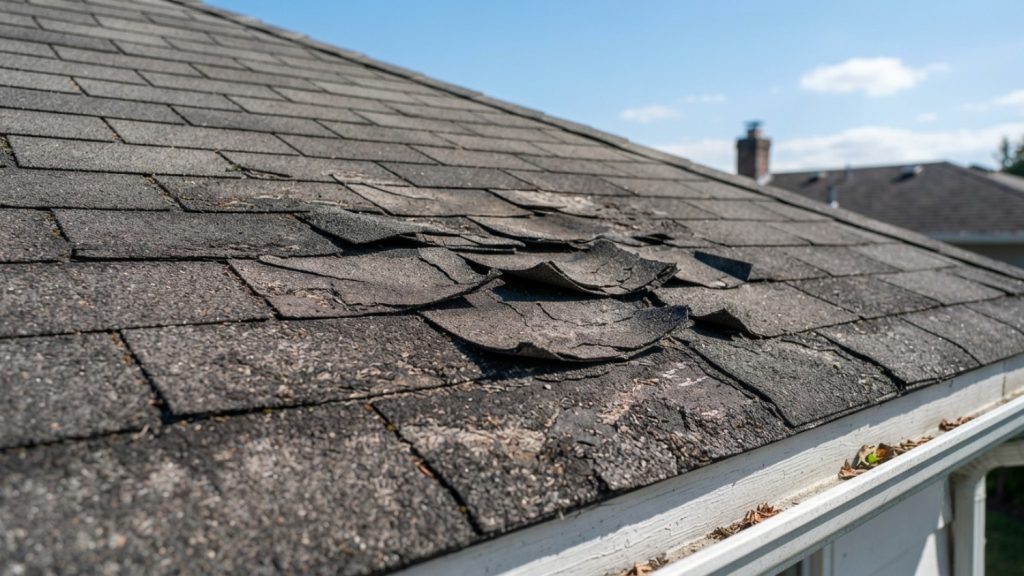
Roof lifespan varies by material type, installation quality, and climate exposure. In the Hudson Valley, frequent freeze-thaw cycles and seasonal storm events shorten the practical life of most roofing materials compared to manufacturer estimates alone.
|
Roofing Material |
Roof Lifespan |
Primary Failure Indicators |
|
3-Tab Asphalt Shingles |
15 to 20 years |
Widespread granule loss, curling at edges |
|
Architectural Asphalt Shingles |
25 to 30 years |
Cracking, blistering, missing and aging shingles |
|
40 to 70 years |
Fastener corrosion, sealant failure at seams |
|
|
Cedar Shake |
20 to 30 years |
Splitting, moss infiltration, wood rot |
|
EPDM / TPO (Low-Slope) |
15 to 25 years |
Membrane shrinkage, seam separation, ponding water |
Roof Repair vs Replacement? How Do You Know When the Line Has Been Crossed?
Isolated damage on a roof under 15 years old supports repair. Widespread deterioration, recurring leaks, or structural compromise at any age points toward replacement.
|
Warning Sign |
Lean Toward Repair |
Lean Toward Replacement |
|
Roof age |
Under 15 years |
20 years or older |
|
Active leaks |
Single, isolated source |
Multiple locations or recurring |
|
Decking condition |
Solid, no soft spots |
Rot, sagging, or soft sections present |
|
Shingle condition |
Localized damage |
Curling, cupping, or granule loss across full slope |
|
Functioning properly |
Persistent moisture or active mold |
|
|
Repair cost vs. replacement value |
Under 25% |
Approaching or exceeding 50% |
|
Insurance claims |
Single recent storm claim |
Multiple claims across several seasons |
How Do You Inspect Your Roof to Know Which Decision Is Right?
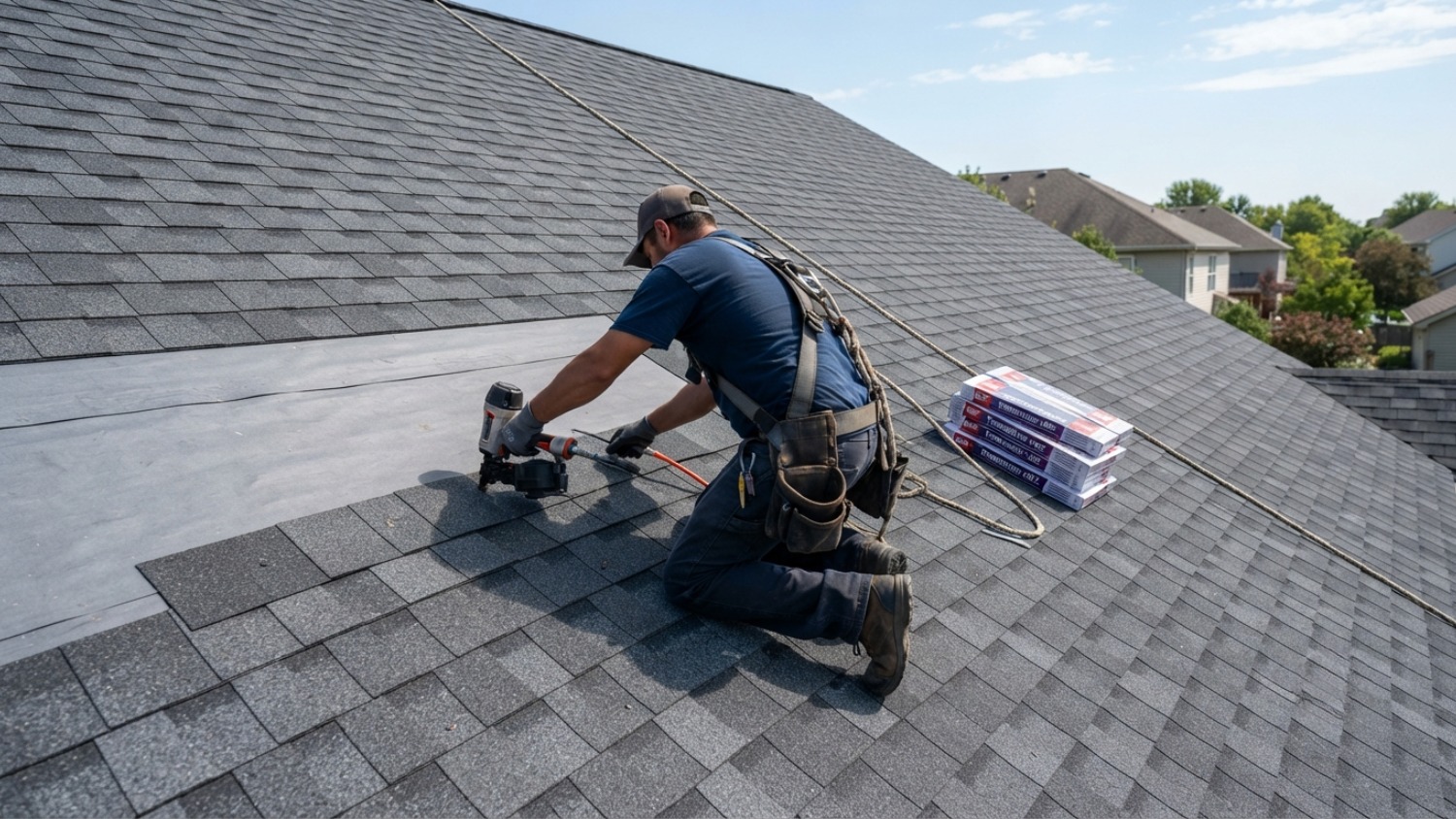
A complete roof inspection covers both the exterior surface and the interior structure. Surface walkovers alone miss decking damage, moisture infiltration, and ventilation failures that directly determine whether repair or replacement is the right call.
Start With Your Installation Records
Locate the original permit, contractor invoice, or any documentation showing when the roof was installed. If no records exist, treat the roof as unknown age and schedule a professional inspection immediately.
Check the Attic Before You Check the Roof
Walk the attic and look for daylight through decking boards, moisture stains along rafters, soft or sagging sections, and visible mold. Active water infiltration at the structural level is a replacement indicator, not a repair one.
Examine Shingles From the Ground
Use binoculars to scan each slope. Look for curling edges, cupping, visible cracking, and granule loss down to the base mat. Widespread deterioration across multiple slopes rules out localized repair.
Inspect Your Gutters for Granule Buildup
Some granule buildup is expected as a roof ages, but heavy accumulation on a roof under 15 years old can point to faster-than-normal wear. Storm exposure is one possible cause, especially since the U.S. sees roughly 100,000 thunderstorms each year and about 10% become severe enough to raise the risk of impact damage. Improper installation or a manufacturing issue can also cause early granule loss.
Check Every Flashing Transition Point
Chimney bases, skylight perimeters, and pipe penetrations are the most common leak entry points. Look for separation, rust staining, and lifted edges. Failed flashing on a roof already showing broader wear strengthens the replacement case.
Look for Moss, Algae, and Biological Growth
Moss and algae indicate persistent trapped moisture at the surface. Growth spreading across multiple slopes suggests a ventilation deficiency driving moisture deeper into the roofing system over time.
Schedule a Licensed Professional Inspection
A hands-on inspection is the only way to assess decking integrity, evaluate ventilation performance, and identify subsurface damage no visual walkover can detect. Self-inspection narrows the picture. A professional assessment closes it.
➤ ALSO READ: How Often Should I Replace My Roof? Insights From the Best Roofing Companies Near Me
What Does the Roof Replacement Near Me Process Look Like in Poughkeepsie?
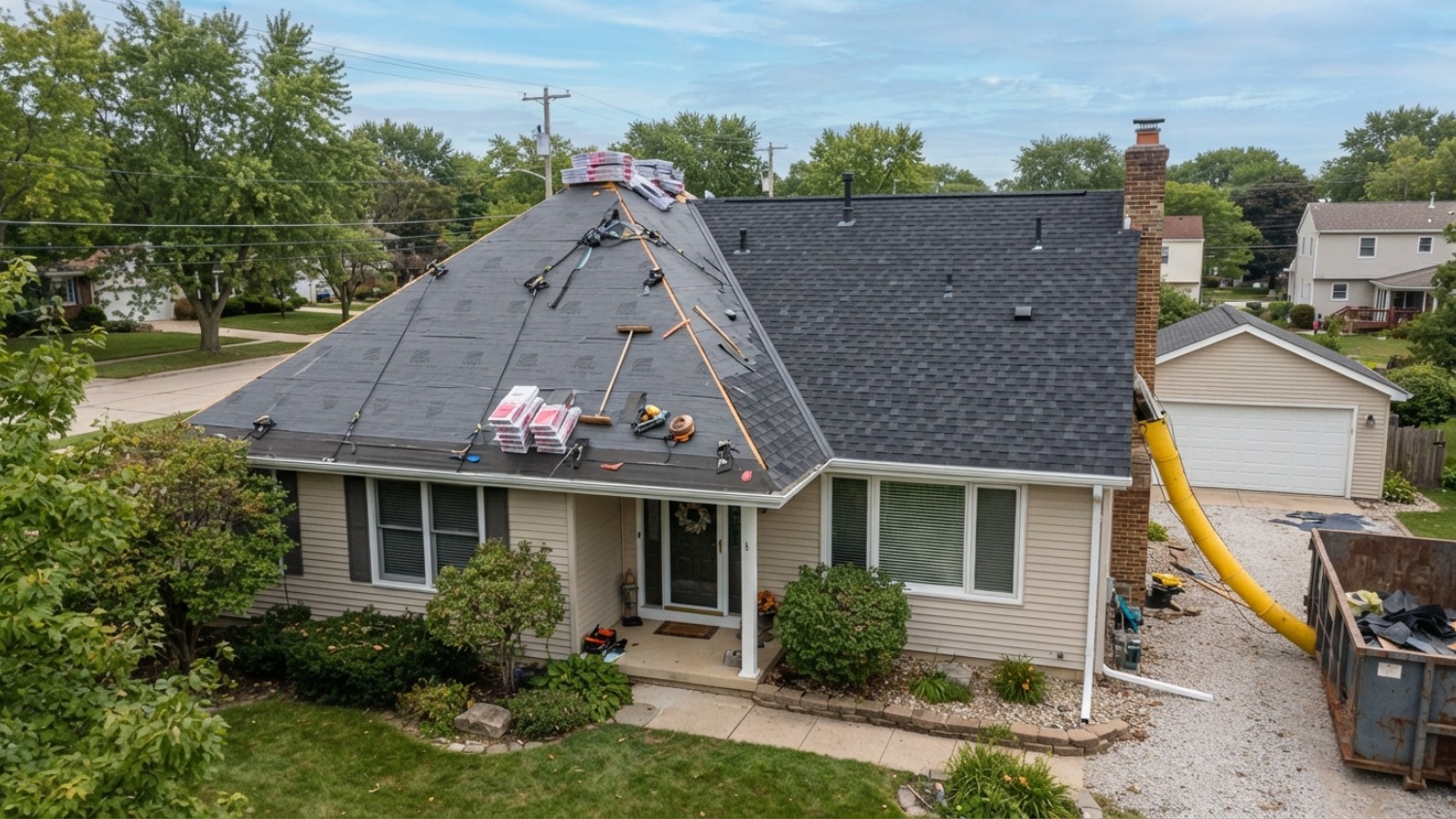
Replacement follows a defined sequence. Knowing each stage helps Poughkeepsie homeowners plan scheduling, financing, and timelines without surprises.
Inspection and Estimate
A licensed contractor evaluates the full roofing system, including decking, ventilation, and flashing, before quoting materials and labor. Poughkeepsie homes, particularly older properties in neighborhoods like Fairview and Arlington, often carry deferred maintenance or layered shingle installations that a surface estimate alone will not catch.
Permit Filing
The City of Poughkeepsie and surrounding Dutchess County municipalities require permits for full roof replacements. A licensed contractor handles the filing directly. Skipping this step creates liability issues at resale and can void manufacturer warranty coverage.
Scheduling
Late summer through early fall is the most practical installation window in Poughkeepsie. Consistent ambient temperatures support proper shingle adhesion and reduce the risk of weather-related delays common during the region’s unpredictable spring and early winter seasons.
Tear-Off and Decking Evaluation
All existing roofing material is removed down to the decking. Given Poughkeepsie’s freeze-thaw exposure, decking boards frequently show moisture damage that only becomes visible after tear-off. Damaged sections are replaced before any new material goes down.
Installation and Final Walkthrough
The new system is installed per manufacturer specifications. A post-installation walkthrough confirms complete clean-up, proper flashing at all transition points, and delivery of warranty documentation.
How Do You Maintain a New Roof?
Schedule a Professional Inspection Every One to Two Years
Routine inspections catch minor issues before they develop into warranty claims or structural problems. A licensed contractor can identify early flashing separation, fastener movement, and granule wear that a homeowner walkover will not detect.
Clear Gutters and Downspouts Every Fall and Spring
Clogged gutters force water to back up along the roof edge, which accelerates shingle deterioration and creates conditions for ice dam formation during Hudson Valley winters. Keeping drainage clear is one of the lowest-cost maintenance steps with the highest impact on roof longevity.
Trim Overhanging Tree Branches Before They Cause Contact Damage
Branches resting on or scraping against shingles wear down the granule surface over time and create entry points for moisture. Keeping trees trimmed back also reduces leaf accumulation on the roof, which traps moisture and promotes biological growth.
Remove Moss and Algae Before Growth Takes Hold
Biological growth left untreated works moisture beneath the shingle surface and into the decking over time. Treatment with a manufacturer-approved zinc or copper-based solution stops active growth without voiding warranty coverage.
Check Flashing at Every Transition Point After Major Storms
Chimney bases, skylight perimeters, and roof valleys are the first areas to show separation after high-wind events. Catching flashing movement early prevents water infiltration that would otherwise go undetected until interior damage appears.
Review Your Warranty Terms and Keep All Documentation
Most manufacturer warranties require documented maintenance and professional installation records to remain valid through a claim. Keeping invoices, inspection reports, and warranty certificates organized protects the coverage you paid for.
Frequently Asked Questions
Does replacing a roof increase home value?
A new roof ranks among the highest-return exterior improvements for residential properties. According to Remodeling Magazine's Cost vs. Value Report, asphalt shingle replacements recoup a significant portion of their cost at resale. Buyers and inspectors scrutinize roof condition closely, and a documented replacement removes a known liability that can stall negotiations or kill a deal during inspection.
How long does a full roof replacement take to complete?
Most residential replacements finish within one to three days, depending on roof size, pitch, and decking repairs uncovered during tear-off. Complex rooflines with multiple valleys, dormers, or steep pitches take longer. Your contractor should provide a realistic schedule before work begins.
Do I need to be home during a roof replacement?
You do not need to be present for the full installation, but being available on the first day is advisable. The contractor may need attic access or need to discuss unexpected decking conditions found during tear-off. Staying reachable by phone throughout the project prevents unnecessary delays.
How should I prepare my home before roof replacement begins?
Clear the driveway and the perimeter around the home to give the crew space to work and stage materials. Move outdoor furniture and fragile items away from exterior walls, as tear-off vibration travels through the structure. Inside, secure fragile wall hangings and attic-stored items before work begins.
Should I replace my roof before putting my home on the market?
A roof in poor condition is one of the most common reasons home sales are renegotiated or fall through after inspection. Buyers typically request a price reduction or require replacement as a condition of closing. A contractor's inspection report gives you accurate documentation to make that decision before listing.
Replace Your Roof Before Small Problems Become Costly Repairs
Waiting too long to replace an aging roof can lead to recurring leaks, structural damage, and more expensive repairs down the road. If your roof is showing signs of wear or nearing the end of its lifespan, replacing it now can provide long-term protection and peace of mind.
At Lyndsey Roofing, LLC, we help homeowners throughout Poughkeepsie, NY make confident roofing decisions with professional inspections, honest recommendations, and high-quality roof replacement near you. Our team is committed to delivering durable solutions that protect your home for years to come.
Contact Lyndsey Roofing, LLC today to schedule your roof inspection in Poughkeepsie, NY.