What’s In This Guide
- What Are the First Safety Steps to Take After Roof Storm Damage?
- How Do I Document Storm Damage to My Roof for Insurance?
- When Should I Use Temporary Roof Protection or Wait for a Professional?
- What Storm Damage Roof Issues Are Most Common in the Hudson Valley?
- How Do I Choose a Trustworthy Emergency Roof Contractor Near Me?
- How Does Insurance Work With Storm Damage Roof Claims?
- What Should Homeowners Expect During the Emergency Roof Repair Process?
- Frequently Asked Questions About Emergency Roof Repair
- Schedule Storm Damage Roof Repair With a Trusted Hudson Valley Contractor
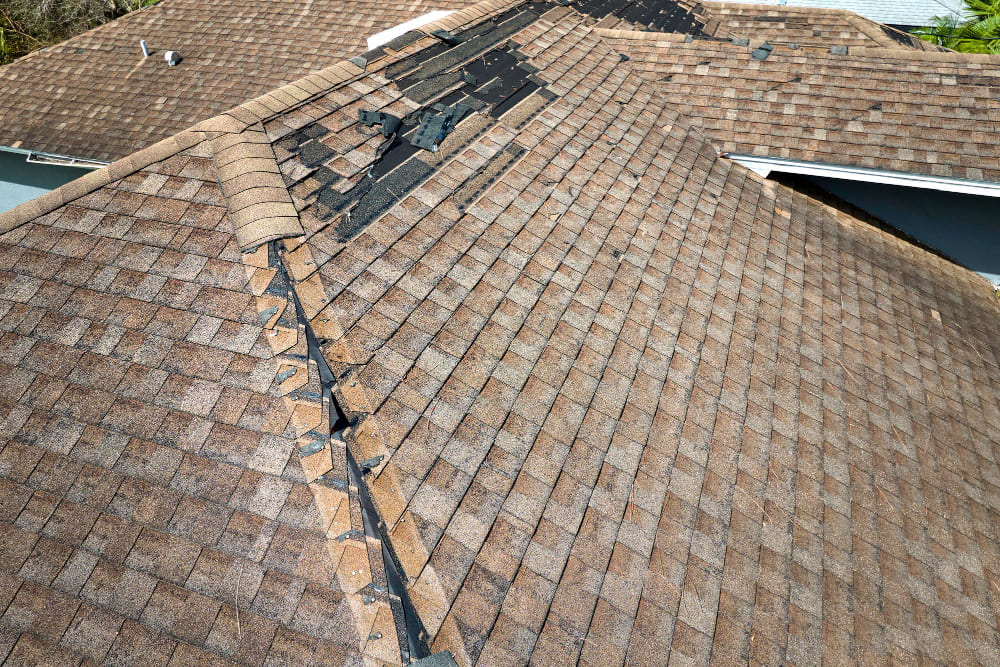
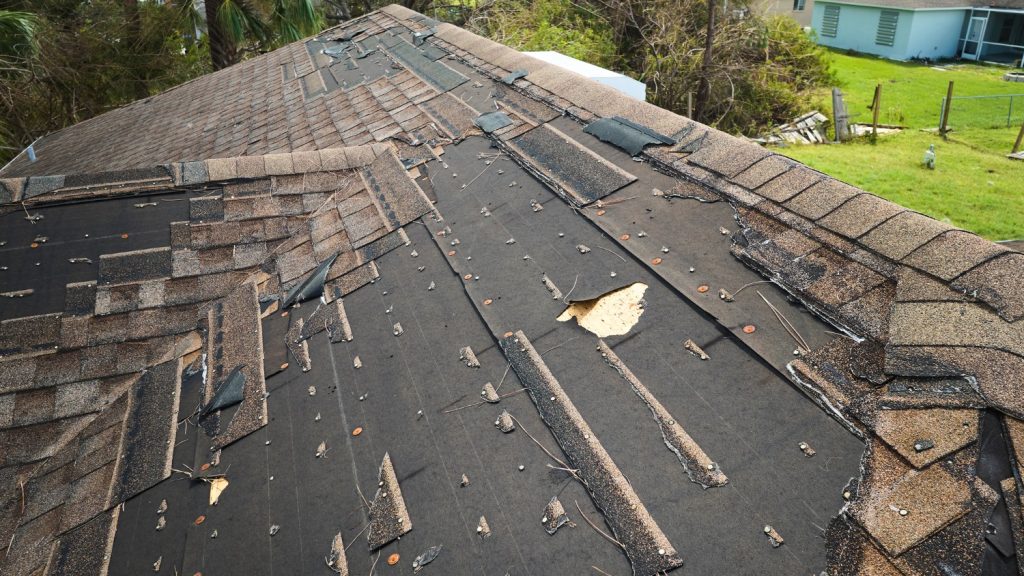
A nor’easter pushes through the Hudson Valley, hail batters Beacon, or a summer microburst peels shingles off a roof in Poughkeepsie. The next move matters. Water intrusion accelerates within hours, insurance documentation gets harder over time, and storm chasers from out of state often arrive within 24 to 72 hours of a major weather event.
QUICK ANSWER
After roof storm damage, stay off the roof, avoid downed lines or standing water, document visible damage from safe ground, and contact a local emergency roof contractor for inspection or temporary roof protection. If water is entering the home, act quickly to limit interior damage, save receipts, and notify your insurance carrier according to your policy requirements.
Quick Facts
- Act quickly, ideally within 24 hours, to limit water damage and start the insurance documentation process.
- Document everything with photos, receipts, and a contractor report.
- Use professional tarping for temporary protection until permanent repair.
- Avoid storm chasers who appear within days of major weather events.
- Hire an emergency roof contractor near you with verifiable credentials.
What Are the First Safety Steps to Take After Roof Storm Damage?

Stay inside until the storm fully passes, avoid the roof entirely, and keep away from standing water or possible electrical hazards before any inspection begins. Many preventable storm cleanup injuries happen shortly after the storm, when adrenaline can drive risky decisions.
What Interior Signs Mean My Roof Has Storm Damage?
Active leaks, bulging drywall, and spreading ceiling stains all signal roof envelope compromise. Check every level of the home, including the attic, after a major weather event.
Key interior warning signs:
- Active dripping or pooling water in ceilings or attic spaces
- Yellow or brown staining spreading across ceilings or upper walls
- Bulging drywall, which indicates heavy water saturation above
- New whistling sounds or airflow suggesting a compromised envelope
- Wet or compressed attic insulation visible from the access hatch
What Outdoor Hazards Should I Avoid After a Storm Hits?
Stay on the ground. Downed lines, weakened tree limbs, and partially detached roofing materials can cause serious injuries after the storm passes.
Hazards to avoid completely:
- Downed power lines anywhere on or near the property (call the utility before any other call)
- Tree limbs leaning on the roof, gutters, or chimney
- Loose or hanging roof materials that may fall during inspection
- Standing water near the foundation, basement, or any electrical panel
- The roof surface itself, regardless of how minor the damage appears
How Do I Document Storm Damage to My Roof for Insurance?
Photograph everything from safe ground, save every receipt for mitigation supplies, and request a written inspection report from a credentialed local contractor. Strong documentation helps support the claim and may reduce disputes with the carrier later.
Follow these six steps in order:
-
- Photograph the exterior from safe ground. Capture wide shots of all four sides of the home and zoomed images of damage from the yard or upper-floor windows.
- Photograph every interior issue. Document each ceiling stain, wet wall, drip location, and attic water sign with timestamps when possible.
- Record the storm event. Save a screenshot of the National Weather Service local storm event reports for the date and zip code.
- Save receipts for emergency supplies. Tarps, buckets, and fans purchased to prevent further damage are typically reimbursable under most homeowners’ policies.
- File the claim quickly. Most insurers expect notification within days, even before a full damage assessment is complete.
- Request a professional inspection report. A credentialed roofing contractor can provide documentation that helps the adjuster evaluate the damage and scope of work.
When Should I Use Temporary Roof Protection or Wait for a Professional?
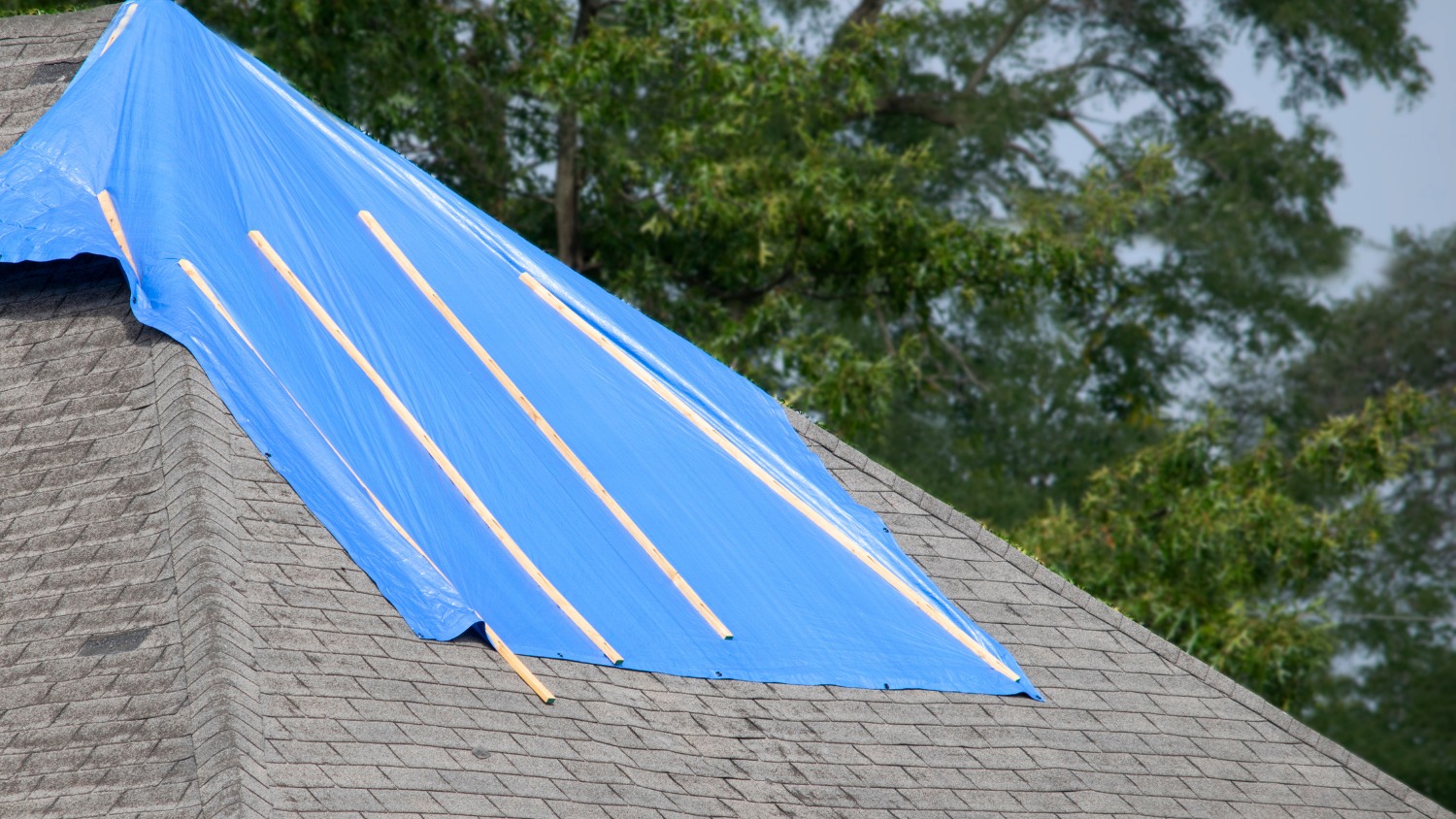
Use professional temporary roof protection when active leaks threaten the interior or when storm damage has visibly opened the roof envelope. Wait for a contractor when conditions are unsafe, the damage appears cosmetic, or your insurer has asked to review the damage before mitigation beyond basic protection.
What Is Emergency Roof Tarping?
Emergency roof tarping is a heavy-duty waterproof cover anchored over the damaged section to stop water intrusion until permanent repair is possible.
Professional tarping is appropriate when:
- Active leaks occur during a multi-day weather system
- Visible roof openings appear from tree limbs, debris, or major shingle field loss
- Underlayment or decking is exposed after significant shingle loss
Properly anchored professional tarps can provide temporary protection until permanent repair is possible. Improvised tarps may fail quickly and can affect manufacturer warranty coverage.
When Should I Wait for a Licensed Emergency Roof Repair Contractor?
Waiting is the right call when conditions favor a controlled, fully documented response rather than a rushed mitigation attempt.
Wait for a professional when:
- Damage is cosmetic, such as a few lifted shingles with no active leak inside
- The storm has not fully passed, or another front is approaching the region
- Roof access is unsafe due to slope, height, or weather conditions
- The insurance adjuster has not yet been contacted, and the carrier requests inspection before mitigation beyond basic tarping
MORE ON THIS TOPIC: How Roof Damage Repair Protects Your Home from Costly Issues
What Storm Damage Roof Issues Are Most Common in the Hudson Valley?
Wind uplift, tree impact, ice dam leaks, and flashing failure cause most storm-related roof claims across Dutchess, Orange, Putnam, and Eastern Ulster Counties. Local weather patterns and dense tree cover shape the damage profile differently than other parts of New York.
The region sees nor'easters off the Atlantic, summer thunderstorms with straight-line winds across Poughkeepsie, Beacon, and Newburgh, occasional tropical system remnants moving north through Kingston and Hyde Park, and recurring winter freeze-thaw cycles.
|
Storm Damage Type |
Common Hudson Valley Cause |
Urgency Level |
|
Wind uplift on shingles |
Nor'easter or summer microburst |
High if active leak |
|
Tree impact damage |
Heavy oak, maple, and pine cover |
Immediate |
|
Ice dam leaks |
Winter freeze-thaw cycles |
High in season |
|
Hail bruising |
Summer convective storms |
Moderate, often delayed |
|
Flashing failure |
Wind-driven rain on chimneys, vents |
High if leak active |
Wind uplift commonly affects roofs more than 15 years old, where shingle adhesion has weakened. Tree impact often hits older neighborhoods with a mature canopy. Ice dam leaks concentrate at eaves where attic ventilation is inadequate.
How Do I Choose a Trustworthy Emergency Roof Contractor Near Me?
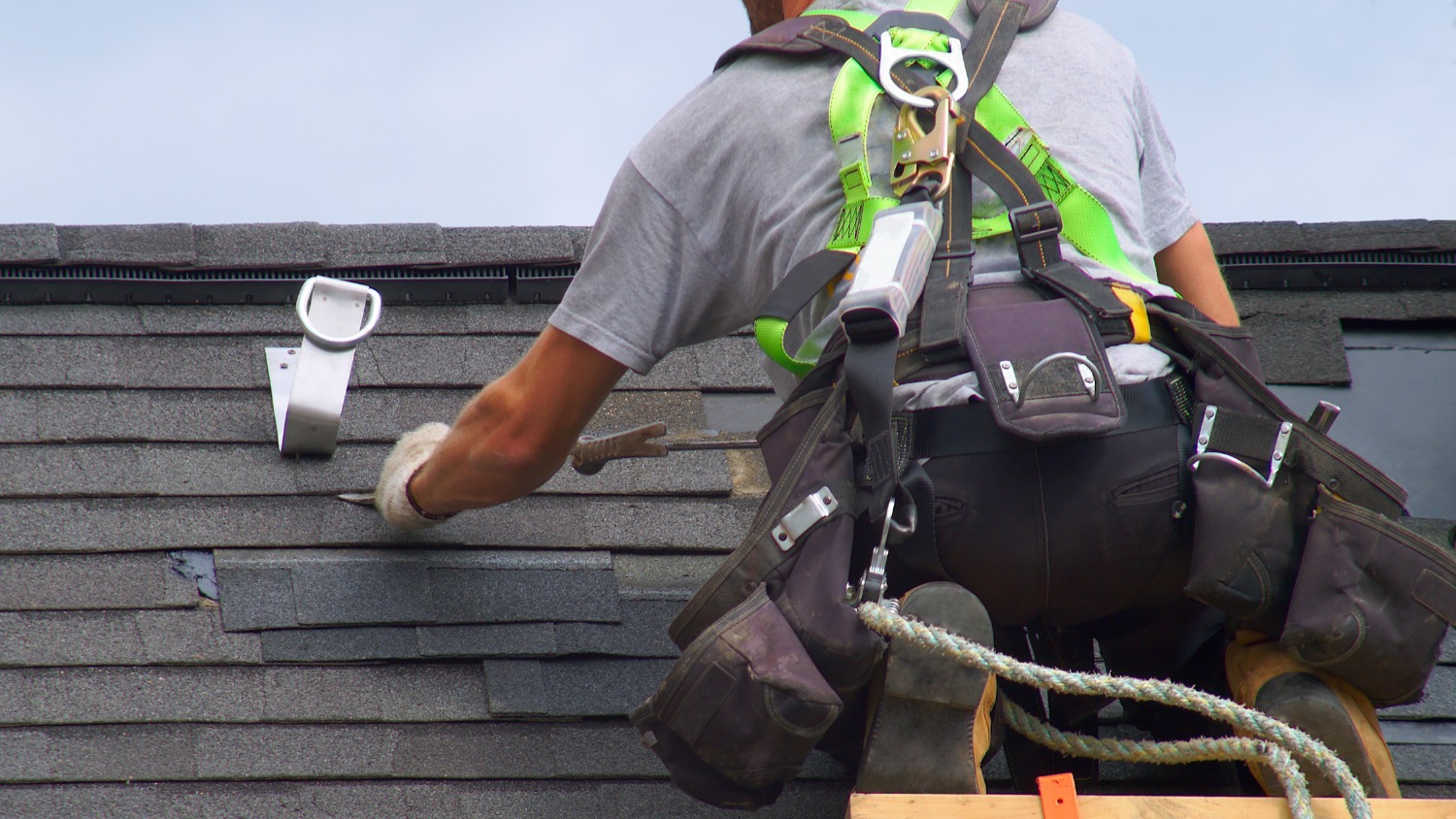
Choose contractors with verifiable local presence, manufacturer certifications, active state licensing, and transparent written contracts. Storm events draw both qualified restoration specialists and storm chasers into the Hudson Valley, and the difference often becomes clear during the first conversation.
What Are the Warning Signs of a Storm Chaser?
Storm chasers move quickly, pressure homeowners on the first visit, and avoid creating any paper trail.
Watch for these red flags:
- Out-of-state license plates and door-to-door soliciting within 24 to 72 hours of the storm.
- Pressure to sign an “inspection authorization” or contract on the first visit.
- Cash-only or full upfront payment demands before any work begins.
- No verifiable physical address, local references, or active manufacturer certifications.
- Vague warranty language or refusal to provide written terms.
- Promises such as “we can get insurance to cover everything” should be treated as a red flag. Homeowners should verify contractor claims against their policy, written estimate, and New York consumer protection guidance before signing.
What Credentials Should Local Roofing Companies Have?
Legitimate roofing companies maintain a documented credential trail tied to a fixed business address and verifiable certifications.
Look for these green flags:
- Verifiable physical address within the Hudson Valley service region.
- Active state licensing and NY home improvement contractor registration where required.
- Liability and workers’ compensation insurance kept current.
- Manufacturer certifications such as GAF Master Elite, Owens Corning Preferred Contractor, James Hardie® certified, and Elevate™ licensed.
- BBB A+ rating, Google verification, and NRCA membership.
- Written, itemized estimates with clear scope and warranty terms.
How Does Insurance Work With Storm Damage Roof Claims?
Standard homeowners policies typically cover sudden storm damage from wind, hail, and falling objects, subject to the policy deductible. Wear-and-tear, gradual leaks, and deferred maintenance are excluded.
Key points homeowners should understand:
- Filing window: Most carriers expect notification within days, with full claim documentation following shortly after.
- Adjuster process: The insurer dispatches an adjuster to inspect, and a written contractor inspection report helps document the damage and repair scope.
- Deductibles: Standard deductibles apply before payout; in New York, separate wind or named-storm deductibles may apply depending on the policy.
- Carrier coordination: Reputable Hudson Valley contractors work alongside the adjuster, not around the claims process.
What Should Homeowners Expect During the Emergency Roof Repair Process?
The emergency roof repair process moves through three phases: temporary roof protection, full damage assessment with adjuster coordination, and permanent repair or replacement.
How Long Does Emergency Roof Repair Take From First Call to Completion?
Initial site response and temporary roof protection typically occur within 24 to 72 hours when weather allows safe access. Permanent repair follows within 2 to 6 weeks once insurance approval, materials, and crew scheduling align. Full storm damage roof replacement can extend to 8 weeks or longer during peak Hudson Valley storm season.
Key timeline factors include:
- Insurance claim approval speed, ranging from days to several weeks.
- Material availability for asphalt shingles, decking, and specialty flashing after regional storms.
- Roof complexity, including pitch, square footage, and any structural compromise.
- Crew scheduling, since qualified local roofing companies near you see a surge in demand after major weather events.
What Types of Storm Damage Roof Repairs Do Contractors Handle?
Emergency repair scope ranges from isolated leak fixes to full roof system replacement. The right scope depends on damage location, roof age, and the insurance settlement reached with the adjuster.
Common repair categories include:
- Leak source repair, including flashing fixes, sealant replacement, and underlayment patches.
- Shingle field replacement for wind uplift or hail damage affecting a section, but not the full roof.
- Decking repair when impact damage or water intrusion compromises the wood beneath the shingles.
- Flashing and chimney repair, common after wind-driven rain events in the region.
- Full roof replacement when damage affects a large portion of the roof field.
Frequently Asked Questions About Emergency Roof Repair
Will filing a storm damage roof claim raise my homeowners insurance premium?
A single storm damage claim is generally less likely to raise premiums than a liability or repeat-loss claim, especially when the storm event is widespread and affects multiple homes in the region. Carriers weigh claim history and loss patterns, not just individual events, per Insurance Information Institute premium factor guidance.
What happens if I cannot afford the deductible after storm damage?
Most reputable Hudson Valley roofing companies near me offer financing options that spread the deductible cost over time. Be cautious of any contractor who offers to waive, reduce, or absorb the deductible. This can create insurance and contract issues, and homeowners should confirm what is allowed under their policy and New York law.
Can a roof contractor near me detect hidden storm damage that is not visible from the ground?
Yes. Trained contractors inspect attic decking, ridge vents, flashing seams, and granule loss in gutters during a professional assessment. Some damage, including hail bruising and partial uplift, only becomes visible from roof-level inspection.
How do I know if my roof needs full replacement instead of emergency roof repair?
Full replacement may be recommended when storm damage affects a large portion of the roof field, when the roof is already near the end of its service life, or when underlying decking is structurally compromised. A written contractor report and the insurance adjuster’s scope guide the final decision.
Is temporary roof protection covered by homeowners insurance?
Temporary roof protection may be covered when it is considered reasonable emergency mitigation under the homeowner’s policy. Save receipts, photos, contractor notes, and all claim documentation for the insurance file.
Schedule Storm Damage Roof Repair With a Trusted Hudson Valley Contractor
The right next step after roof storm damage is a free, documented post-storm inspection from a contractor whose credentials hold up to scrutiny.
Lyndsey Roofing, LLC is a locally owned roofing and exterior contractor founded in 2015, serving homeowners and commercial property owners with a full storm restoration scope and direct insurance coordination experience.