What’s In This Guide
- What Does Hail Actually Do to a Roof?
- How Can You Spot Hail Damage Without Climbing Onto the Roof?
- What Factors Determine Whether Storm Damage Roof Repair Is A Viable Option?
- How Do You Document Roof Hail Damage Before a Contractor or Adjuster Arrives?
- Why Does Hail Damage Sometimes Not Appear Until Months After A Storm?
- What Should Poughkeepsie-Area Homeowners Do Right After A Hailstorm?
- Frequently Asked Questions (FAQs)
- Ready To Find Out Whether Your Storm-Damaged Roof Can Be Repaired?
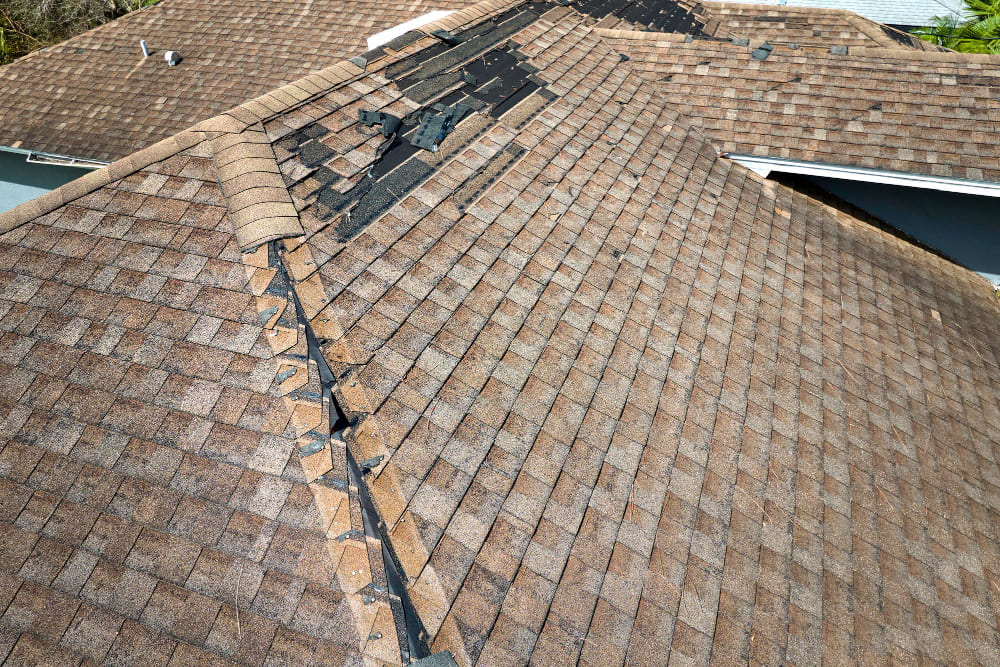
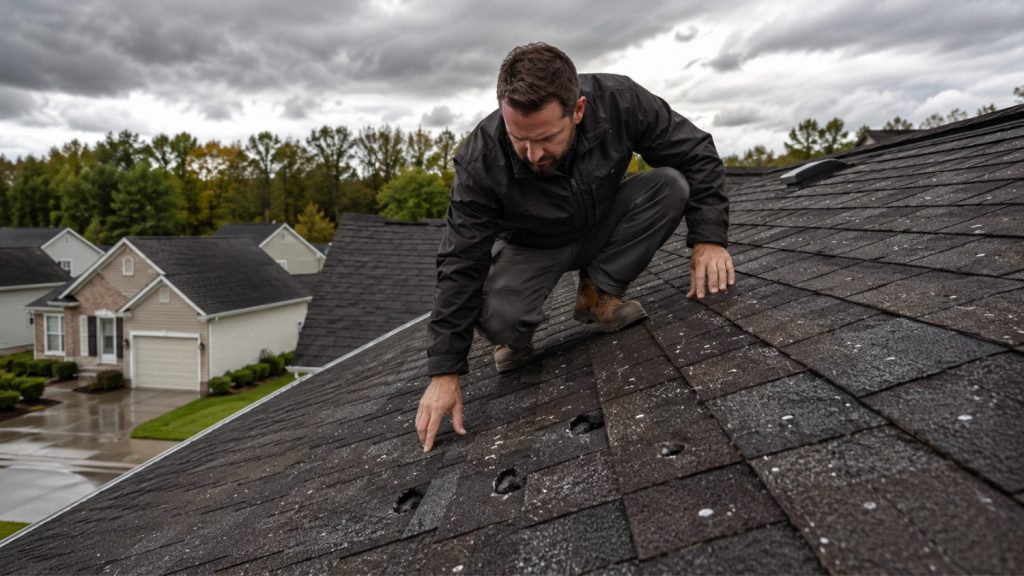
After a hailstorm, most Hudson Valley homeowners face the same gap: something hit the roof, granules are sitting in the gutters, and there's no clear answer on whether a few shingles need replacing or the entire system does. That uncertainty is where costly decisions get made prematurely, in either direction.
The choice between hail damage roof repair and full replacement turns on specific, measurable indicators.
Quick Facts
- 1-inch hail or larger causes functional shingle damage.
- Damage over 30% of the roof surface typically means full replacement.
- Roofs 15+ years old rarely qualify for partial repair.
- Granule loss triggers UV breakdown months after impact.
- Get a licensed inspection before filing any insurance claim.
What Does Hail Actually Do to a Roof?
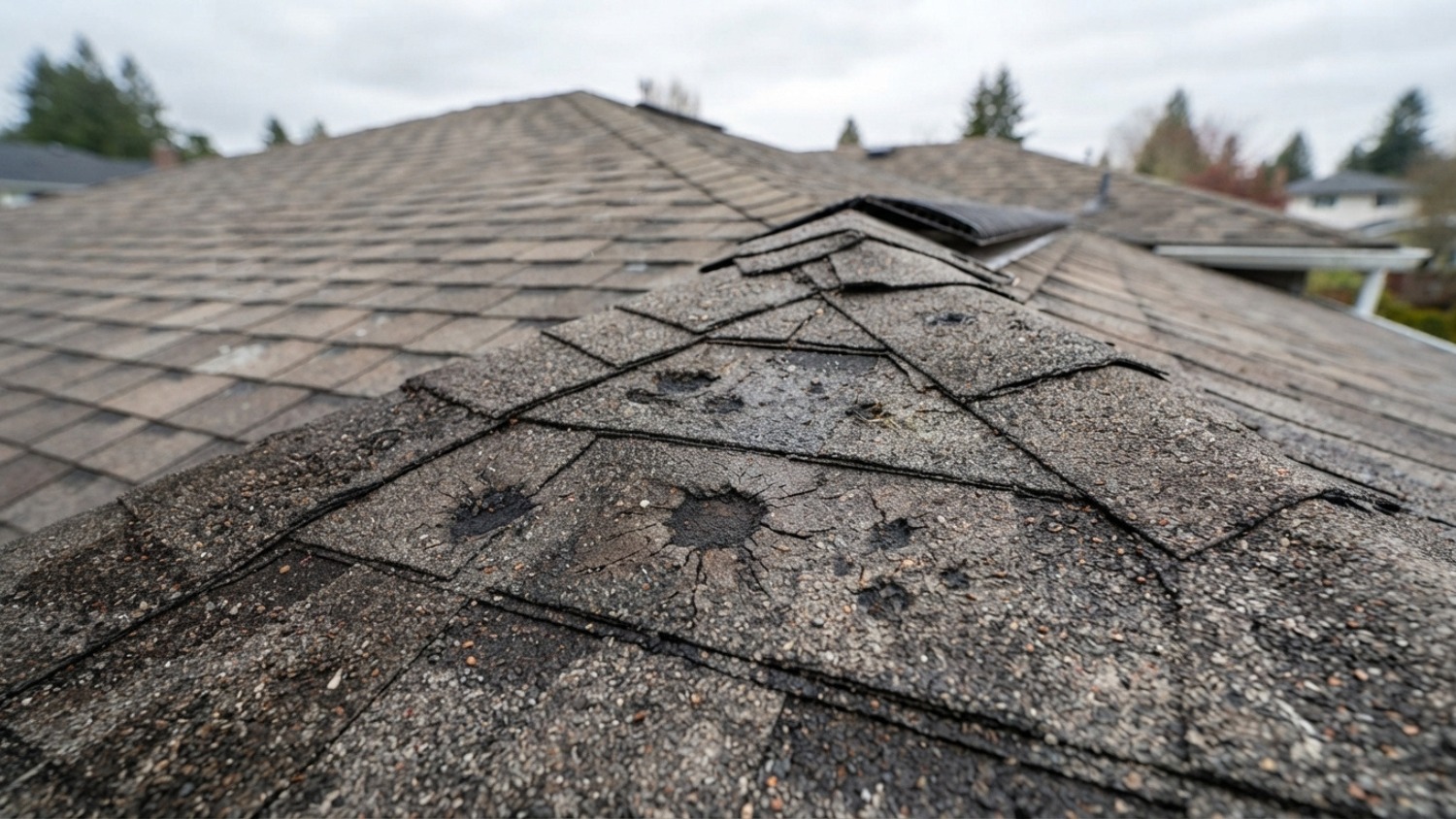
Hail damages roofing materials by transferring kinetic energy on impact. Severity depends on stone size, wind speed, and the age and existing condition of the material being struck. Not all damage impairs function immediately, and not all visible damage is structurally significant.
The central distinction in any post-storm assessment is whether damage is functional or cosmetic. InterNACHI's roof inspection standards define functional damage as impact that compromises a roof's ability to shed water or reduces its service life, and cosmetic damage as impact that affects appearance without impairing waterproofing performance. That distinction drives both the insurance claim outcome and the repair-versus-replace decision.
Damage type varies by material:
- Asphalt shingles: Impact dislodges surface granules, compresses the fiberglass mat below, and in severe cases cracks or fractures the shingle tab entirely. The most consequential damage is often not visible from the ground.
- Metal roofing panels: Hail commonly produces cosmetic denting on metal without compromising waterproofing. Seam integrity and coating condition determine whether any functional damage occurred.
- Low-slope membranes (EPDM, TPO): Older or brittle membranes may crack or puncture under direct impact. Newer membranes with adequate thickness are significantly more resistant.
Assessment standards published by the National Roofing Authority identify hailstones at or above 1 inch in diameter as the threshold at which functional damage to asphalt shingles most commonly occurs.
How Can You Spot Hail Damage Without Climbing Onto the Roof?
You can identify probable hail damage from the ground and at the gutter level before any contractor visit. Soft metal surfaces on the building exterior can show impact evidence that helps support a roof damage assessment.
Walk the full perimeter of the structure and examine:
- Gutters and downspouts: Consistent circular denting may help indicate hail impact and storm coverage across the structure. Granule accumulation inside the gutter trough indicates surface disruption on the shingles directly above.
- Soffit vents and fascia boards: Pitting or denting on aluminum or painted wood surfaces confirms hail contact at the roof level.
- Window screens: Small punctures or tears may indicate hail impact. A dense pattern on multiple sides of the house reflects broad storm coverage.
- Outdoor A/C condenser fins: Compressed or bent fins may indicate hail impact and are easier to inspect from the ground.
- Vinyl or aluminum siding: Directional, circular impact marks in a consistent pattern may indicate storm intensity across the building envelope.
When soft metals on multiple sides of the structure show impact marks, the roof may have sustained damage that warrants a professional inspection.
What Do Hail Impacts Look Like On Asphalt Shingles?
The three primary indicators used in roof hail damage repair assessments are granule displacement, mat bruising, and tab fracture. Each carries different repair implications.
- Granule displacement: Appears as dark, circular bare patches where the surface granule layer has been knocked away. The exposed asphalt mat begins UV degradation immediately.
- Mat bruising: The fiberglass mat beneath the granule layer absorbs residual impact energy and produces a soft or spongy feel under hand pressure. Bruising cannot be confirmed from ground level.
- Tab cracking or fracture: A full break through the shingle body can create a direct water intrusion pathway and usually requires a professional repair-or-replacement assessment.
Localized granule displacement concentrated on a single small area does not automatically require full replacement. The percentage of total affected surface area is the primary deciding variable.
What Factors Determine Whether Storm Damage Roof Repair Is A Viable Option?
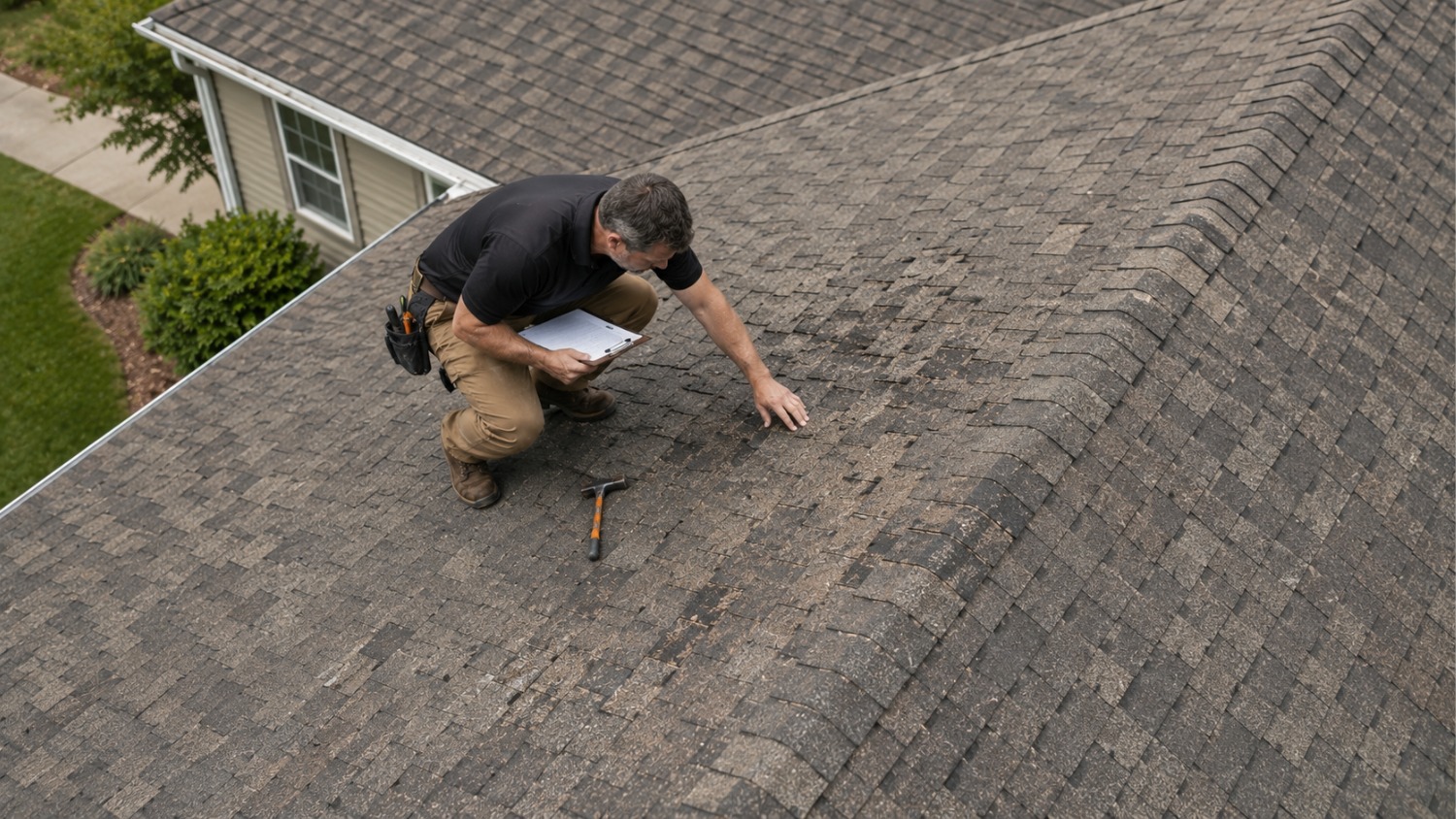
Four factors determine whether targeted storm damage roof repair is worth pursuing: roof age, damage spread, structural involvement, and impact density per roofing square. No single factor is conclusive on its own.
|
Factor |
Repair Viable |
Replacement Indicated |
|
Roof age |
Under 12 to 15 years |
15 to 20+ years |
|
Damage spread |
Under 30% of total surface |
30% or more of total surface |
|
Structural involvement |
Decking and underlayment intact |
Water intrusion through the deck |
|
Impact density |
Limited affected areas on one roof plane |
Scattered across multiple slopes |
How Does Roof Age Affect Repair Viability After A Hailstorm?
A roof nearing the end of its service life has degraded material across every surface, not only at impact points. Replacing individual shingles on an aging roof creates performance inconsistencies between new and weathered materials, and future weather events stress those seam lines first.
Roofs under 10 years old with damage isolated to a single plane are the strongest repair candidates. Roofs between 15 and 20 years old are rarely worth patching after significant hail. Insurance adjusters also factor roof age into damage assessments when calculating actual cash value versus replacement cost payouts, so age affects both repair logic and claim outcome.
How Does The Percentage Of Damaged Area Affect Repair Options?
Roofing contractors and insurance adjusters measure storm damage in squares: 10-foot by 10-foot sections of roof surface. Damage covering more than 30% of the total roof area typically triggers a replacement recommendation over targeted spot repairs.
Damage concentrated on a single roof plane may allow for a targeted section repair, provided ridges, valleys, and adjoining flashings remain unaffected. Scattered damage across multiple slopes generally rules out partial repair as a durable long-term solution.
MORE ON THIS TOPIC: How To Pay for a New Roof? A Homeowner’s Guide From a Local Roofing Contractor
How Do You Document Roof Hail Damage Before a Contractor or Adjuster Arrives?
Thorough pre-inspection documentation protects the insurance claim and gives contractors an accurate starting point. Do not authorize any repairs until the adjuster has completed and recorded the damage assessment.
-
- Stay off the roof. Wet and structurally compromised shingles are serious fall hazards. Disturbing the surface before inspection can also affect the integrity of the claim record.
- Photograph the full exterior perimeter. Capture gutters, downspouts, siding, fascia, window screens, and any outdoor equipment showing impact evidence. Date-stamp every image.
- Check the attic before the next rain event. Look for light penetrating through the decking, new water staining on rafters or sheathing, or wet insulation. Attic evidence confirms deck or underlayment breach before any interior ceiling stain appears.
- Verify the storm through NOAA records. The NOAA Storm Events Database logs hail events by county, date, and reported hailstone size. Dutchess County records are searchable by date, and insurers use this data to validate roof repair after storm claims. Having the confirmed storm record on hand before the adjuster’s visit strengthens the claim file from the start.
- Notify your insurer promptly. New York State does not set a universal statutory deadline for property insurance claims; the filing window is defined by each individual policy. Most carriers require claim notification within one year of the storm date, but delays weaken documentation and give insurers grounds to question the timing. Contact your insurer within 24 to 48 hours of the event.
- Do not make repairs before the adjuster visits. Premature patching can reduce or complicate a claim if the adjuster determines the original damage condition was altered before formal assessment.
- Schedule an independent licensed contractor inspection. A contractor’s written damage report can document functional damage in roofing-specific terms and provide additional material details for the claim file.
Why Does Hail Damage Sometimes Not Appear Until Months After A Storm?
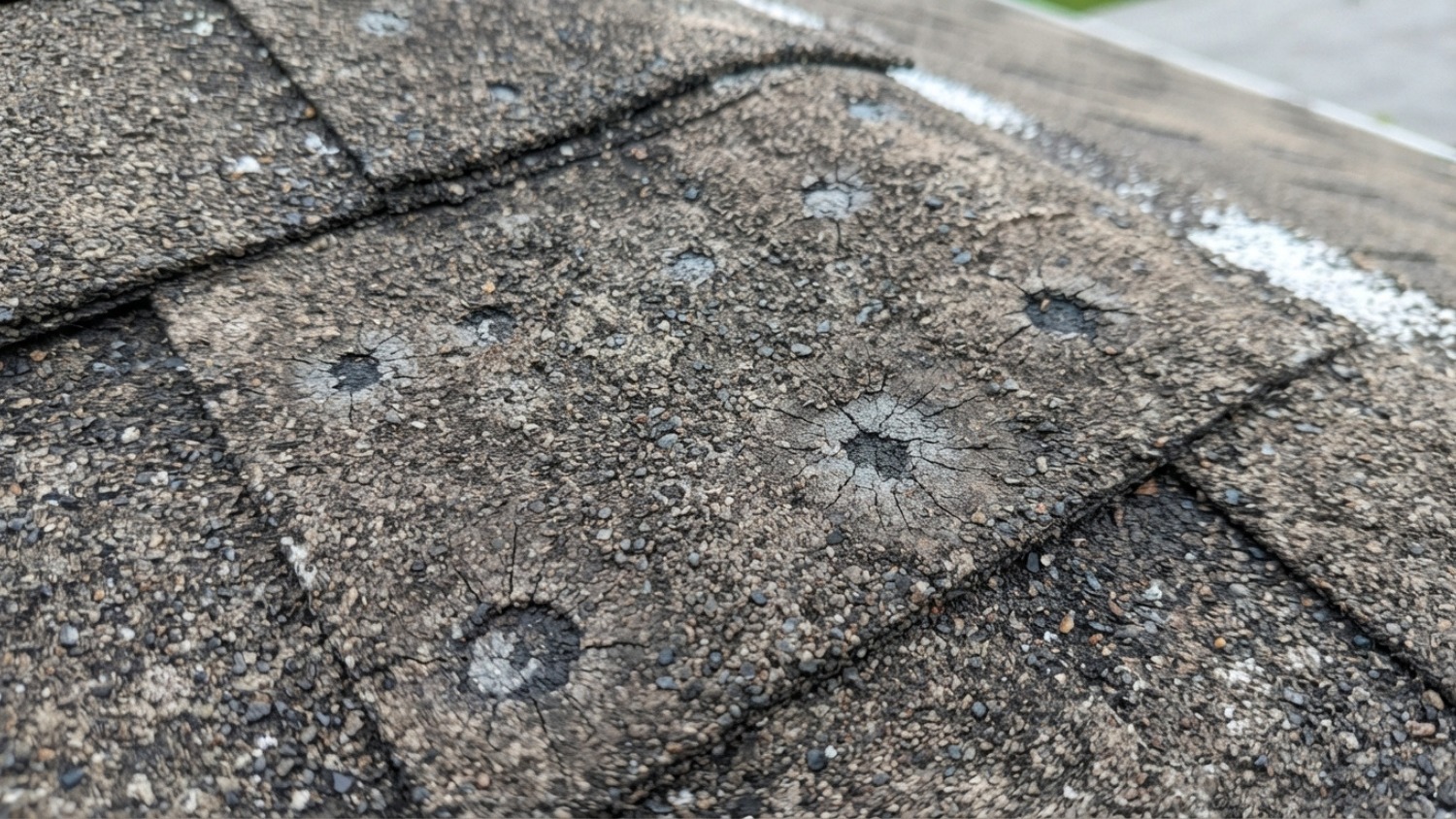
Granule loss from hail impact exposes the asphalt mat directly to UV radiation. Prolonged UV exposure oxidizes and degrades the asphalt layer beneath, causing shingles to dry, crack, and curl weeks or months after the original impact, even when the roof appeared intact right after the storm.
Flashing and ice-and-water shield edges partially compromised by hail create a parallel delayed-failure path. A storm that lifts flashing or cracks a sealant edge may not produce an interior water leak until the following rain season.
In the Hudson Valley, winter freeze-thaw cycles accelerate this process through January and February. Water enters the compromised edge, freezes, expands, and forces the gap wider with each thermal cycle. In some cases, a ceiling stain noticed months later may trace back to hail damage from an earlier storm.
What Should Poughkeepsie-Area Homeowners Do Right After A Hailstorm?
Acting within days of a storm, not weeks, preserves evidence and prevents follow-up weather from compounding the damage or obscuring the original impact condition.
Post-storm action checklist:
-
- Photograph all visible exterior impact evidence the same day the storm clears.
- Check the attic before the next rain event to catch any water intrusion early.
- Search Dutchess County hail records in the NOAA Storm Events Database to confirm official hail size and storm date.
- Contact your insurer within 24 to 48 hours and confirm the exact filing window in your specific policy.
- Schedule a licensed contractor inspection within 5 to 7 days, before additional weather alters the roof’s condition.
Frequently Asked Questions (FAQs)
How do I avoid storm chaser contractors after a hailstorm in the Hudson Valley?
Storm chasers move in within days of a major hail event, solicit work door-to-door, and often pressure homeowners into signing contracts before a licensed local contractor has assessed the damage. Verify the contractor’s local licensing, insurance, and business credentials before signing anything. Homeowners can also check local municipal requirements and ask for proof of coverage.
Will filing a hail damage insurance claim raise my homeowner’s insurance premium?
Weather-related claim outcomes vary by carrier, policy terms, location, and claim history. Ask your insurance agent how a hail claim may affect your premium before filing.
Can I put a tarp on my roof after hail damage while waiting for the adjuster?
Temporary protective covering is permitted and often required, since homeowners carry a duty to mitigate further damage after a loss. Photograph the roof condition thoroughly before installing any tarp and notify your insurer so the mitigation effort is documented in the claim file.
How long does hail damage roof repair typically take once work begins?
A targeted repair may be completed in one to three days when the deck and underlayment are intact, depending on roof size, material availability, weather, and scheduling. Full replacements run three to five days for a standard residential roof, with insurance processing adding two to four weeks before work can begin.
Does unrepaired hail damage affect a home’s resale value?
Functional hail damage is a material defect that licensed home inspectors are trained to identify. Buyers routinely use inspection findings to renegotiate sale price or require repair credits, and some mortgage lenders will not approve financing on a roof in a compromised condition.
Ready To Find Out Whether Your Storm-Damaged Roof Can Be Repaired?
Roof repair after storm events is one of the most time-sensitive decisions a homeowner faces, and accurate damage documentation is the foundation of a sound outcome for both the repairs and the insurance claim.
Lyndsey Roofing, LLC is a GAF Master Elite and Owens Corning Preferred Contractor serving Poughkeepsie and the broader Hudson Valley, including Dutchess, Orange, Putnam, and Eastern Ulster Counties.
Contact us for an inspection.