What’s In This Guide
- What Are Your Commercial Flat Roof Repair Options in Poughkeepsie?
- Why the Right Repair Decision Matters for Your Poughkeepsie Property
- Commercial Flat Roof Repair Options: From Least Invasive to Most Involved
- How to Decide Which Flat Roof Repair Option Fits Your Building
- What Affects the Cost of Commercial Flat Roof Repair in Poughkeepsie
- When Should You Call a Professional for Flat Roof Repair?
- Frequently Asked Questions
- Ready to Repair or Restore Your Poughkeepsie Commercial Flat Roof?
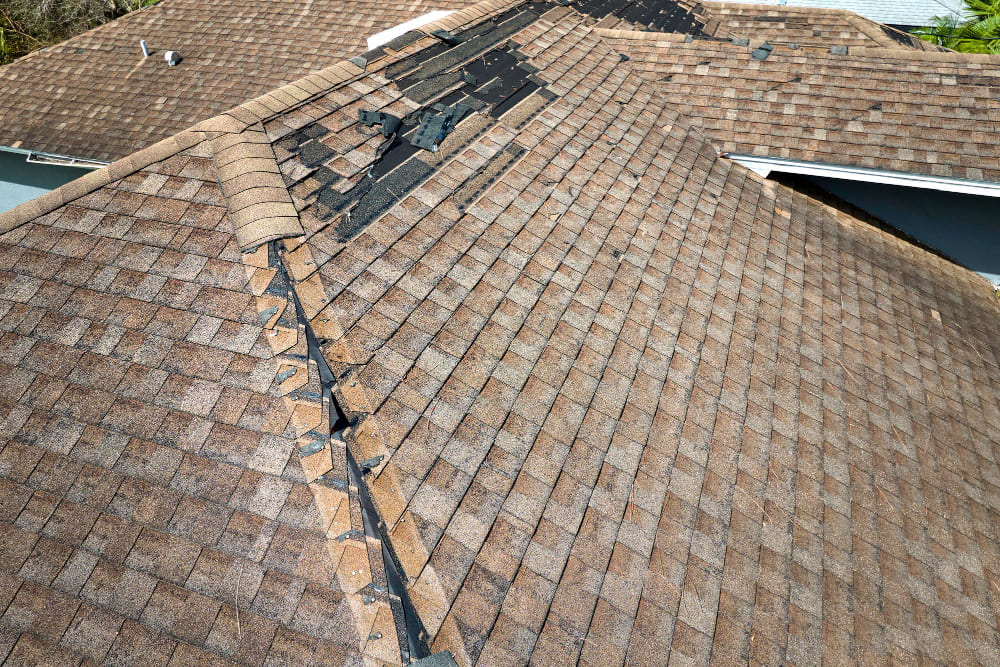
A spreading ceiling stain, persistent ponding water, or a lifting seam is often what prompts Poughkeepsie business owners to take a closer look at their flat roof. The next question is whether the problem calls for a localized patch, a broader membrane repair, a protective coating, or full replacement.
Commercial flat roof problems often develop gradually rather than appearing all at once. As damage progresses, the appropriate response may shift from localized repair to restoration or replacement. Understanding those options helps property owners make decisions based on the roof's actual condition rather than guesswork.
Quick Facts
- Start with a documented roof inspection. It helps determine whether damage is isolated or extends to seams, flashing, insulation, or the roof deck.
- Use patching for small, localized damage. Punctures, minor flashing issues, and isolated seam failures may not require broader repairs.
- Consider coatings only on structurally sound roofs. Coatings can restore weather resistance, but they should not be applied over active leaks or saturated insulation.
- Plan for replacement when damage is widespread. Recurring leaks, saturated insulation, structural deck issues, or extensive membrane failure may make replacement more practical.
- Schedule routine maintenance and inspections. Semiannual checks can catch drainage, seam, and flashing problems before they develop into larger repairs.
What Are Your Commercial Flat Roof Repair Options in Poughkeepsie?
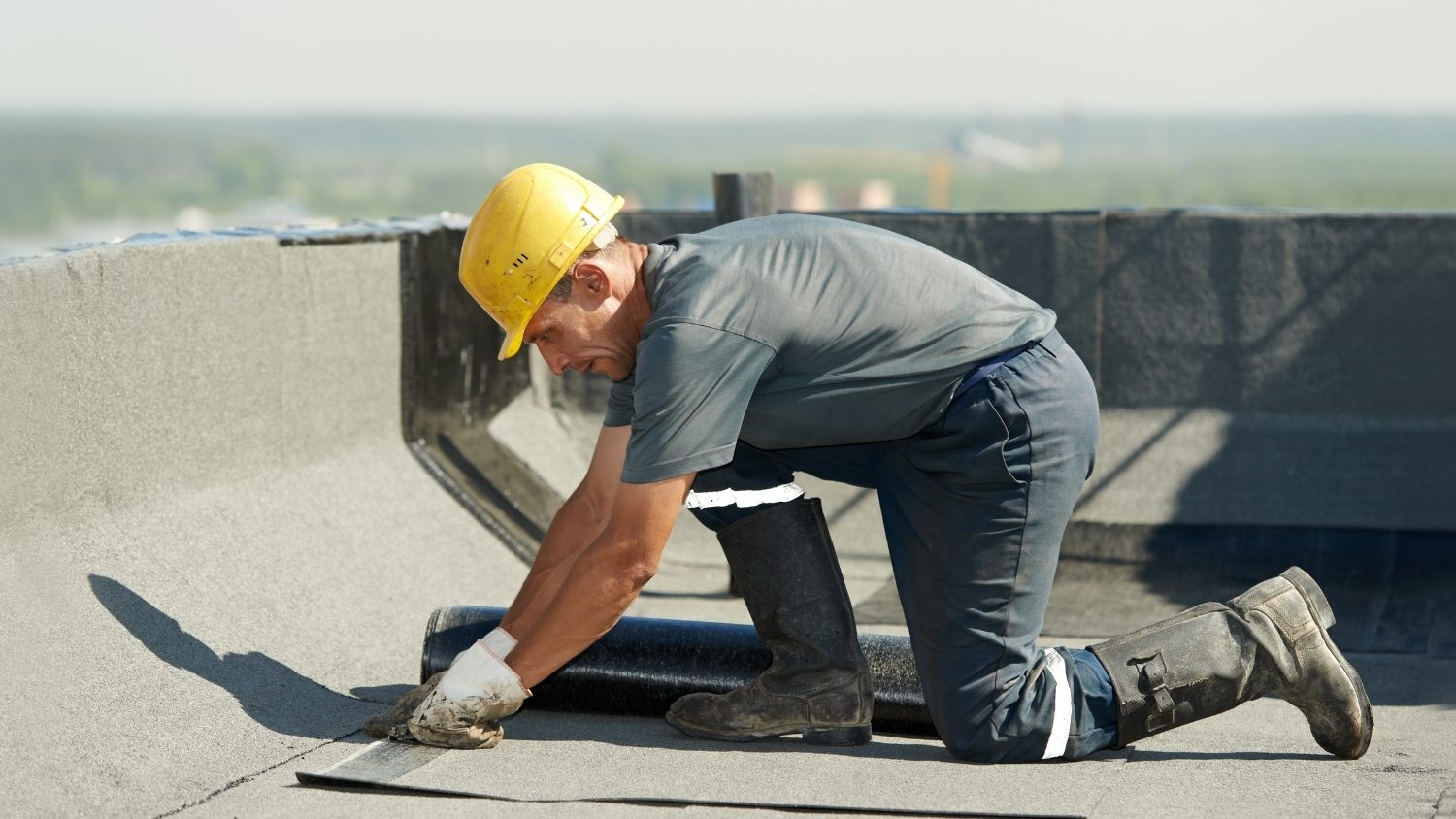
Commercial flat roof repairs range from localized fixes to full membrane replacement. The right approach depends on the extent of the damage, the condition of the roof deck, and the remaining service life of the membrane.
Common repair options include:
- Patching: Repairs isolated punctures, cracks, or small damaged areas.
- Membrane repair: Addresses larger seam, flashing, or membrane failures.
- Roof coatings: Restore and protect membranes that remain structurally sound but show surface wear.
- Preventive maintenance: Corrects minor issues before they develop into more costly damage.
- Roof replacement: Becomes necessary when the membrane, insulation, or roof deck has deteriorated beyond practical repair.
Start with a professional inspection. A cursory visual check can miss hidden moisture or problems around seams, drains, and flashing, leading to repairs that address the visible symptom rather than the underlying cause.
Why the Right Repair Decision Matters for Your Poughkeepsie Property
Choosing an unsuitable repair approach can increase costs, disrupt operations, and allow roof damage to worsen. Commercial leaks may affect tenants, employees, equipment, or inventory, while unresolved water intrusion may also affect warranty coverage depending on the manufacturer's terms. A thorough inspection helps define the repair scope so property owners can address the current problem and reduce the risk of more extensive repairs later.
Commercial Flat Roof Repair Options: From Least Invasive to Most Involved
Step 1: Start With a Professional Roof Inspection
Every repair decision should begin with a documented inspection rather than assumptions based on a visible stain or suspected leak point. The inspection should assess the membrane, drains, flashing, and extent of the damage to determine whether the problem is localized or widespread.
A thorough commercial roof inspection typically covers:
- Membrane surface condition, including blistering, cracking, or shrinkage
- Seam integrity at laps, penetrations, and terminations
- Drainage performance and any areas holding water more than 48 hours after precipitation ends
- Flashing at HVAC curbs, parapets, and roof-to-wall transitions
- Interior signs of moisture, such as ceiling staining or wet insulation
Step 2: Localized Patch Repairs for Isolated Damage
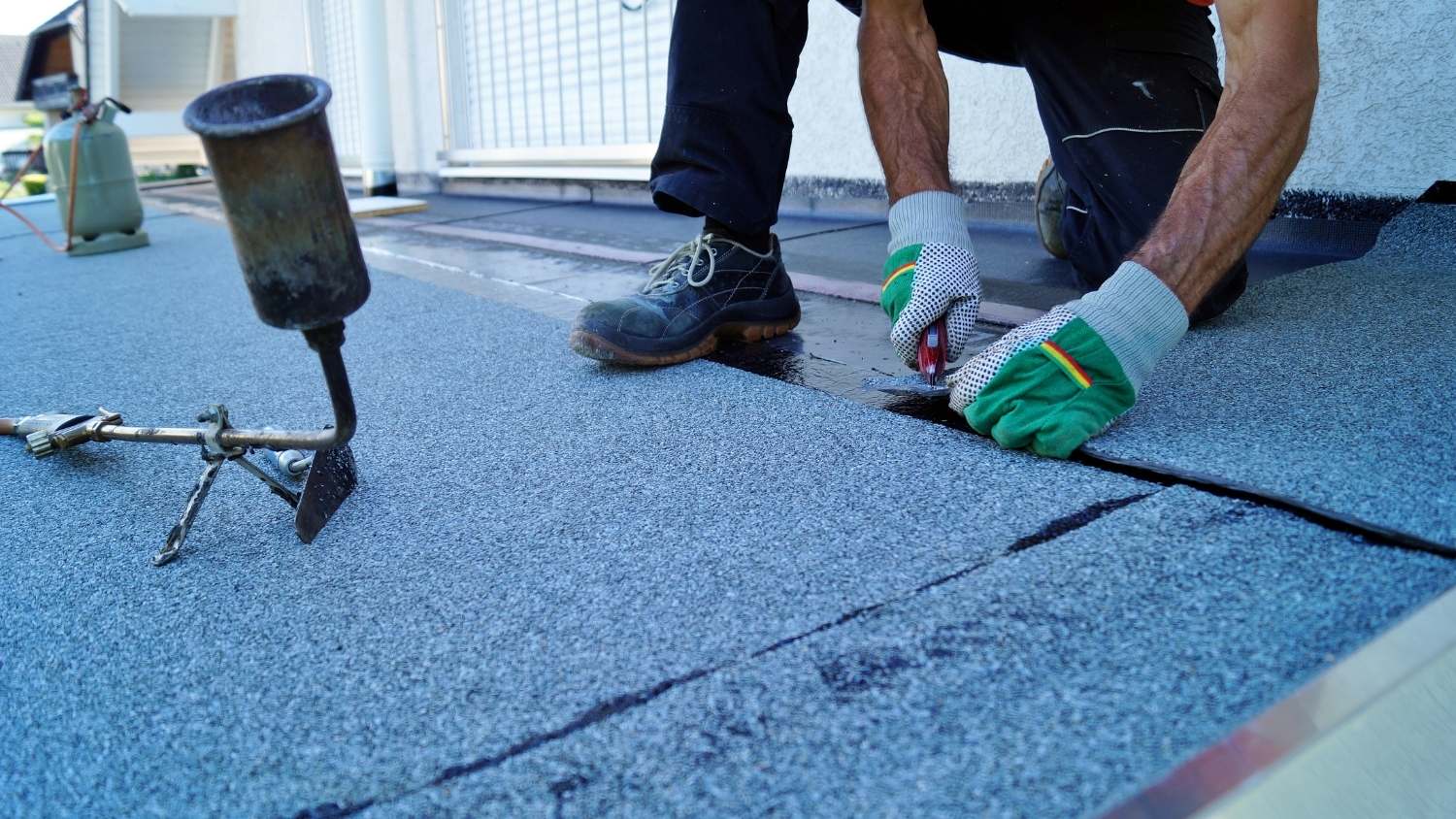
Patch repairs address small, contained problems such as a single puncture, lifted seam, or minor flashing separation. They are most appropriate when the surrounding membrane remains well adhered and free of widespread deterioration. If a leak returns in the same location after a prior patch, the underlying cause may involve drainage, flashing, or another issue that requires a broader repair.
Step 3: Membrane and Seam Repairs for Larger Problem Areas
When damage affects multiple seams, larger areas of the membrane, or several flashing points, a more involved membrane repair may replace the affected sections rather than patching each problem individually.
Repair materials must be compatible with the existing roofing system. TPO, EPDM, and PVC membranes require system-appropriate materials and installation methods, and specific warranty requirements may also apply. Using incompatible materials can lead to poor adhesion or premature repair failure.
Step 4: Roof Coatings as a Restoration Option
A roof coating is a fluid-applied layer, typically silicone or acrylic, that seals the membrane surface and restores weather resistance without a full tear-off. Coatings work as a restoration tool, not a repair for active leaks or saturated insulation.
Timing determines whether a coating makes sense. Applying a coating before the membrane’s service life ends can extend protection, since coatings perform best on a roof that is still structurally sound. Before application, the roof should be clean, dry, and sound, with existing damage addressed. For that reason, coating candidacy should be determined through an inspection.
Step 5: Preventive Maintenance Programs
A maintenance program combines scheduled inspections with minor repairs before small issues develop into active leaks. Rather than serving as a single repair method, it helps reduce the likelihood of larger repairs over time.
Twice-yearly inspections, typically in spring and fall, can identify seam separation, blocked drains, and flashing movement before they contribute to leaks. Some manufacturer warranties also include maintenance or documentation requirements, so property owners should review the specific terms of their roofing system.
Step 6: When Full Replacement Becomes the More Practical Path
Replacement may be more practical when repair costs approach the cost of a new system, moisture damage affects large areas of insulation or decking, or the membrane has deteriorated beyond what patching or coating can reasonably address.
Signs that point toward replacement rather than continued repair include:
- Recurring leaks in different locations after multiple repair attempts
- Wet insulation identified through moisture testing
- Widespread membrane shrinkage, cracking, or seam failure across the field
- Structural concerns at the deck level
- A roof already near or past its expected service life
How to Decide Which Flat Roof Repair Option Fits Your Building
Working through these steps helps property owners match the right repair option to the actual condition of the roof, rather than the first solution offered.
-
- Schedule a documented inspection.
- Ask how far the damage extends.
- Confirm the insulation and deck condition.
- Review the roof’s remaining service life.
- Ask about manufacturer warranty requirements.
What Affects the Cost of Commercial Flat Roof Repair in Poughkeepsie
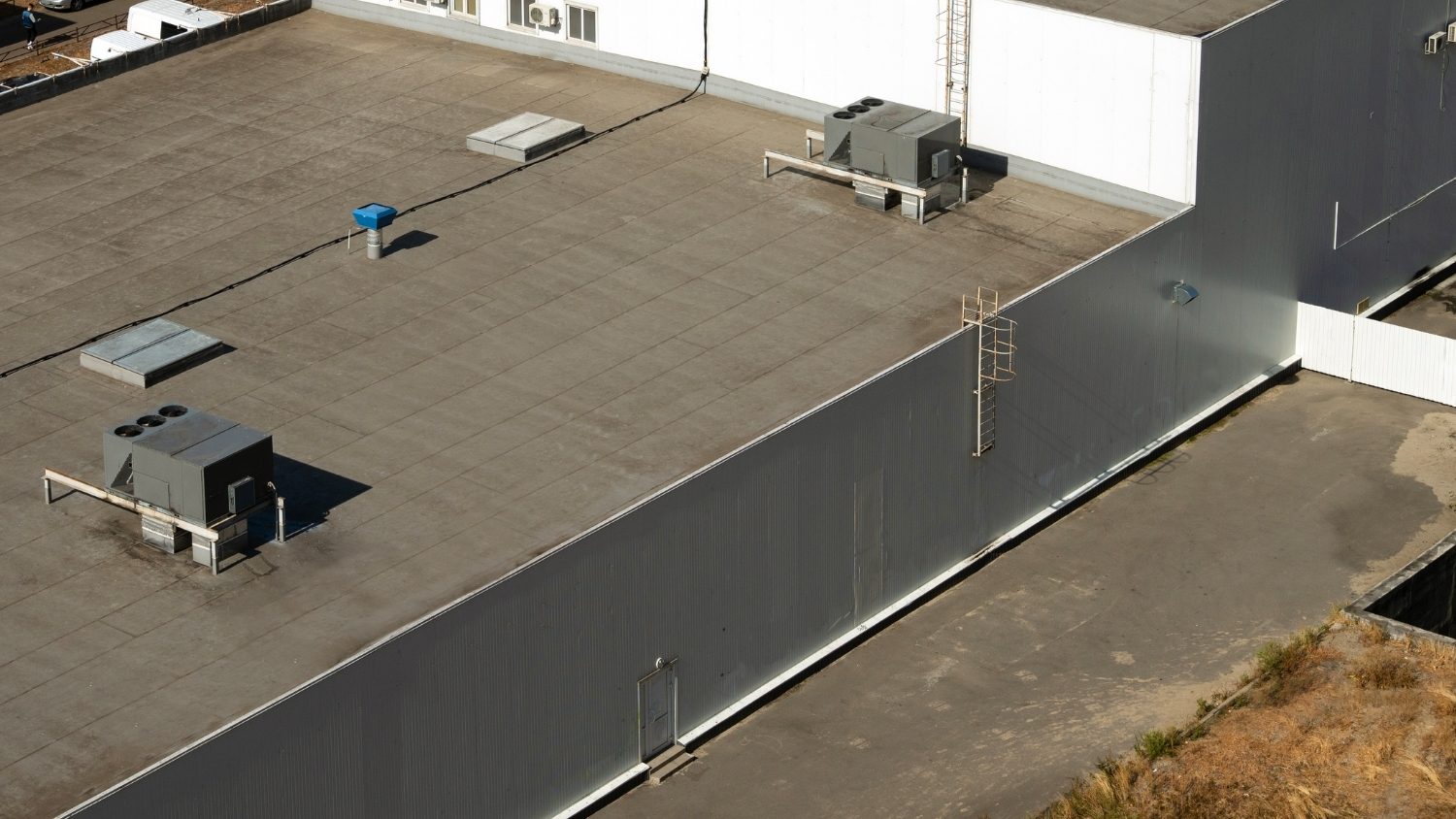
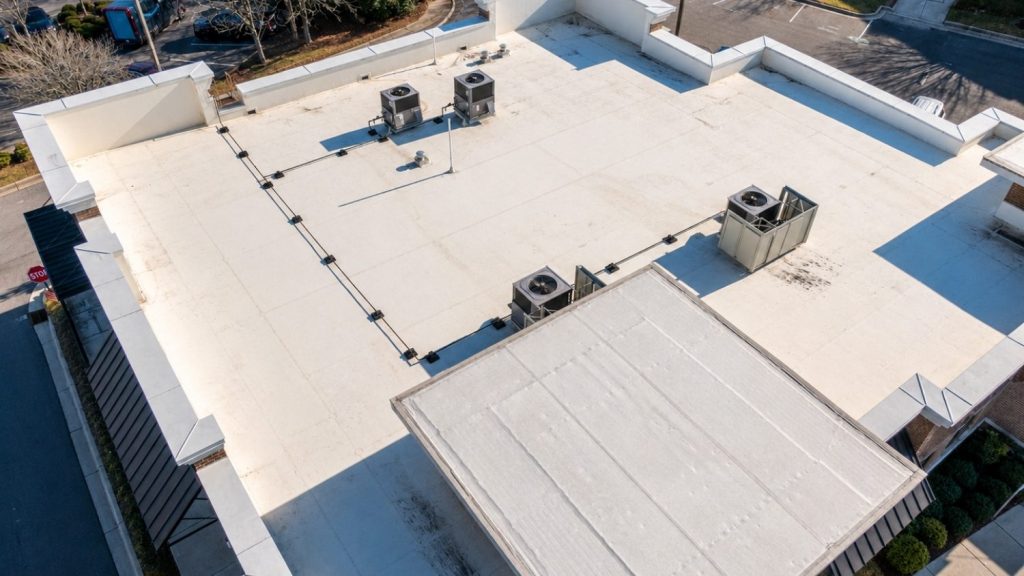
The cost of commercial flat roof repair varies with the extent of the damage, the roofing system, and building accessibility. Because every roof has different conditions, there is no single price that applies to every property.
Several variables typically influence the final estimate:
- Size and location of the damaged area
- Roofing membrane type, such as EPDM, TPO, or PVC
- Roof accessibility, including height and HVAC obstructions
- Condition of the underlying insulation and deck
- Whether repair, coating, or a maintenance program best fits the roof's condition
- Material and labor availability at the time of scheduling
The most reliable way to estimate a specific project is through a site inspection followed by a written estimate from a qualified commercial roofing contractor.
When Should You Call a Professional for Flat Roof Repair?
A commercial flat roof should be evaluated by a qualified commercial roofing contractor when a leak appears, ponding water remains more than 48 hours after precipitation ends, or a scheduled inspection is due. Waiting until moisture damage becomes visible inside the building can allow the problem to spread beyond the original leak area.
Property owners should also schedule an evaluation after a significant storm, when a previous repair fails, or when the roof approaches the end of its expected service life. A qualified contractor can determine whether patching, membrane repair, coating, or replacement best fits the roof's condition.
Frequently Asked Questions
Can a commercial flat roof be repaired instead of replaced?
In many cases, yes. Localized damage, isolated seam failures, and minor punctures are often good candidates for patching or membrane repair rather than full replacement. The right approach depends on how much of the roof is affected and whether the insulation and deck remain dry and structurally sound.
How long do flat roof patch repairs last?
Patch longevity depends on the roofing material, the condition of the surrounding membrane, repair quality, and ongoing maintenance. A patch is more likely to perform well when the underlying cause of the damage, such as a drainage or flashing issue, is also corrected.
What is the difference between a roof coating and a roof replacement?
A roof coating is a fluid-applied layer that restores and protects an existing membrane that is still structurally sound. A roof replacement installs a new roofing system and may involve removing some or all of the existing roof assembly, depending on its condition and the selected system. Coatings extend the life of a serviceable roof, while replacement addresses a roof that is no longer a practical candidate for repair or restoration.
How often should a commercial flat roof be inspected?
Many commercial roofing maintenance programs recommend inspections at least twice a year, generally in spring and fall, along with additional evaluations after major storms. Older roofs or those with a history of repairs may benefit from more frequent checks.
Does ponding water always mean the roof needs replacement?
Not necessarily. Ponding water indicates a drainage issue that should be professionally evaluated, but the appropriate response depends on the cause and extent of the damage. Some cases may require drain or targeted membrane repairs, while long-term moisture damage to the membrane, insulation, or decking may require more extensive repairs or replacement.
Ready to Repair or Restore Your Poughkeepsie Commercial Flat Roof?
Lyndsey Roofing, LLC works with Hudson Valley business owners to evaluate commercial flat roofs and recommend the repair option that matches the roof's actual condition. As a GAF Master Select Contractor and Elevate licensed applicator, our team is equipped to handle EPDM, TPO, PVC, and coating projects across Dutchess, Orange, Putnam, and Eastern Ulster Counties.
If your commercial property has a leak, ponding water, or a roof due for inspection, schedule a professional assessment to identify the appropriate next step.