What’s in This Guide
- Why Roof Leak Repair Costs Start With the Inspection
- How Roofers Trace the Source of a Roof Leak
- Roof Leak Repair Cost: What Shapes the Final Estimate
- Emergency Roof Leak Repair vs. Scheduled Service
- When to Call a Roofing Contractor About a Leak
- Frequently Asked Questions
- Dealing With a Roof Leak in the Hudson Valley?
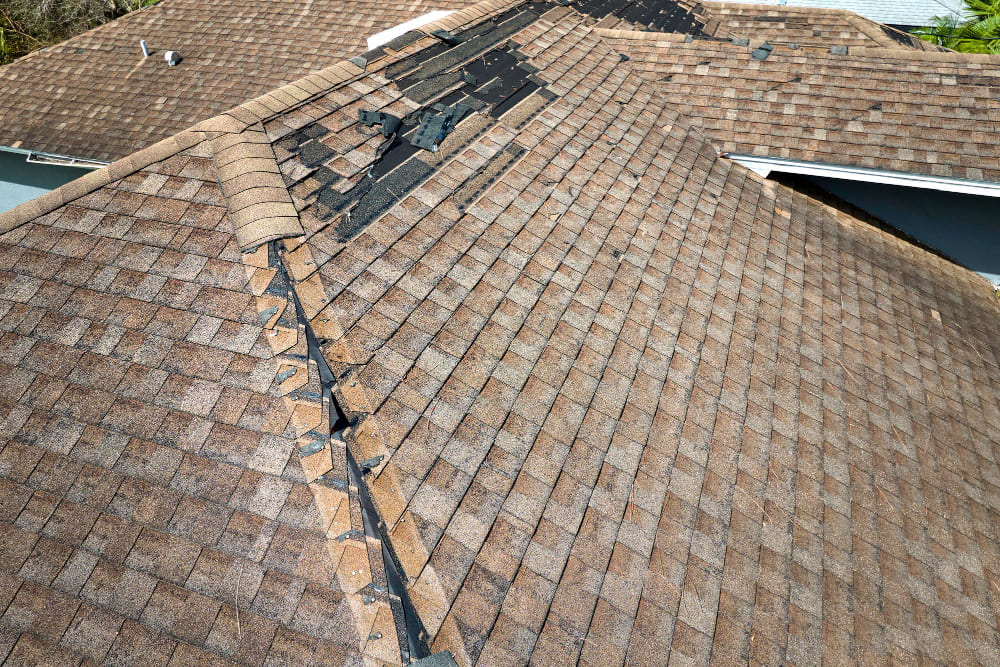
A water stain spreads across the ceiling after a storm rolls through the Hudson Valley, and the first question is almost always the same: what will this cost to fix? The honest answer is that no roofer can price a leak accurately until a roof leak inspection confirms where the water is actually getting in.
The drip you see inside the house is the end of the water's path, not the beginning. Pricing the repair before tracing that path is guesswork, and guesswork is how homeowners end up paying for the same leak twice.
Quick Facts
- Leak location rarely matches the ceiling stain; water travels along rafters and decking first.
- Phone quotes without an inspection often miss hidden moisture damage.
- Flashing and roof penetrations are among the most leak-prone areas.
- Mold risk rises when wet materials sit beyond 24 to 48 hours.
- Emergency repair applies when water is actively entering the home.
Why Roof Leak Repair Costs Start With the Inspection
The cost to repair a roof leak depends on three things: where the water enters, how far the water has traveled, and what the moisture has damaged along the way. None of those answers is visible from a ceiling stain or a ground-level glance at the shingles.
Water rarely drops straight down. Moisture that slips past a cracked pipe boot or a lifted flashing edge runs along the underlayment, follows a rafter, and finally drips through a drywall seam several feet from the actual entry point. Two identical-looking ceiling stains can represent two very different repairs: one a straightforward flashing fix, the other a section of saturated decking that has been absorbing water for months.
That gap between what a leak looks like and what a leak actually is explains why credible contractors inspect before quoting. An estimate built on the stain alone prices the symptom. An estimate built on an inspection prices the problem.
How Roofers Trace the Source of a Roof Leak
A professional roof leak inspection works backward from the evidence inside the home to the entry point on the roof. Each step narrows the search and defines the true repair scope.
Step 1: Map the Interior Evidence
The inspection starts with the stain itself. When does the leak appear? A leak that shows up during every rainfall points to a different failure than one that only appears during wind-driven storms or midwinter thaws, which often signals ice dam activity at the eaves. Timing and location together tell the roofer where to look first.
Step 2: Check the Attic for Moisture Paths
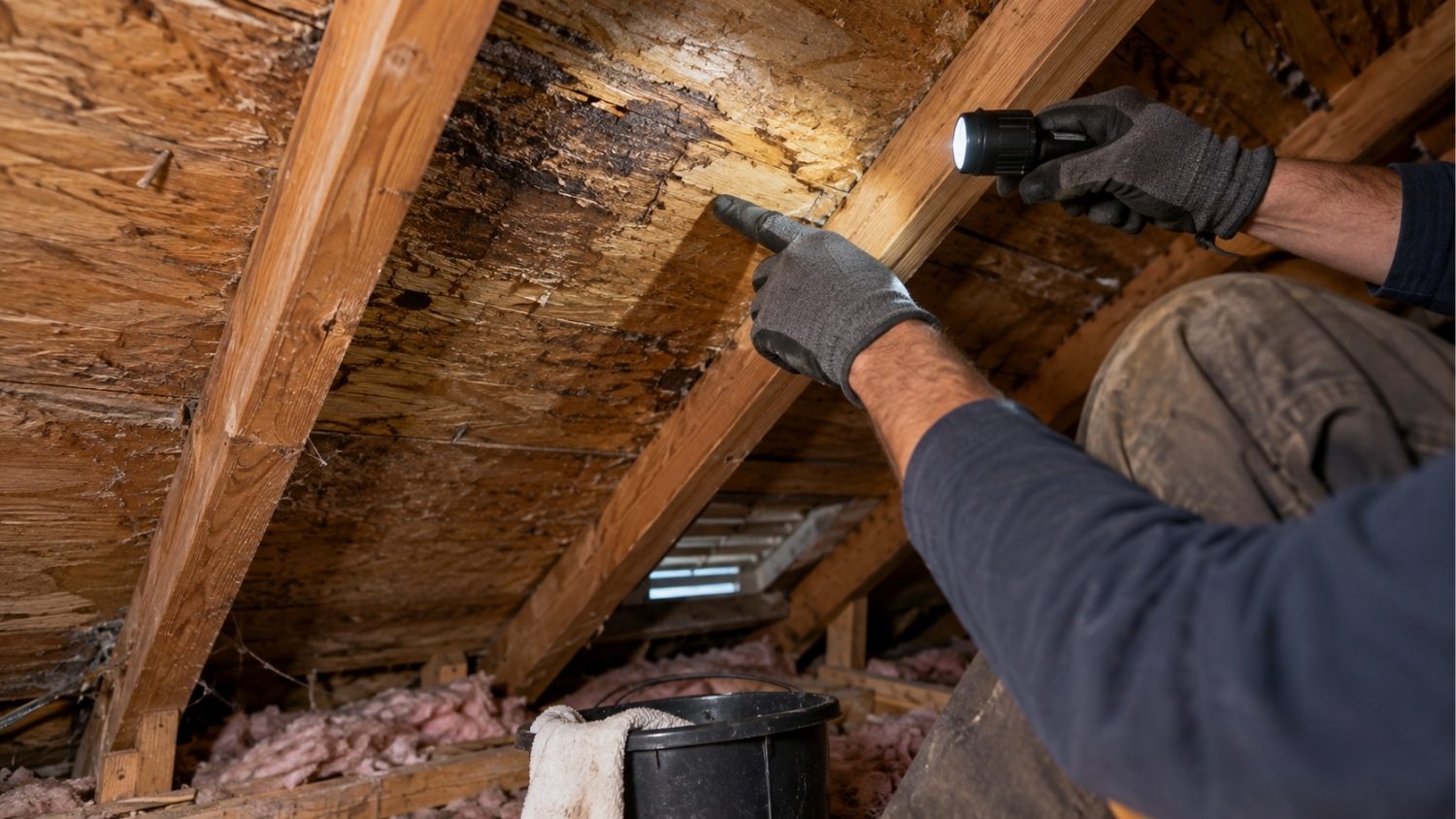
The attic sits between the stain and the roof surface, and moisture leaves a trail there. Roofers look for wet or compressed insulation, darkened sheathing, rusted nail tips, and water tracks running down rafters. A moisture meter confirms whether the wetness is active or left over from an older, already-sealed problem.
Step 3: Inspect Flashing and Roof Penetrations
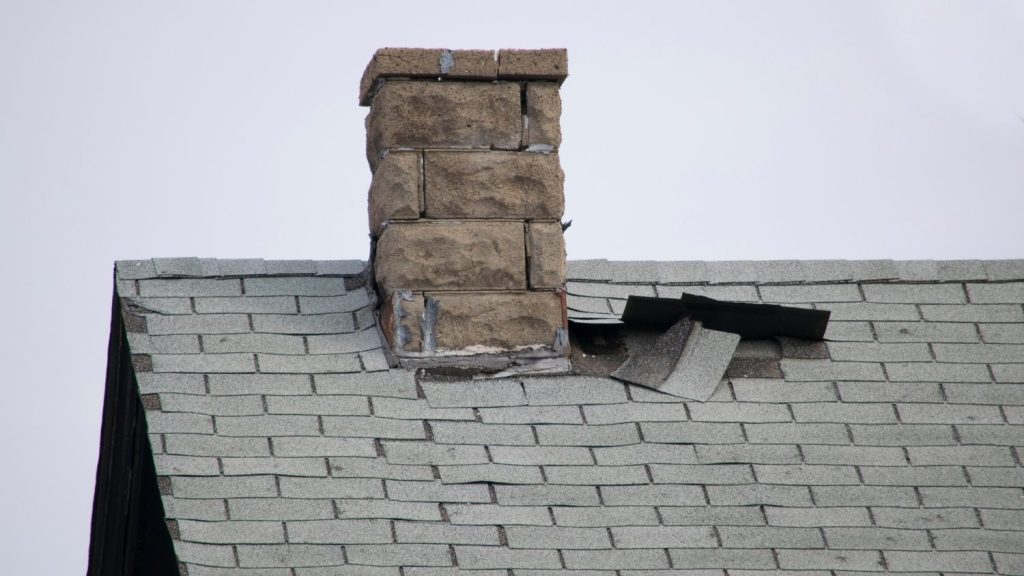
Chimneys, skylights, plumbing vents, valleys, and roof-to-wall transitions get close attention because flashing protects the roof areas most likely to leak, according to InterNACHI inspection guidance. Cracked pipe boots, corroded step flashing, and separated counterflashing at chimney masonry account for a large share of residential leaks in this region.
Step 4: Evaluate the Shingle Field and Sealant Points
From there, the roofer examines the surrounding shingle field for lifted tabs, nail pops, exposed fasteners, and dried or cracked sealant. These smaller failures often work together with a flashing gap, and repairing one without the other invites the leak back.
Step 5: Assess the Decking Before Scoping the Repair
Decking condition is the factor that most changes a repair scope. Solid decking under the entry point usually supports a contained surface repair. Soft, delaminated, or rotted decking means the moisture has been active long enough to compromise the structure beneath the shingles, and the repair plan has to account for replacing those sections.
READ MORE: How Roof Damage Repair Protects Your Home from Costly Issues
Roof Leak Repair Cost: What Shapes the Final Estimate
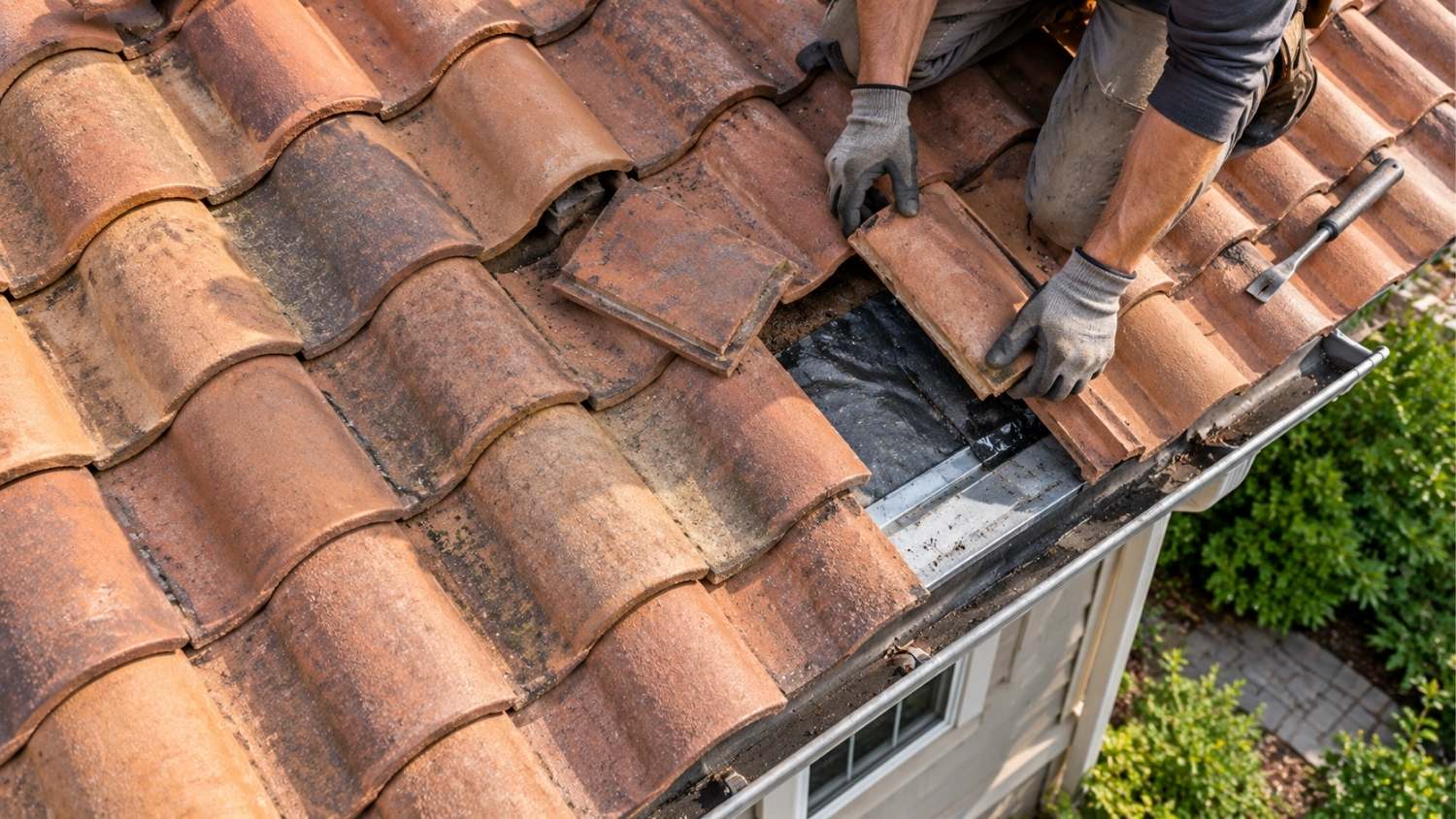
Roof leak repair cost varies from home to home because the inspection findings define the scope, and no two leaks share the same scope. Rather than a fixed price, expect an estimate shaped by a specific set of factors.
The variables that move the number most:
- Entry point location and access. A leak at an open shingle field is simpler to reach than one buried at a chimney base or a steep roof-to-wall transition.
- Roof pitch and height. Steeper slopes and multi-story access require more setup, safety equipment, and labor time.
- How far the water traveled. A leak caught early stays contained. A leak that has run along rafters for a season widens the repair area.
- Decking and underlayment condition. Saturated or rotted decking adds material and labor that a surface patch does not.
- Flashing scope. Resealing an intact flashing detail is a smaller line item than fabricating and replacing corroded step or chimney flashing.
- Material matching. Discontinued or weathered shingle profiles can require sourcing time to keep the repair visually consistent.
- Timing and weather. Cold-weather repairs may require hand-sealing techniques and tighter scheduling windows.
A written, itemized estimate should follow the inspection and spell out exactly which of these factors apply to your roof. That document, not a phone-call ballpark, is the number worth planning around.
Emergency Roof Leak Repair vs. Scheduled Service
Active water entering the home calls for emergency roof leak repair. A dry roof showing evidence of a past or intermittent leak can usually wait for a scheduled inspection and repair. The dividing line is whether moisture is reaching the living space right now.
The urgency is not just about the ceiling. The EPA advises homeowners to dry water-damaged materials within 24 to 48 hours to prevent mold growth. Insulation, drywall, and framing that stay wet past that window create a secondary problem that outlasts the roof repair itself.
Emergency response focuses on stabilization first: containing the water, protecting the interior, and covering the compromised section until conditions allow a full assessment. The permanent repair still follows a complete inspection, because a tarp stops the symptom without diagnosing the source. Skipping the diagnostic step after an emergency call is how the same leak reappears the following season.
When to Call a Roofing Contractor About a Leak
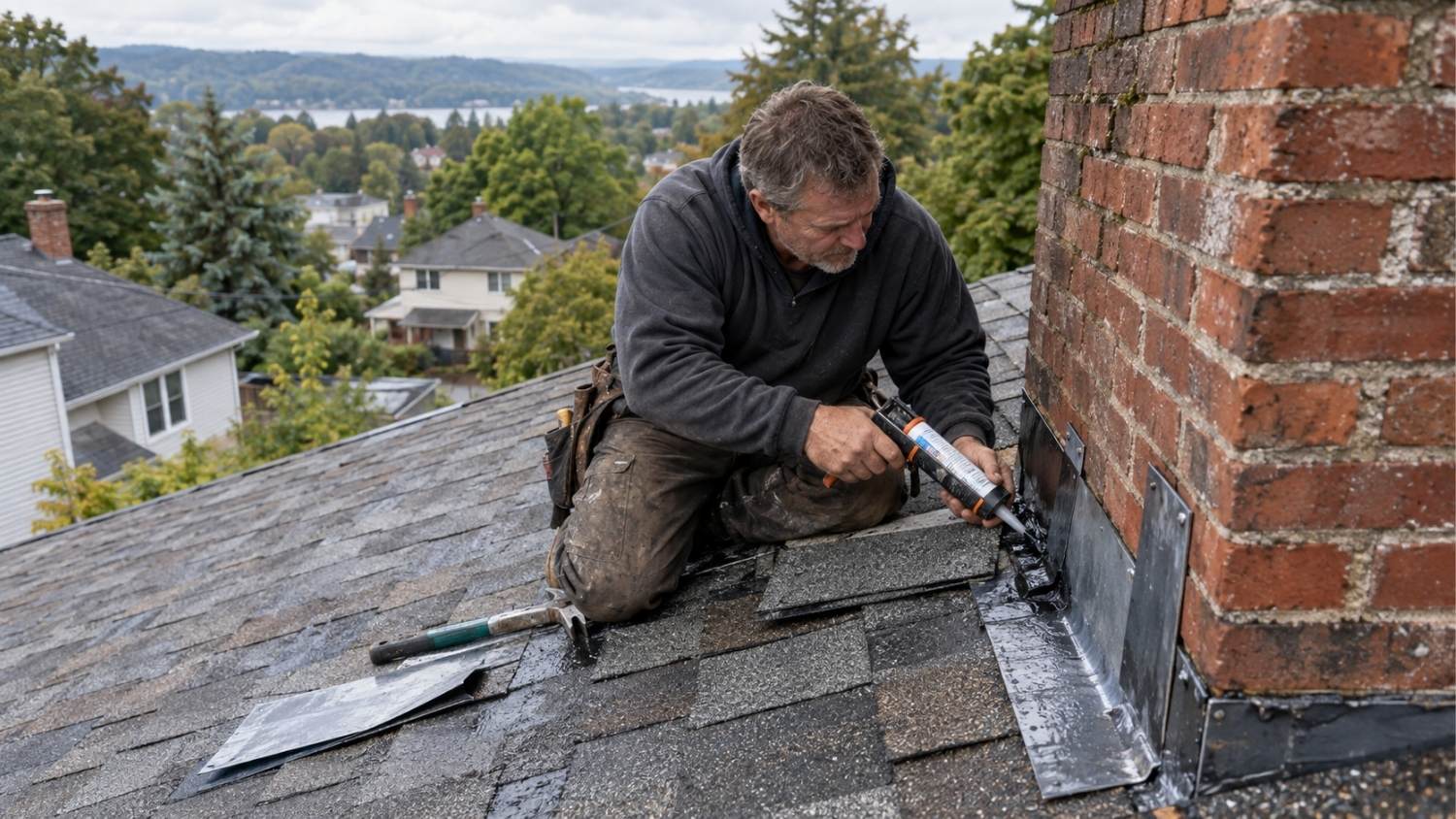
Call a professional when the evidence points to an active or recurring problem rather than a one-time event. Certain patterns justify the call even when the dripping has stopped.
Reach out for a professional inspection when:
- A ceiling stain is growing, darkening, or returning after drying out
- The leak came back after a DIY sealant or patch attempt
- Water appears in more than one room or on more than one level
- A new leak shows up on a roof that is 15 years old or older
- The leak followed a wind, hail, or heavy snow event
DIY diagnosis has real limits here. Walking a wet or damaged roof is a fall hazard, and surface-level sealant applied to the wrong spot hides the evidence a roofer needs to trace the true entry point. A professional roof leak inspection documents the source, the moisture path, and the full repair scope in writing, which also matters if an insurance conversation follows.
Frequently Asked Questions
Can a Hudson Valley roof leak inspection start if the roof is still wet or snow-covered?
Safety and access conditions can affect how much of the roof can be evaluated immediately. A contractor may begin with accessible interior or attic areas and complete exterior checks when conditions allow a safer, more useful inspection.
What records should homeowners share before a roof leak inspection?
Prior repair invoices, warranty information, roof age details, photos, and notes about when the leak appeared can provide useful context. These records may help the contractor understand earlier work and organize the inspection more efficiently.
Can a roof leak inspection include garages, additions, or porch roofs?
Yes, if those areas are part of the suspected problem or requested inspection scope. Hudson Valley properties can have several connected roof sections, so homeowners should point out any additional areas showing moisture or exterior concerns.
Can an inspection help determine whether moisture is coming from the roof or another source?
A roof leak inspection can help trace visible moisture patterns and determine whether they appear connected to the roofing system. If the evidence points elsewhere, additional evaluation by another qualified professional may be appropriate.
Should previously repaired roof areas be pointed out during the inspection?
Yes. Letting the contractor know where earlier repairs were completed can provide helpful context, especially if moisture appears nearby. The inspector can review those areas along with the surrounding roof before defining the current repair scope or roof leak repair cost.
Dealing With a Roof Leak in the Hudson Valley?
Lyndsey Roofing, LLC is a GAF® Master Elite® certified roofing contractor serving homeowners across Dutchess, Orange, Putnam, and Eastern Ulster Counties. Every leak repair starts the same way: a thorough inspection, a clear explanation of the findings, and a written estimate before any work begins.
Get the source confirmed before you pay to fix the symptom.