What’s In This Guide
- Why Commercial Roof Repair Cost Varies From Building to Building
- Key Factors That Influence Commercial Roof Repair Cost
- Commercial Roof Repair vs. Replacement: How to Know Which Makes Sense
- How to Get an Accurate Commercial Roof Repair Estimate
- When Should Poughkeepsie Property Managers Call a Commercial Roofing Contractor?
- Frequently Asked Questions
- Ready for a Commercial Roof Repair Estimate in Poughkeepsie, NY?
A stained ceiling tile over the sales floor. A property manager fielding a tenant complaint about a drip near the HVAC unit. A maintenance budget that needs a real number, not a national average pulled from a search result.
If you manage a commercial building along Main Street, South Road, or the Route 9 corridor in Poughkeepsie, NY, you have likely searched for a straight answer on commercial roof repair cost and found generic price lists that have nothing to do with your building.
Commercial roof repair cost depends on far more than square footage. Membrane type, leak location, roof access, and hidden moisture damage all shape the final scope.
Quick Facts
- Commercial roof repair cost depends on membrane type, damage, access, moisture, and urgency.
- TPO, EPDM, PVC, and modified bitumen require different materials and repair methods.
- Wet insulation, rooftop equipment, and difficult access can expand repair scope.
- Recurring leaks or aging membranes may make replacement more practical than repeated repairs.
- Inspections and itemized estimates provide the clearest pricing for Poughkeepsie properties.
Why Commercial Roof Repair Cost Varies From Building to Building
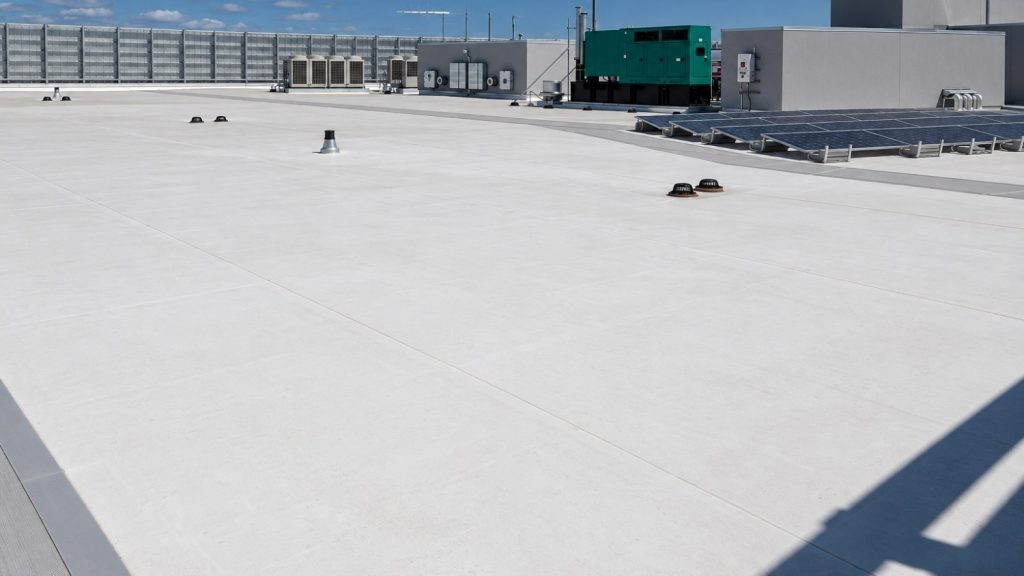
Commercial roofs vary because no two buildings share the same membrane, drainage layout, rooftop equipment, or leak history, and even small differences change the labor and materials required to fix a problem correctly.
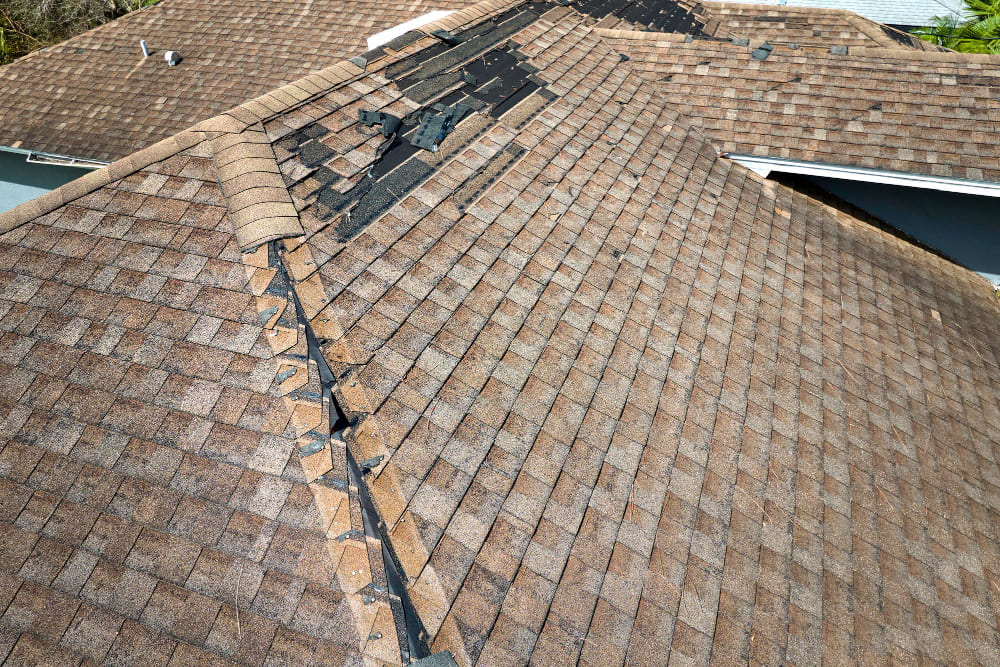
Low-slope and flat roofing dominates commercial properties, unlike the steep-slope asphalt shingle roofs common on Poughkeepsie’s residential streets in neighborhoods like Arlington and Fairview.
That distinction matters because repair techniques, tools, and manufacturer requirements differ by membrane category.
|
Membrane Type |
Common Repair Method |
Relative Labor Complexity |
|
TPO |
Heat-welded patch at seam or puncture |
Moderate; requires calibrated welding equipment |
|
EPDM |
Liquid-applied or cured adhesive patch |
Lower for isolated punctures; higher for widespread seam failure |
|
PVC |
Heat-welded patch, chemistry-specific materials |
Moderate to higher; requires PVC-compatible materials |
|
BUR / SBS (Torch Down) |
Multi-ply patch or torch-applied section repair |
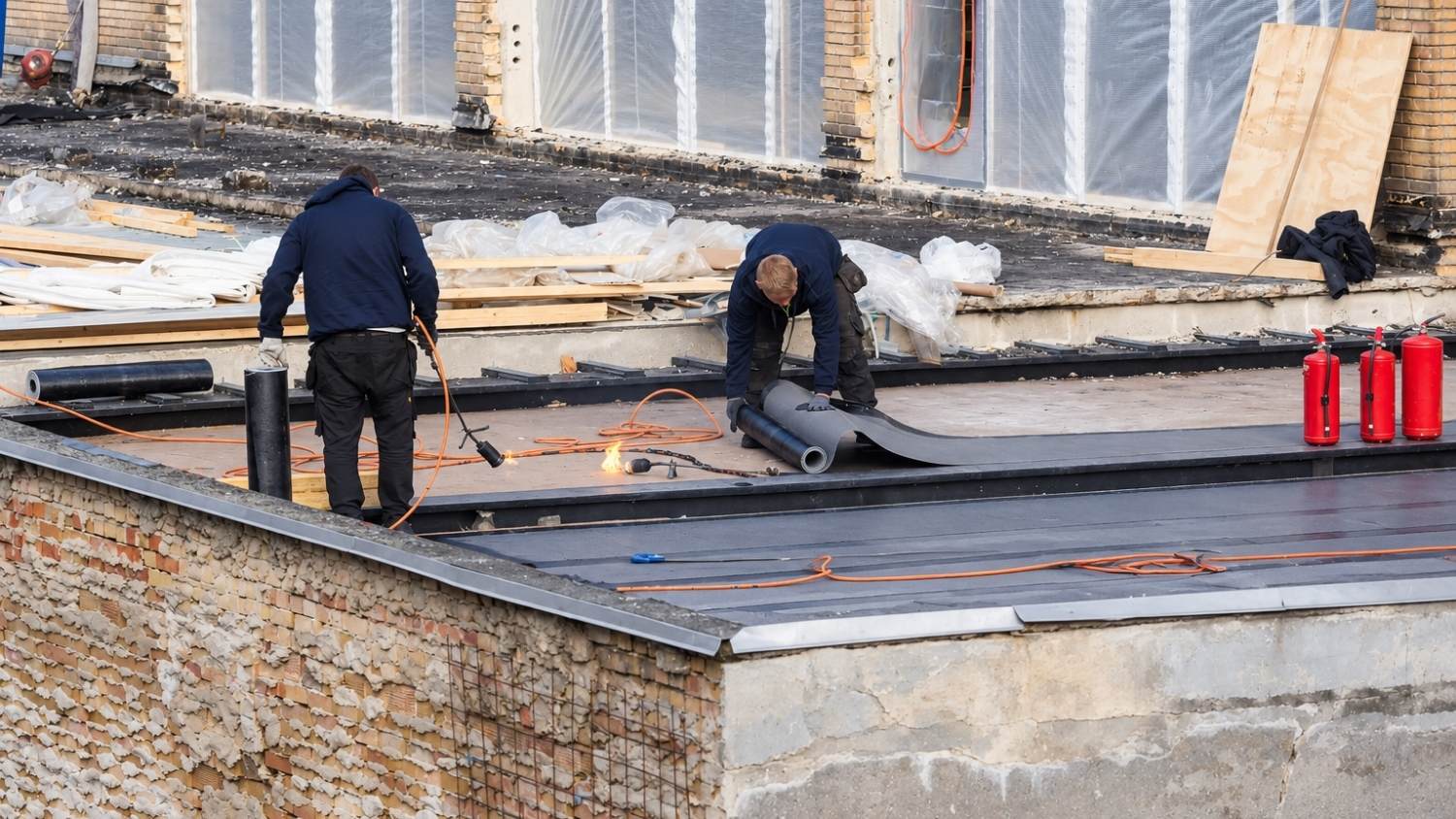
Higher; requires hot-work safety protocol |
Repair materials are not interchangeable across systems. A patch designed for EPDM will not bond correctly to a TPO or PVC membrane, which is one reason a contractor needs to confirm the exact membrane before pricing any repair.
Key Factors That Influence Commercial Roof Repair Cost
Roof Size and Total Square Footage
Commercial roof cost per square foot depends on more than total size. The membrane type, roof condition, and accessibility all influence the final price, and contractors commonly estimate commercial roofing by the square, or 100 square feet. Larger roofs may benefit from more efficient material delivery and crew mobilization, but those savings can shrink when damage is spread across several separate areas.
Membrane Type and Repair Method
Membrane type affects the materials, tools, and techniques required for a commercial roof repair. TPO and PVC systems may require heat-welding equipment, while EPDM and modified bitumen use different repair methods. Some systems also require additional safety planning, specialized technicians, or equipment, which can increase labor and coordination compared with a more straightforward membrane repair.
Leak Location and Roof Accessibility
The location of a leak can significantly affect repair time and cost. Damage near an accessible roof edge may be easier to address than a leak near a parapet wall, rooftop equipment, or a difficult section of a multi-story building. Because Poughkeepsie commercial properties vary widely in height and layout, roof access should be evaluated on-site rather than estimated from building size alone.
Wet Insulation and Hidden Moisture Damage
Wet insulation can expand the scope of a repair because saturated material often needs to be removed and replaced rather than covered with a surface patch. Contractors may use infrared imaging to identify moisture that is not visible from the roof surface. According to IIBEC’s documentation on non-destructive roof moisture surveys, thermal differences can help locate wet materials and determine whether damage extends beyond the visible leak.
Rooftop Equipment and Access Conditions
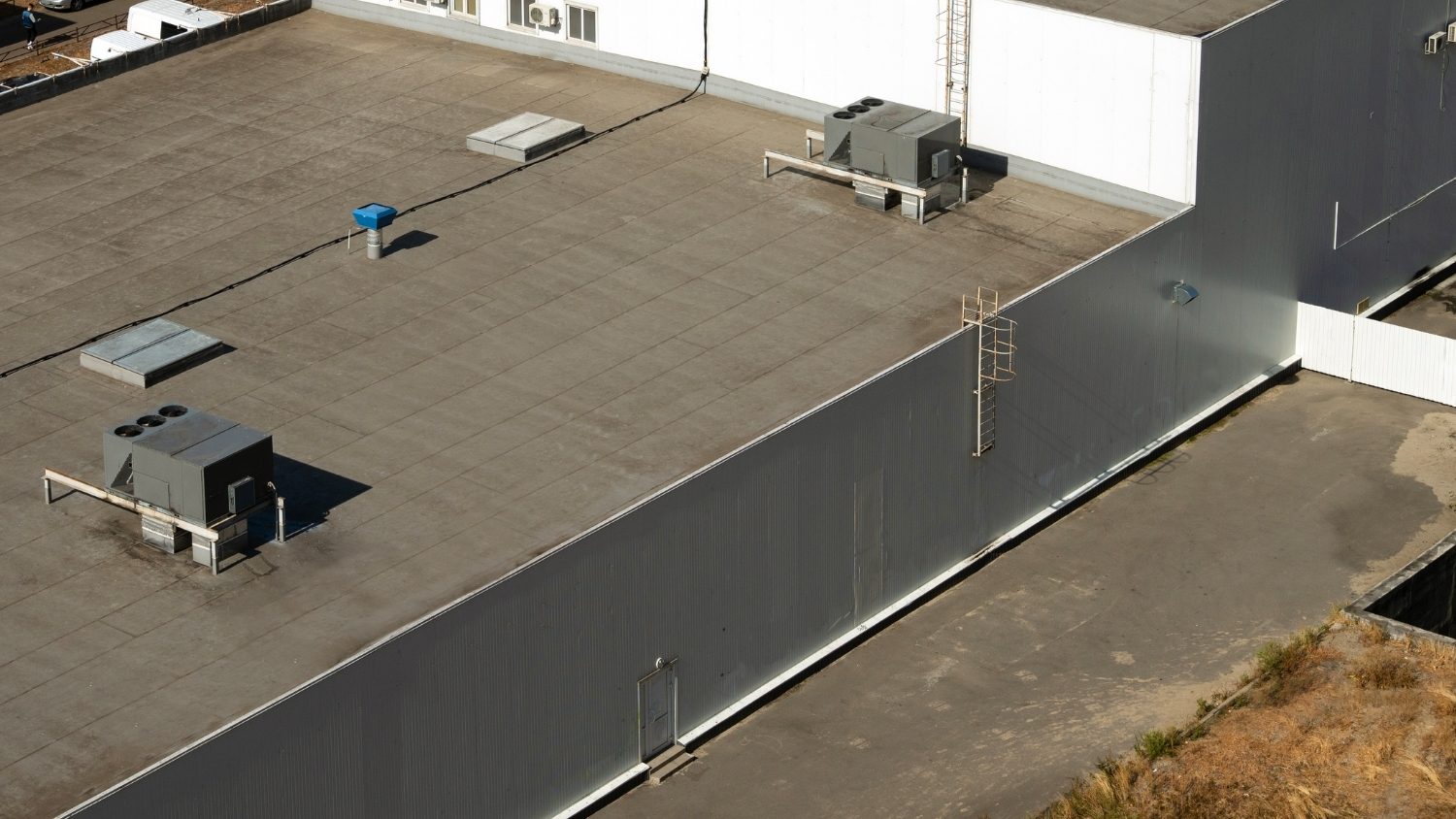
HVAC units, skylights, solar arrays, vents, and other rooftop equipment can make commercial roof repairs more complex because crews must work around additional penetrations and active building systems. These areas may also require closer inspection of flashing and sealants.
Emergency Response vs. Scheduled Repair Timing
Emergency commercial roof repairs often involve faster mobilization, temporary water-control measures, and coordination outside normal business hours. The immediate priority may be stopping active water intrusion before a permanent repair can be completed.
Scheduled repairs generally provide more flexibility for sourcing membrane-matched materials, planning crew access, and coordinating work around tenants, customers, and normal building operations.
Labor, Equipment, and Site Conditions
Labor costs can be influenced by crew size, safety requirements, material staging, equipment needs, and the overall conditions around the property. Commercial roof repair may also require planning around tenant schedules, deliveries, customer parking, or restricted access areas. These site-specific factors can add coordination time even when the damaged section of the roof itself is relatively small.
Commercial Roof Repair vs. Replacement: How to Know Which Makes Sense
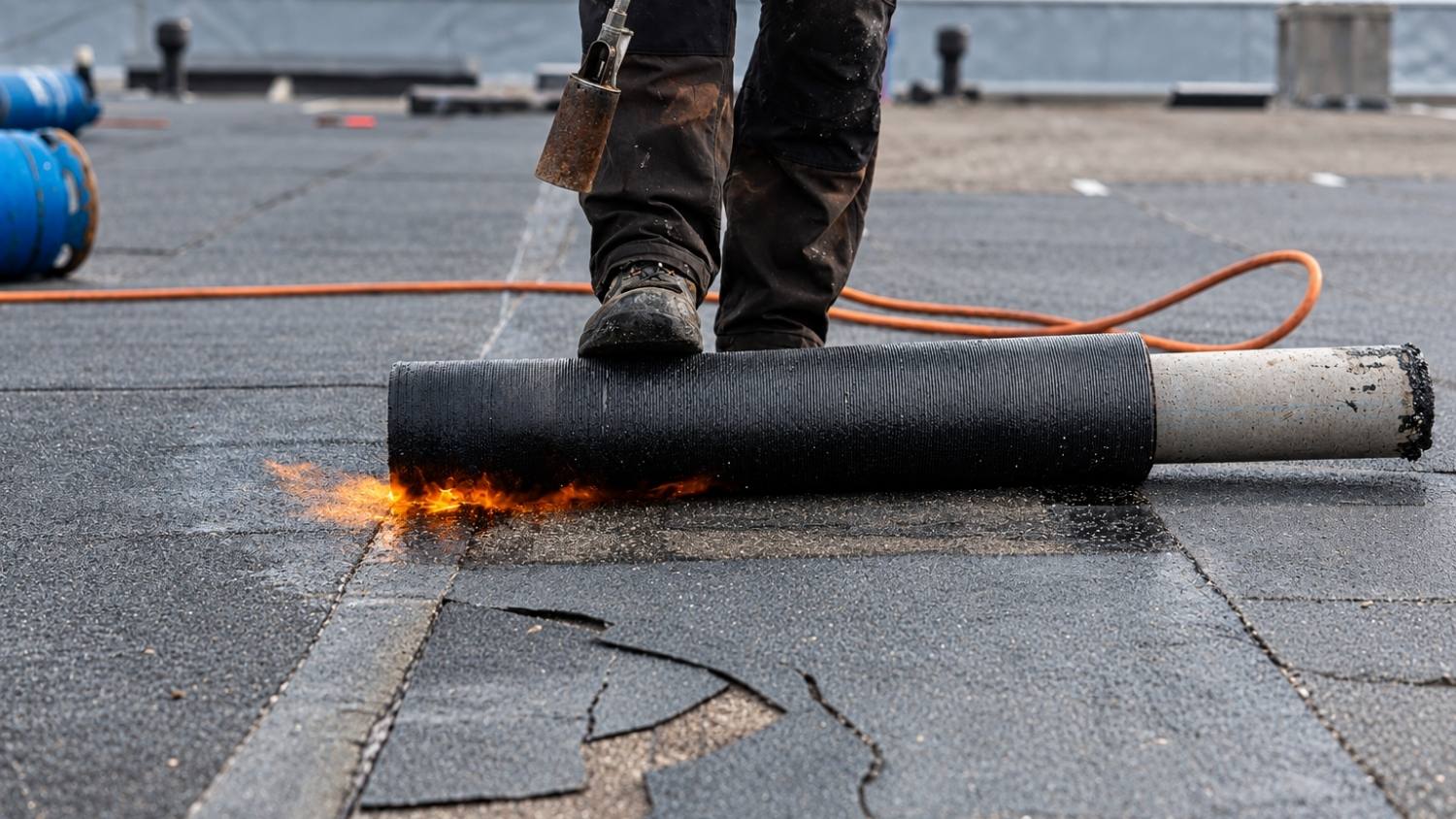
Repair makes sense when damage is isolated, the membrane is holding up structurally, and moisture has not spread beyond a contained area. Replacement becomes the more practical option once repairs are recurring, the membrane is nearing the end of its rated service life, or moisture has compromised a large portion of the insulation layer.
|
Condition |
Leans Toward Repair |
Leans Toward Replacement |
|
Membrane age |
Within manufacturer-rated lifespan |
Approaching or past rated service life |
|
Leak pattern |
Single, identifiable source |
Multiple locations or recurring after repair |
|
Insulation condition |
Dry, confirmed by inspection |
Widespread saturation across roof sections |
|
Seam condition |
Isolated failure point |
Shrinkage or separation across the field |
|
Ponding water |
Not present or resolved after repair |
Persistent, remaining visible more than 48 hours after rainfall |
Commercial roof replacement cost is naturally higher than a repair, but a roof with recurring leaks and aging insulation can end up costing more in cumulative repairs than a single, properly scoped replacement. A written comparison from a licensed contractor, not a guess based on the building's age alone, is the only way to know which path fits a specific roof.
How to Get an Accurate Commercial Roof Repair Estimate
Getting a number that actually reflects a specific building starts with a documented inspection, not a phone estimate. The following steps outline what a thorough, accurate commercial roofing estimate should include.
Step 1: Schedule a Written Roof Inspection
A qualified contractor should walk the roof, document membrane condition, drainage performance, flashing integrity, and any visible ponding or wear. A verbal walkthrough is not a substitute for a written report with dated findings.
Step 2: Confirm the Membrane Type and Roof Age
Repair materials and methods are membrane-specific. Confirming whether the roof is TPO, EPDM, PVC, or BUR or SBS, along with its approximate installation date, determines which repair approach and materials apply.
Step 3: Request a Moisture Assessment for Recurring Leaks
If a leak has appeared more than once, ask whether an infrared or moisture-meter survey is appropriate before committing to a repair scope. Confirming the extent of wet insulation upfront prevents mid-project surprises once the membrane is opened.
Step 4: Ask for an Itemized, Line-Item Proposal
A compliant proposal separates material costs from labor costs and lists any specialty work, such as HVAC curb flashing or drain repair, individually rather than folding it into one lump sum. That breakdown makes it possible to compare bids accurately.
Step 5: Compare Warranty Terms Tied to the Repair
Ask how the repair affects any existing manufacturer warranty on the roof system. Repairs performed by a contractor without the correct manufacturer certification can affect warranty standing on systems like Elevate EPDM and TPO or GAF commercial membranes.
When Should Poughkeepsie Property Managers Call a Commercial Roofing Contractor?
Interior ceiling stains, active drips, or bulging drywall should prompt a call regardless of how minor the visible damage looks from the ground. Water intrusion rarely stays contained to the point where it first appears.
Ponding water that remains visible more than 48 hours after rainfall, membrane shrinkage pulling away from walls or drains, and leaks that return after a prior repair are all signs the underlying issue may extend beyond a simple patch. A professional assessment is the only reliable way to confirm the scope before committing to a repair plan.
READ MORE: Commercial Roofers Near Me: How to Evaluate Their Experience
Frequently Asked Questions
Do commercial roof repairs in Poughkeepsie, NY, require a permit?
Permit requirements can depend on the scope of work and whether structural or other building changes are involved. A commercial roofing contractor or the local building department can help confirm what applies before work begins.
Can commercial roof repairs in Poughkeepsie be completed in phases?
Sometimes. Larger properties or roofs with several isolated problem areas may allow commercial roof repairs to be prioritized in stages based on urgency, roof condition, and budget.
What maintenance should follow a commercial roof repair in Poughkeepsie?
Follow-up maintenance may include checking repaired areas, keeping drains clear, and watching for new signs of moisture. The right routine depends on the roof system, its age, and the scope of the repair.
Should Poughkeepsie property managers document completed roof repairs?
Yes. Keeping a short record of the repaired area and completed work can make future commercial roof maintenance easier to track.
Can cold weather affect commercial roof repair in Poughkeepsie, NY?
Yes. Cold temperatures can affect how some commercial roofing materials are applied or cured. Scheduling may depend on the roof system, repair method, and current weather conditions.
Ready for a Commercial Roof Repair Estimate in Poughkeepsie, NY?
Lyndsey Roofing, LLC is a locally owned roofing and exterior contractor based in Poughkeepsie, NY, serving commercial and residential properties across Dutchess, Orange, Putnam, and Eastern Ulster Counties.
A written, itemized inspection is the starting point for any accurate commercial roof repair estimate.
Reach out to discuss the roof, the timeline, and what a personalized assessment would involve.