What’s in This Guide
- Interior Warning Signs: What Your Ceilings and Walls Are Telling You
- Rooftop Warning Signs: What to Look for on the Roof Surface
- Rising Energy Bills: An Overlooked Sign of Roof Damage
- How to Document Warning Signs Before Calling a Roofing Contractor
- Repair or Replacement? How Poughkeepsie Property Owners Should Weigh the Decision
- Why Commercial Roof Damage Costs More the Longer Poughkeepsie Businesses Wait
- What Affects the Cost of Commercial Roof Repair or Replacement
- When Should You Call a Professional Roofing Contractor?
- Frequently Asked Questions
- Ready to Protect Your Poughkeepsie Business With a Commercial Roof Inspection?
A single water stain on a break room ceiling rarely feels urgent. Neither does a slightly higher energy bill or a few bubbled patches on a flat roof. For Poughkeepsie business owners, though, these small details are often the first signs your commercial roof needs repair or replacement, long before a leak forces a closed sign on the door.
Commercial roof damage tends to develop out of sight, above ceiling tiles, behind parapet walls, and underneath rooftop HVAC units. By the time it reaches a customer-facing space, the commercial property roof repairs needed are usually more extensive than they would have been if caught earlier.
Quick Facts
- Ponding water lasting 48 hours or longer signals a drainage or slope problem and accelerates membrane breakdown.
- Ceiling stains and interior humidity often trace back to open seams, cracked flashing, or a punctured membrane, not a fresh leak.
- Rising energy bills can point to wet or compressed roof insulation losing its R-value, not just an aging HVAC system.
- A written commercial roof inspection is the only reliable way to confirm whether a specific roof needs repair or replacement.
Interior Warning Signs: What Your Ceilings and Walls Are Telling You
Interior damage is often the first sign anyone inside the building actually notices. By the time a stain or odor is visible indoors, moisture has typically been present in the roof assembly for a while.
Recurring Leaks and Ceiling Stains
A single leak after a major storm is common and often isolated. A leak that returns in the same spot, or a stain that keeps spreading, points to a source that a previous patch did not fully resolve.
Water rarely drips straight down from where it enters the roof. It travels along decking, insulation, and structural members before showing up on a ceiling tile, which means the visible stain may sit several feet from the actual opening in the membrane or flashing.
Interior Humidity, Musty Odors, and Early Moisture Signs
A musty smell, unexplained condensation, or a consistently damp feel in one part of the building often signals trapped moisture inside the roof assembly before any staining ever appears. Materials that stay wet are more likely to support mold growth the longer the source goes unaddressed.
The EPA recommends drying wet building materials within 24 to 48 hours of a known moisture event to limit the conditions that support mold. A roofing contractor who can locate and correct the water source at the roof level is a necessary first step before any interior moisture concern can be resolved.
Rooftop Warning Signs: What to Look for on the Roof Surface
Not every warning sign shows up inside the building first. Several of the most serious issues develop on the roof surface itself and are only visible during a walkover or a professional inspection.
Membrane Cracks, Blisters, and Open Seams
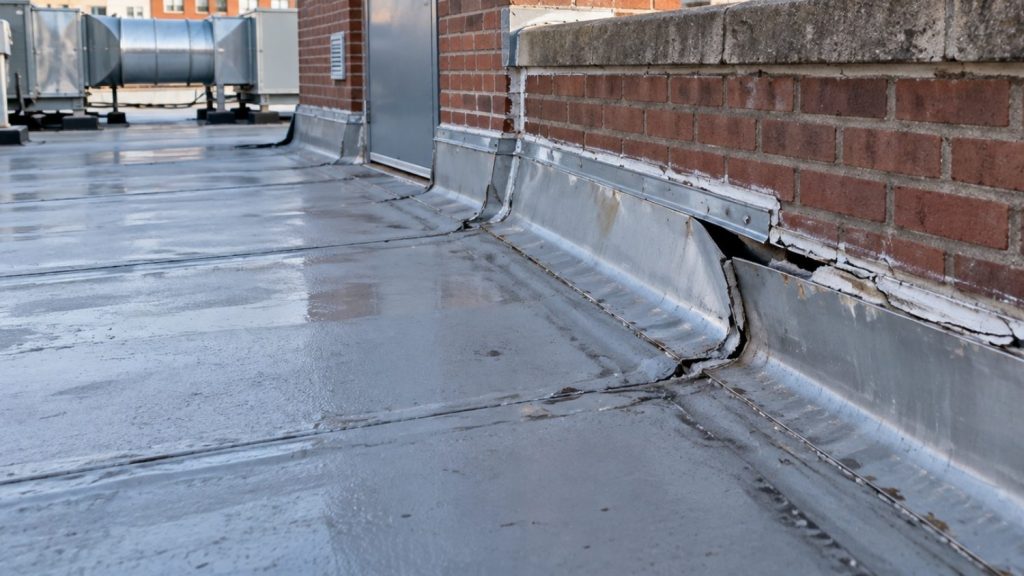
Cracking, blistering, and open seams are structural weak points in a low-slope membrane system. Seams are where two sheets of roofing material join together, and they are among the most common failure points on TPO, EPDM, and PVC systems.
An open seam does not need standing water to leak. Wind-driven rain, condensation, and even humidity can work through a separated seam over time, well before a visible puddle ever forms.
Damaged or Failing Flashing
Flashing seals the transitions where the roof meets walls, curbs, skylights, and roof edges. Lifted metal, cracked sealant, and separated laps at these transition points are common origins of leaks that never show up as one clean hole in the membrane.
Because flashing sits at a joint rather than in the open field, damage here is easy to miss from a casual walkover. That is one reason a trained inspection covers more ground than a quick visual check from the parking lot.
Ponding Water and Drainage Issues
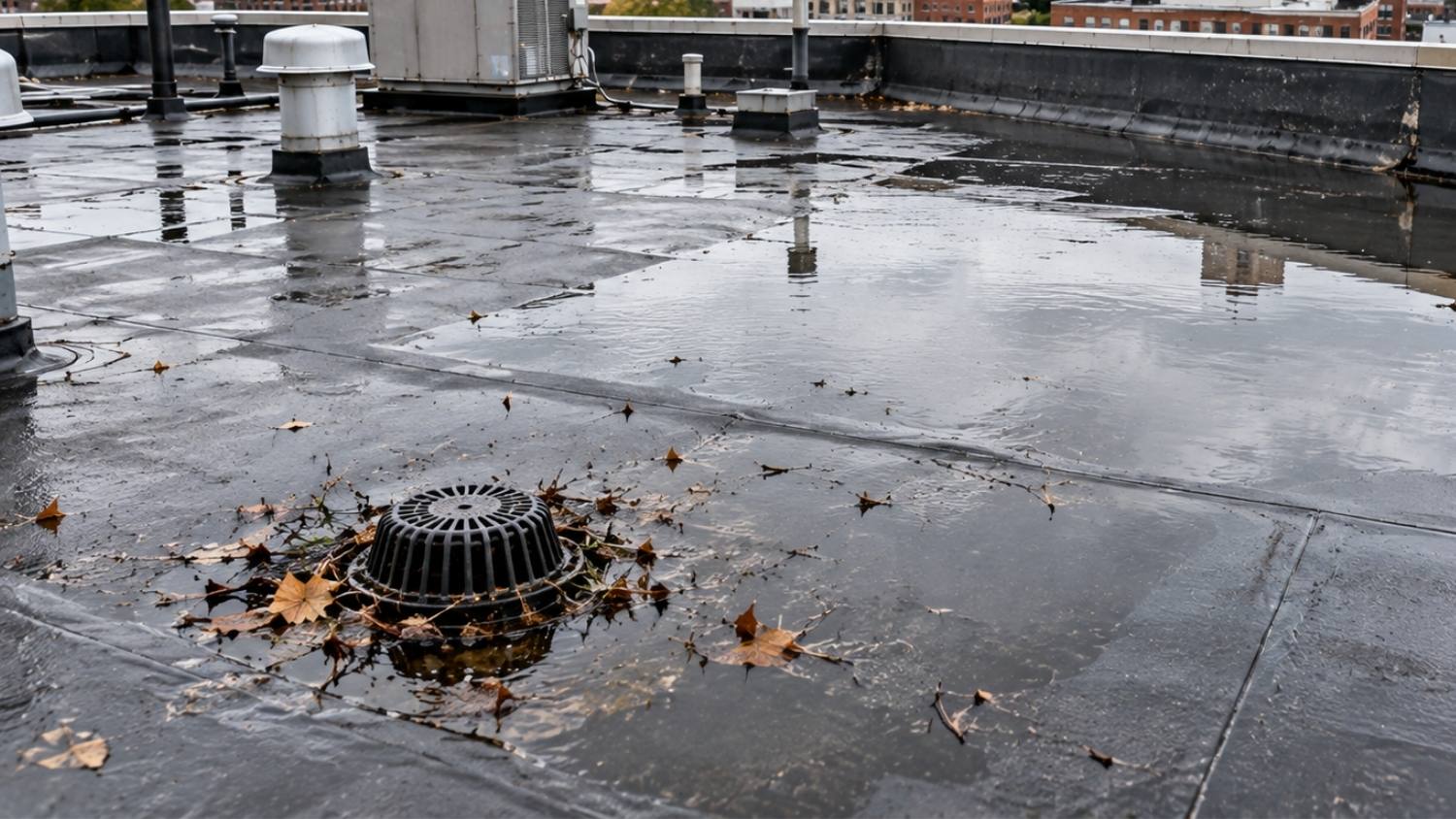
Ponding water is standing water that remains on a flat or low-slope roof instead of draining as designed. Industry guidance generally defines ponding as water remaining on the roof for 48 hours under conditions that would otherwise allow it to dry.
Ponding adds weight to the roof deck, accelerates membrane aging in the affected area, and often signals a blocked drain, a low spot in the deck, or insufficient slope in the original installation.
Visible Deterioration Around Rooftop Units
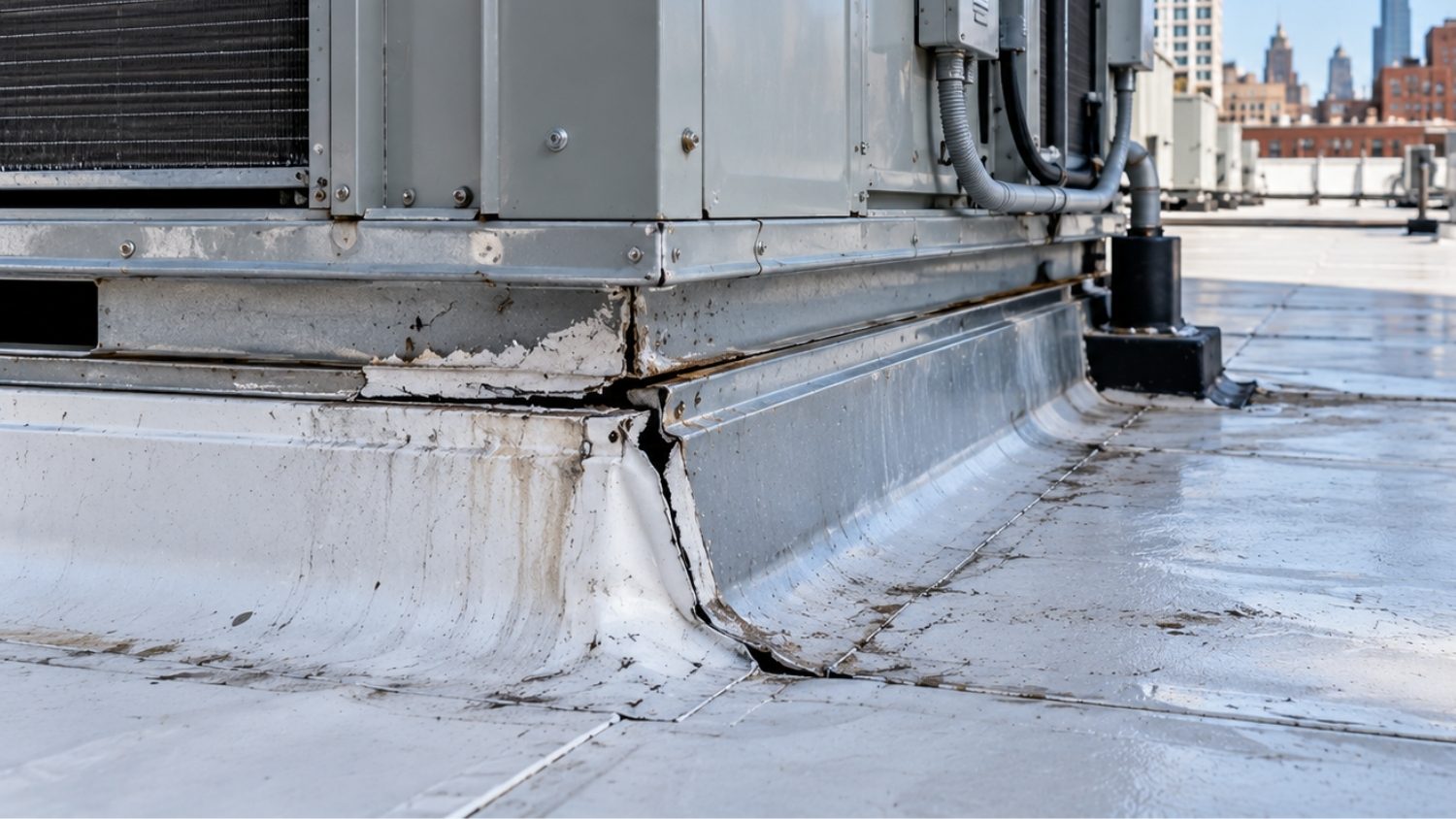
HVAC units, exhaust fans, and other rooftop equipment sit on curbs that penetrate the roof membrane. These penetrations concentrate foot traffic, vibration, and flashing detail work in a small area, which makes them more prone to wear than the open field of the roof.
Cracked pitch pockets, gaps at the base of a curb, or worn sealant around rooftop equipment are common, often overlooked sources of leaks directly beneath mechanical systems.
Rising Energy Bills: An Overlooked Sign of Roof Damage
A steady increase in heating or cooling costs, without a change in building use, can point to compromised roof insulation rather than an aging HVAC system alone.
Wet or damaged insulation loses much of its ability to resist heat transfer, which is the entire function of a roof's R-value rating.
R-value measures how well insulation resists heat flow, and moisture trapped inside a roof assembly reduces that performance well before any leak becomes visible indoors. A building working harder to hold a set temperature is often fighting a roof problem, not only an HVAC one.
Comparing utility bills against the same period from a prior year is a simple way to flag whether a roof-related energy loss deserves a closer look.
How to Document Warning Signs Before Calling a Roofing Contractor
A documented walkthrough gives a roofing contractor a clearer starting point and helps confirm whether a targeted repair or a broader evaluation is the right next step.
Step 1: Walk the Interior First
Check ceilings, walls, and areas below rooftop equipment for stains, soft spots, or musty odors. Note the location of each issue relative to interior walls or fixed equipment, since this helps narrow down where the roof-level source may be.
Step 2: Photograph Every Affected Area
Take dated photos of stains, bubbling, or damaged materials. A photo record shows whether an issue is spreading over time and gives a contractor useful reference points before the first site visit.
Step 3: Review Recent Utility Bills
Pull two to three months of energy bills and compare them to the same period from the previous year. A pattern of rising costs, paired with any interior signs, strengthens the case for a roof-focused inspection rather than an HVAC-only service call.
Step 4: Note Any Recent Rooftop Access
List any recent rooftop work, including HVAC servicing, satellite or antenna installation, or other contractors accessing the roof. Foot traffic and equipment work are common, often unintentional causes of membrane damage.
Step 5: Schedule a Professional Roof Inspection
Interior observations and photos are useful starting points, but only a hands-on inspection can confirm the source of damage, assess the membrane and flashing condition, and determine whether commercial roof repair or a larger scope of work is the right path forward.
Repair or Replacement? How Poughkeepsie Property Owners Should Weigh the Decision
Repair is usually the right call when damage is isolated, the roof is younger, and the membrane and decking underneath are otherwise sound. Replacement becomes the more practical option once damage is widespread, recurring, or affecting a significant share of the roof.
|
Factor |
Leans Toward Repair |
Leans Toward Replacement |
|
Extent of damage |
Isolated to one area |
Spread across multiple sections |
|
Leak history |
First occurrence |
Recurring in the same or new areas |
|
Membrane condition |
Localized cracking or wear |
Widespread blistering or brittleness |
|
Roof age |
Within the first half of expected service life |
Approaching or past expected service life |
|
Repair cost vs. replacement value |
Well below replacement cost |
Approaching a significant share of replacement cost |
This comparison is a starting point, not a final answer. A written inspection report from a qualified commercial roofing contractor is the only reliable way to confirm which side of that line a specific roof falls on.
Why Commercial Roof Damage Costs More the Longer Poughkeepsie Businesses Wait
Delaying commercial roof repair can increase both the repair scope and the disruption to daily operations. Common problems include:
- Moisture spreading beyond the roof surface: Water can move into insulation, decking, and interior finishes before the damage becomes obvious.
- Freeze-thaw stress: Poughkeepsie’s seasonal temperature changes can place repeated stress on membranes, seams, and flashing.
- Larger repair areas: A small leak or membrane issue can expand over time, requiring more materials and labor to address.
- Interior property damage: Water intrusion can affect inventory, equipment, ceilings, walls, and other building materials.
- Business disruption: Repairs may lead to tenant complaints, equipment downtime, or sections of the property being temporarily closed.
- Higher overall costs: Addressing a contained roofing issue early is generally less disruptive than waiting until the damage spreads.
What Affects the Cost of Commercial Roof Repair or Replacement
Commercial roof repair and replacement costs vary widely and depend on the roofing system, the extent of damage, and how accessible the building is. A precise number isn't possible without a site-specific assessment.
Several factors typically shape the estimate:
- Roofing system type: TPO, EPDM, PVC, and metal systems each carry different material and labor costs.
- Scope of damage: A single seam repair costs far less than a section requiring new insulation and membrane.
- Roof accessibility: Height, rooftop obstructions, and building layout affect labor time and equipment needs.
- Decking condition: Water-damaged decking discovered during repair adds to the project scope.
- Timing and urgency: Emergency or storm-related repairs can affect scheduling and project sequencing.
A commercial roofing contractor should walk the property and provide a written, itemized estimate before any work begins. Costs vary by building, roof condition, and project scope, so the only accurate figure is one based on a direct site assessment.
When Should You Call a Professional Roofing Contractor?
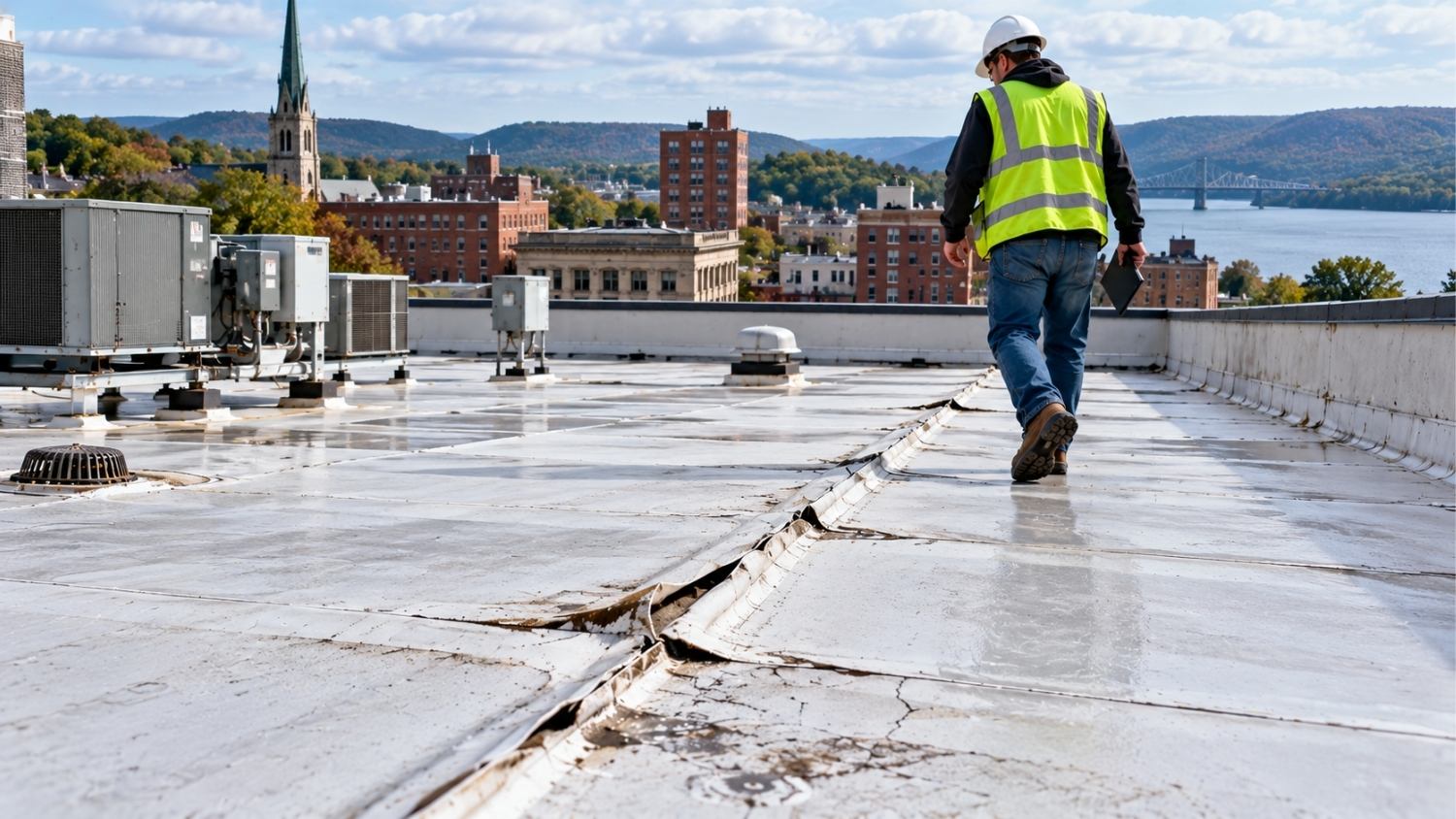
Consider calling a professional roofing contractor when you notice:
- Active roof leaks: Drips, ceiling stains, or recurring moisture can indicate a problem that needs closer inspection.
- Ponding water: Water that remains on a flat or low-slope roof may point to drainage or membrane issues.
- Damaged seams or flashing: Open seams, loose flashing, or visible gaps can allow water into the roofing system.
- Cracks, punctures, or membrane damage: Even small damaged areas can spread if they are left exposed.
- Repeated roof problems: Recurring leaks after previous repairs may indicate a larger underlying issue.
- Interior water damage: Wet insulation, stained walls, or damaged ceilings can mean moisture has moved beyond the roof surface.
- Storm-related damage: High winds, falling debris, or severe weather can cause damage that is difficult to assess from the ground.
READ MORE: Commercial Roofers Near Me: 8 Signs It's Time to Call the Pros
Frequently Asked Questions
Can rust or corrosion on rooftop metal be a sign of commercial roof damage?
Yes. Rust around fasteners, curbs, or metal roof components can suggest prolonged moisture exposure. A commercial roofing contractor can determine whether the issue is limited to the metal or connected to a larger roof problem.
Are loose membrane edges a warning sign that a commercial roof needs repair?
They can be. Loose or lifted membrane edges may allow wind and moisture to affect the roofing system. Poughkeepsie property owners should have noticeable separation checked before it spreads.
Can damaged roof sealant be an early sign of a roofing problem?
Yes. Cracked, shrinking, or missing sealant around penetrations and roof components can leave vulnerable areas exposed. Catching these smaller signs early may help prevent more extensive commercial roof repair.
Should I be concerned if roofing material or sealant pieces appear near roof drains?
It is worth investigating. Loose roofing material or deteriorated sealant can indicate aging or localized damage somewhere on the roof. A professional inspection can help identify where the debris came from.
Can storm damage exist even if my Poughkeepsie commercial roof is not leaking?
Yes. Wind, hail, or debris can damage roofing materials without causing an immediate interior leak. After severe weather, subtle changes such as lifted edges, punctures, or damaged components may warrant a commercial roof inspection.
Ready to Protect Your Poughkeepsie Business With a Commercial Roof Inspection?
Catching these warning signs early is only useful if the next step is a qualified assessment. Lyndsey Roofing, LLC, has served commercial and residential properties across Dutchess, Orange, Putnam, and Eastern Ulster Counties, with credentials specific to low-slope commercial systems.
A professional inspection is the clearest way to know whether a commercial roof needs a targeted repair or a larger conversation about replacement.