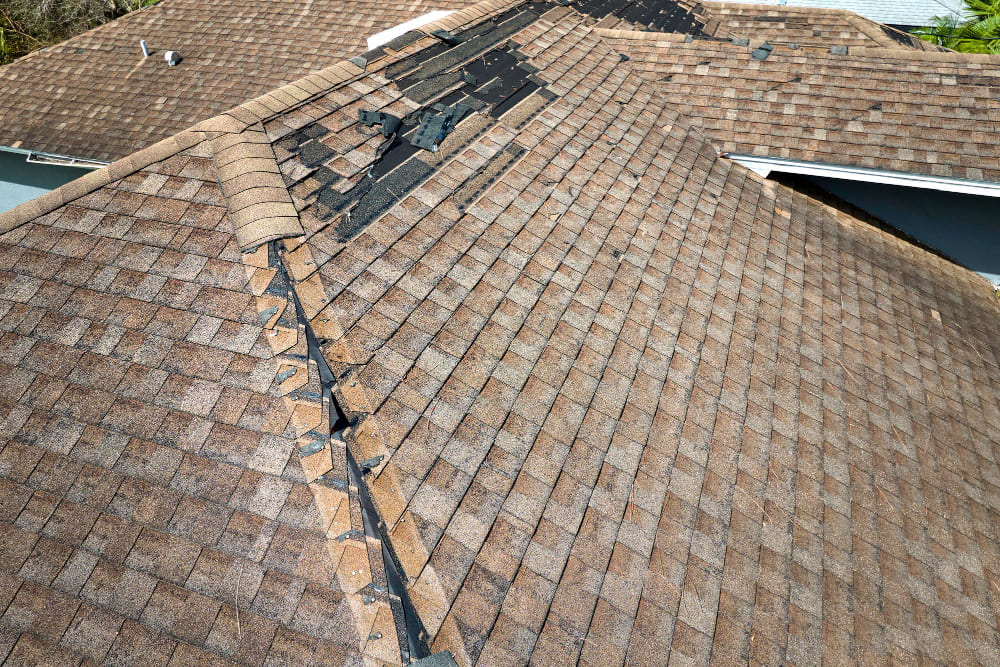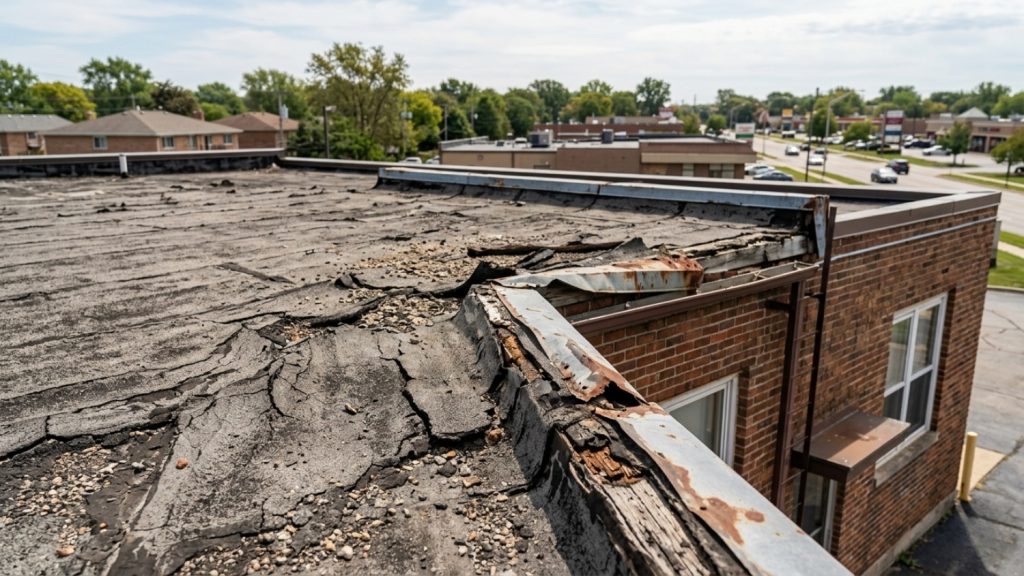
Severe storms are becoming more frequent and more expensive across the United States, and commercial properties are often the first to absorb the impact.
After a storm passes, the biggest mistake is waiting for obvious signs like interior leaks before taking action. Most commercial roof storm damage begins in less visible ways. Small membrane punctures, lifted seams, and gutter storm damage can quietly compromise the roof system before problems reach the interior.
The best next step is to involve a qualified roofing contractor early. A professional inspection connects immediate response with long-term protection through industrial roof maintenance.
What’s In This Guide
- How Weather Conditions in Poughkeepsie, NY, Affect Commercial Roofs
- What Counts as Commercial Roof Storm Damage?
- The Types of Storm Damage Commercial Owners Often Miss
- How a Roofing Contractor Evaluates Commercial Roof Storm Damage
- When To Call a Storm Damage Roofing Contractor Immediately
- Step by Step: What Commercial Property Owners Should Do After a Storm
- How a Roofing Contractor Helps With Insurance Documentation
- Why Gutter Storm Damage Matters More Than Many Owners Think
- Common Mistakes Commercial Property Owners Make After a Storm
- Repairs Now or Maintenance Plan Later? Commercial Owners Usually Need Both
- Choosing the Right Roofing Contractor for Commercial Storm Damage
- Frequently Asked Questions (FAQs)
- Protect Your Commercial Property Before Storm Damage Spreads
Quick Facts
- Commercial roof storm damage is often hidden at first.
- A roofing contractor can catch damage early.
- Gutter storm damage can lead to bigger roof issues.
- Good documentation helps support insurance claims.
- Repairs should lead into industrial roof maintenance.
How Weather Conditions in Poughkeepsie, NY, Affect Commercial Roofs
Local weather patterns play a direct role in how commercial roof storm damage develops and how often inspections are needed. Understanding regional risks helps owners plan ahead with a roofing contractor.
Common Regional Storm Risks
- Heavy rain leading to drainage overload and gutter storm damage
- Strong winds that loosen seams and edge materials
- Seasonal hail events that can puncture roofing membranes
Cold Weather Impact
- Freeze-thaw cycles that expand small cracks
- Ice buildup that stresses drainage systems
- Increased risk of hidden moisture damage
What This Means for Property Owners
- Schedule inspections after major storms
- Monitor drainage performance regularly
- Strengthen industrial roof maintenance plans
What Counts as Commercial Roof Storm Damage?
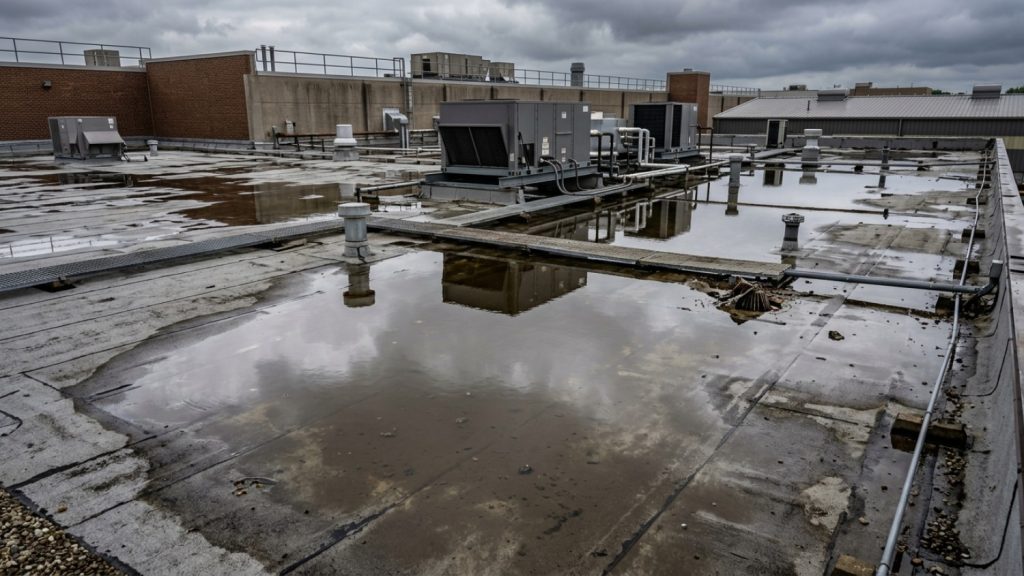
Commercial roof storm damage refers to any storm-related issue that reduces the roof’s ability to protect the building from water, wind, and environmental exposure. This includes more than visible tears or leaks.
Common causes include:
- Wind uplift that loosens or detaches roofing materials
- Hail impact that punctures or bruises membranes
- Wind-driven rain that penetrates weak points
- Debris strikes from branches or airborne objects
- Drainage failure caused by clogged or damaged systems
Damage can affect multiple components of the roof system:
- Membranes and coatings
- Flashing and seams
- Roof edges and coping
- Drains and downspouts
- Insulation beneath the surface
Gutter storm damage is also part of this category. When gutters bend, detach, or clog, water can back up onto the roof or overflow near the building envelope. That creates conditions for further deterioration.
The Types of Storm Damage Commercial Owners Often Miss
Many commercial owners focus on visible damage, but hidden issues are often more serious.
Visible Damage
- Torn or missing roofing materials
- Detached flashing or edge metal
- Punctures from debris
- Sagging or bent gutters
- Overflow stains on exterior walls
- Interior ceiling stains or active leaks
Hidden Damage
- Subsurface moisture trapped beneath the membrane
- Lifted seams that allow water intrusion over time
- Fastener movement caused by wind pressure
- Minor gutter storm damage that alters drainage patterns
- Insulation saturation that reduces thermal performance
A storm damage roofing contractor is trained to identify these less obvious conditions. Without a professional inspection, hidden damage can remain undetected until it leads to structural issues or widespread leaks.
How a Roofing Contractor Evaluates Commercial Roof Storm Damage
A qualified roofing contractor provides more than a quick visual check. The goal is to assess the full condition of the roof system and identify both immediate and developing risks.
A typical inspection includes:
- Evaluation of membrane integrity and surface damage
- Inspection of seams, flashing, and penetrations
- Assessment of roof edges and securement systems
- Identification of moisture intrusion or insulation damage
- Review of drainage systems, including gutters and downspouts
- Documentation of all findings with photos and notes
This process is important because commercial storm damage often affects more than the visible roof surface. A storm damage roofing contractor connects these findings to actionable next steps
When To Call a Storm Damage Roofing Contractor Immediately
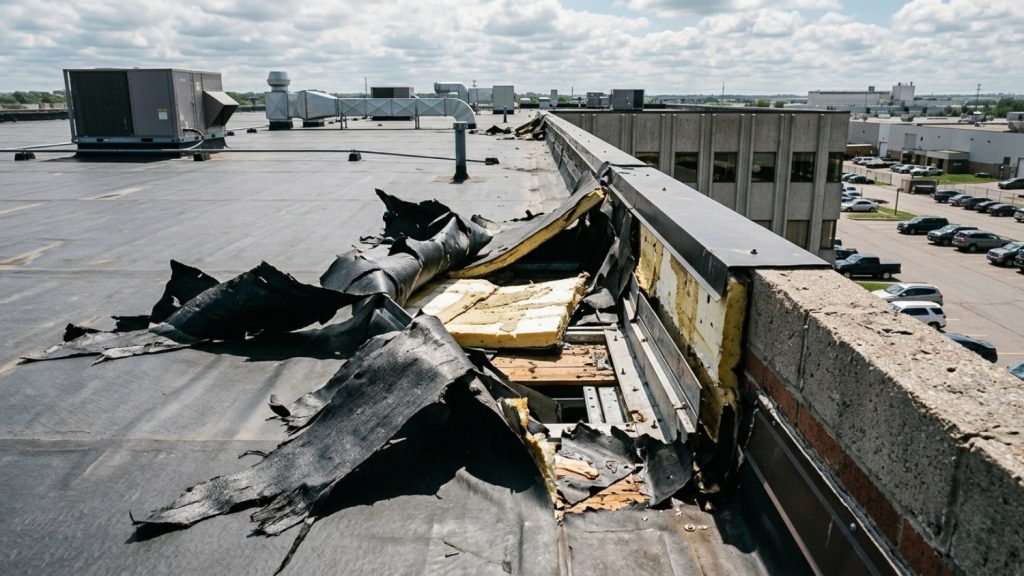
Timing matters. Waiting can allow minor damage to worsen and increase repair costs.
Call Immediately if You Notice
- Active leaks inside the building
- Missing or displaced roofing materials
- Standing water that does not drain
- Loose flashing or exposed seams
- Detached or overflowing gutters
- Debris impact near rooftop equipment
Call Even Without Visible Leaks If
- The building experienced high winds or hail
- Nearby properties show storm damage
- There was significant debris or tree impact
- Drainage systems overflowed during the storm
A storm damage roofing contractor insurance claim is easier to support when damage is documented early. Delays can make it harder to distinguish storm-related issues from normal wear.
➤ READ: How Reviews and Ratings Can Help You Choose the Right Commercial Roofers Near Me
Step by Step: What Commercial Property Owners Should Do After a Storm
After a storm, fast and organized action can help limit water intrusion, reduce repair costs, and strengthen your documentation for insurance.
Step 1: Prioritize Safety
Limit access to the roof and surrounding areas. Wet surfaces, electrical hazards, and loose materials create risk.
Step 2: Document Visible Conditions
Take photos of:
- Roof edges and visible damage
- Interior leaks or stains
- Debris impact areas
- Signs of gutter storm damage
Record the date and time of the storm.
Step 3: Contact a Roofing Contractor
Schedule an inspection with a roofing contractor experienced in commercial roof storm damage. Request written documentation and photos.
Step 4: Prevent Additional Damage
Use temporary measures if needed to limit water intrusion. Keep records of any actions taken.
Step 5: Organize Documentation for Insurance
Maintain:
- Inspection reports
- Photos and videos
- Repair estimates
- Maintenance history
Disaster recovery guidance emphasizes the importance of thorough documentation when working with storm damage roofing contractor insurance claims.
Step 6: Plan Repairs and Maintenance
Separate urgent repairs from long-term improvements. Use the inspection findings to strengthen your industrial roof maintenance plan.
How a Roofing Contractor Helps With Insurance Documentation
A roofing contractor plays a key role in documenting damage for insurance claims.
They typically provide:
- Detailed inspection reports
- Photo evidence of damage
- Identification of storm-related versus pre-existing issues
- Clear repair recommendations
- Notes on affected drainage systems and gutter storm damage
This information helps property owners file more accurate claims and gives adjusters a clearer record of the damage.
Why Gutter Storm Damage Matters More Than Many Owners Think
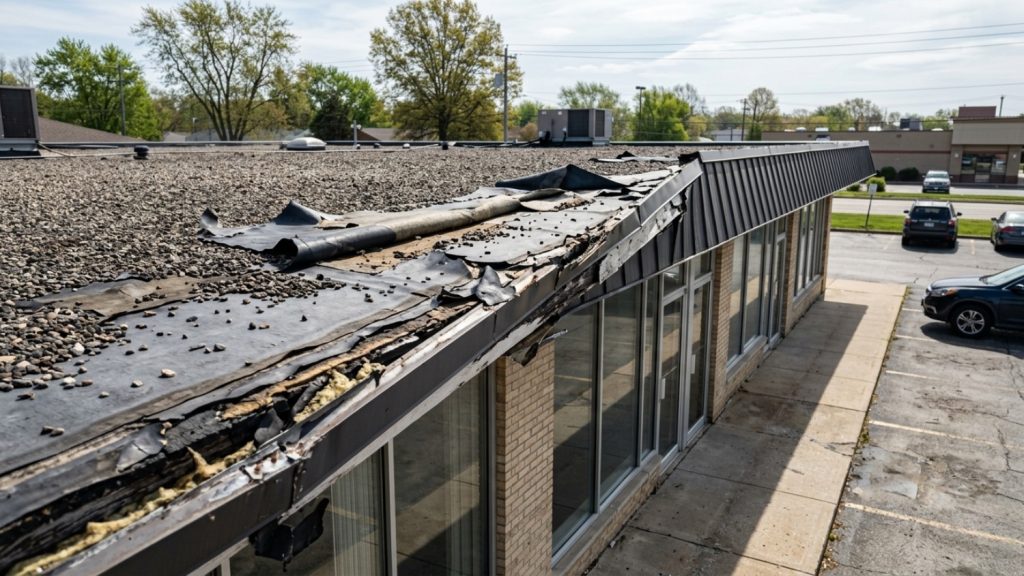
Gutters are often overlooked after a storm, but they are critical to roof performance.
Gutter storm damage can include:
- Bent or detached sections
- Loose brackets or fasteners
- Crushed downspouts
- Clogs that cause overflow
These issues can lead to:
- Water backing up onto the roof surface
- Increased stress on roof edges
- Water infiltration near walls and foundations
- Safety hazards around entrances
A roofing contractor evaluates gutters as part of the overall system. Addressing gutter storm damage early helps prevent more serious problems.
Common Mistakes Commercial Property Owners Make After a Storm
After a storm, the damage is only part of the problem. The way a commercial property owner responds can affect repair costs, insurance documentation, and the long-term performance of the roof.
Waiting for Visible Leaks
Many owners delay calling a roofing contractor because there are no active leaks. However, commercial roof storm damage often starts beneath the surface. By the time water appears inside, insulation and structural components may already be affected.
Overlooking Gutter and Drainage Damage
Focusing only on the roof surface while ignoring gutter storm damage is a common oversight. Damaged or clogged gutters can redirect water back onto the roof, increasing the risk of pooling, edge deterioration, and long-term water intrusion.
Skipping Professional Inspection
Relying on a quick visual check instead of a full evaluation can lead to missed issues. A storm damage roofing contractor is trained to identify hidden damage, such as seam separation, moisture intrusion, and compromised flashing that are not visible from the ground.
Delaying Documentation for Insurance
Failing to document damage immediately can weaken a storm damage roofing contractor insurance claim. Without clear photos, inspection reports, and timelines, it becomes harder to prove that damage was caused by a specific storm event.
Approving Repairs Without a Clear Scope
Quick fixes without proper assessment can lead to incomplete repairs. Without a documented scope from a roofing contractor, temporary solutions may overlook deeper problems, increasing the likelihood of repeat damage.
Treating Repairs as a One-Time Fix
Addressing only immediate issues without planning for industrial roof maintenance leaves the building vulnerable. Storm damage should trigger a broader maintenance strategy to prevent recurring problems and extend the roof’s lifespan.
Repairs Now or Maintenance Plan Later? Commercial Owners Usually Need Both
Storm response should not stop at emergency repairs.
Emergency repairs focus on:
- Active leaks
- Open seams or punctures
- Detached flashing
- Immediate drainage problems
Industrial roof maintenance focuses on:
- Routine inspections
- Moisture detection
- Drainage performance
- Preventive repairs
- Long-term documentation
Combining both approaches helps extend roof life and reduce future risk. Ongoing maintenance is a key factor in roof durability and performance.
Choosing the Right Roofing Contractor for Commercial Storm Damage
Not all contractors specialize in commercial systems. Selecting the right partner matters.
Look for a roofing contractor with:
- Experience in commercial roof systems
- Knowledge of commercial roof storm damage
- A clear inspection and documentation process
- Understanding of drainage systems and gutter storm damage
- Ability to connect repairs with industrial roof maintenance
Ask questions such as:
- How do you document storm damage for insurance?
- What types of commercial roofs do you service?
- Do you provide both emergency repairs and maintenance planning?
Frequently Asked Questions (FAQs)
How soon should a commercial roof be inspected after a storm?
As soon as conditions are safe. Early inspection helps catch hidden damage, limit further deterioration, and support timely insurance documentation.
Can storm damage void a commercial roof warranty?
Storm damage alone usually does not void a warranty, but delayed repairs and poor maintenance can affect coverage. Keep records of inspections, repairs, and maintenance.
Should tenants be notified after commercial roof storm damage is found?
Yes, if the damage could affect operations, safety, or interior conditions. Prompt communication helps tenants prepare for leaks, repair access, temporary closures, or disruptions while the roofing contractor evaluates the building.
Is temporary roof tarping enough after a commercial storm event?
Temporary protection can help limit additional water intrusion, but it is not a full repair. A storm damage roofing contractor should still inspect the roof system to determine whether moisture, flashing, drainage, or gutter storm damage needs permanent correction.
How often should commercial gutters be inspected after storm season?
After major storms and during routine seasonal maintenance. Regular checks help catch clogs, detachment, and drainage issues early.
Protect Your Commercial Property Before Storm Damage Spreads
A qualified roofing contractor can assess storm-related damage, document problem areas, and help turn immediate repairs into a longer-term maintenance plan.
If your property in Poughkeepsie, NY, has recently experienced severe weather, consider reaching out to Lyndsey Roofing, LLC for a professional inspection and clear next steps.
Contact us today.