Oil canning is usually a cosmetic effect caused by normal metal movement, material characteristics, or installation stress. It rarely means your roof is failing, but it can signal a workmanship or substrate problem that is worth evaluating.
In Poughkeepsie, NY, the issue can be more noticeable because our climate swings hard from winter to summer. Average highs hit about 84°F in July, and average lows dip to around 19°F in January. This creates repeated expansion and contraction cycles that can amplify waviness in large flat metal panels.
Table of Contents
Key Takeaways
✔ Oil canning is usually cosmetic and does not automatically mean your roof is failing.
✔ Poughkeepsie’s hot summers and cold winters can make waviness more noticeable because metal expands and contracts repeatedly.
✔ Most waviness comes from panel design choices, uneven decking, or installation-related stress.
✔ The right fix depends on the root cause, ranging from minor adjustments to partial repairs or full replacement.
✔ If waviness is paired with leaks, shifting panels, or visible deck problems, schedule a professional inspection sooner rather than later.
What Is Oil Canning? (And Why It Happens on Metal Roofs)
What Is Oil Canning in Roofing Terms?
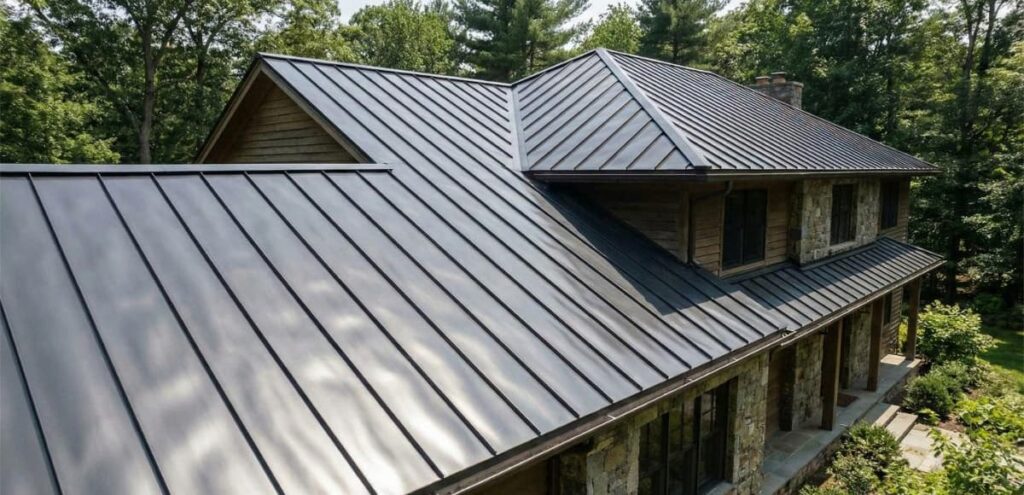
In roofing, it refers to visible waviness in the flat areas of metal panels, usually between ribs or seams. The Metal Construction Association defines it as visible waviness in the flat areas of metal roofing and metal wall panels, also described technically as elastic buckling or stress wrinkling.
Homeowners typically notice it as:
- A “quilted” reflection when sunlight hits the roof
- Shallow ripples that run vertically or diagonally
- Panel distortion that looks like the metal is not perfectly flat
Is Oil Canning a Defect or Normal Behavior?
In many cases, oil canning on a metal roof is expected behavior, not a defect. Industry guidance commonly classifies it as a characteristic of light-gauge metal products, especially those with wide, flat “architectural” panels.
The National Roofing Contractors Association (NRCA) also states that oil canning by itself is not a cause for rejection.
That matters because homeowners often assume waviness means the roof was installed wrong. Sometimes it was, but sometimes it is simply how flat metal reacts under real-world conditions.
Oil Canning on Metal Roofs: Common Causes Homeowners Should Know
Natural Metal Movement From Temperature Changes
Metal expands when heated and contracts when cooled. If panels are constrained by clips, fasteners, or tight seams, that movement can show up as oil canning in the flat areas.
Why Poughkeepsie Weather Can Make It More Visible
Seasonal conditions here can amplify oil canning metal roof waviness:
- Hot summers that heat metal panels well above air temperature
- Freezing winters that contract panels quickly
- Big day-to-night swings that repeat movement daily
Snow Load and Freeze-Thaw Cycles Add Stress
Winter conditions can worsen visual distortion, especially when other issues exist:
- Snow load adds weight that can highlight uneven decking
- Freeze-thaw cycles can affect the roof deck and underlayment
- Ice buildup can restrict drainage and stress transitions
Panel Thickness and Material Quality
Thinner metal flexes more easily, making it more prone to oil canning, especially on wide, flat standing seam panels.
Gauge Basics
Gauge = thickness. You do not need to know exact numbers, but you should know:
- Thicker panels resist waviness better
- Thinner panels can still perform well, but they may show more cosmetic rippling
- Wider panels tend to show oil canning more than narrower profiles
Steel vs. Aluminum
Both can be excellent roofing materials, but they behave differently:
- Steel: Strong and commonly used for residential roofing
- Aluminum: Lightweight and corrosion-resistant, but it expands more with temperature changes
Profile, thickness, and installation quality matter more than the metal type alone

Improper Handling, Storage, or Transportation of Panels
Panels can carry stress from the job site to the roof. Once installed, sunlight makes that distortion easier to see.
Common Handling Mistakes
Oil canning can be triggered by:
- Uneven stacking that bends panels under their own weight
- Dragging panels across rough surfaces
- Improper lifting that twists long panels
- Storing panels without full support
Uneven Roof Decking or Substrate Problems
Metal panels reflect the surface beneath them. If the deck is not flat, the roof will not look flat.
Common Substrate Issues
These often lead to visible oil canning:
- Warped sheathing from past moisture exposure
- Uneven rafters or framing shifts
- Patchwork decking repairs with inconsistent heights
- Swollen plywood edges
Why Older Poughkeepsie Homes Are More Vulnerable
Older homes often have:
- Settling and framing shifts over time
- Previous reroofing layers that were not leveled
- Hidden deck damage that only shows up once metal panels are installed
Installation Issues
Even high-quality metal panels can develop oil canning if they are installed under tension or restricted from moving naturally.
Over-Tightening Fasteners
When fasteners are driven too tight, panels cannot move freely. That creates stress points that ripple flat areas.
Incorrect Clip Spacing or Clip Installation
Standing seam roofs rely on clips to allow controlled movement. Problems include:
- Clips spaced too far apart
- Clips fastened inconsistently
- Clips installed out of alignment
Misalignment of Panels or Seams
Even minor layout issues can increase stress:
- Panels installed slightly out of square
- Seams forced into place
- Inconsistent spacing between panel runs
Underlayment and Insulation Issues
Uneven layers beneath the metal can “telegraph” through the panel:
- Wrinkled underlayment
- Bunched material near seams
- Uneven insulation or substrate layers
Oil Canning Metal Roof Problems: Should You Worry?
Most oil canning metal roof waviness is cosmetic and does not mean the roof is failing. But it should be evaluated if it is severe, worsening, or paired with performance issues.
Does Oil Canning Affect Performance or Lifespan?
Usually, No
Oil canning is typically a visual outcome, not a durability issue.
When It Can Signal Bigger Problems
Oil canning may point to:
- Deck unevenness
- Over-tightened fasteners or restricted movement
- Clip issues on standing seam systems
- Panel stress from misalignment
Why It May Get More Noticeable Over Time
In Poughkeepsie, panels go through constant seasonal movement. If panels were installed under tension, waviness can stand out more over time.
Does Oil Canning Cause Leaks?
Not Directly
Oil canning usually occurs in flat areas, not at seams or flashings where leaks start.
Poor Installation Can Create Both Waviness and Leak Risk
If oil canning comes from workmanship issues, you may also see:
- Seam irregularities
- Loose flashing
- Fastener stress or pull-out
- Underlayment inconsistencies
Signs You Should Get an Inspection
Call a roofer if you notice:
- Severe buckling in one area (not mild rippling across panels)
- Waviness that worsens quickly
- Uneven seams, trim, or ridge cap lines
- Loose or raised fasteners
- Water stains, attic moisture, or dripping
When to Call a Roofer for Evaluation
If oil canning is paired with leaks, shifting panels, or visible deck sagging, get an inspection promptly.
Before you move forward with a roof replacement near me in Poughkeepsie, NY, it’s worth getting a professional opinion. An evaluation can tell you if there’s an underlying installation or deck issue that should be corrected.
Preventing Oil Canning Before It Starts: Best Practices for Homeowners
Choose the Right Panel Type for Your Home
Pick Panel Features That Naturally Hide Waviness
Some panel designs are simply less likely to show oil canning because they reduce glare and panel flex:
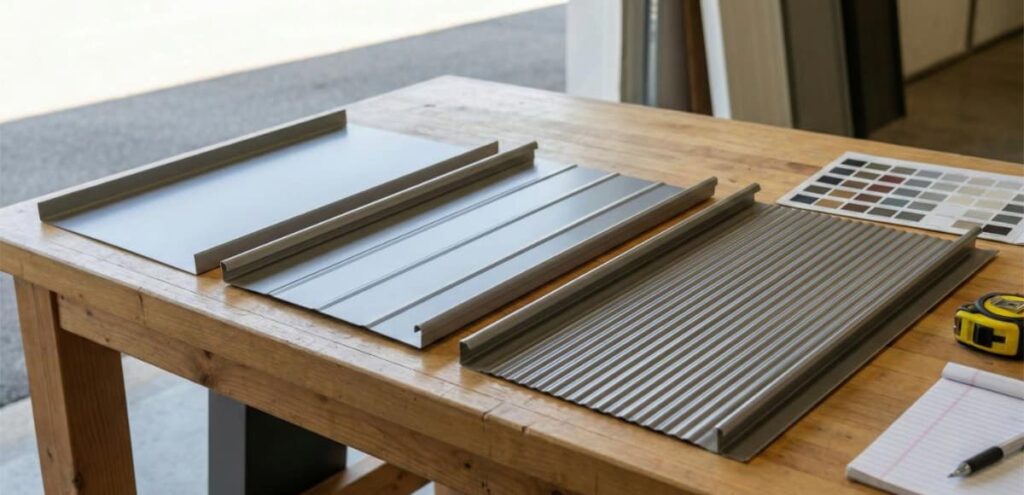
- Striated or micro-rib panels: Break up reflections, making waviness harder to notice.
- Narrower panel widths: Wide flat panels show ripples more easily.
- Heavier gauge metal: Thicker panels resist buckling better than thinner ones.
- Textured finishes: Gloss highlights waviness; textured coatings soften the look.
Match the Panel Style to Your Home’s Visibility and Exposure
Where and how your roof is seen matters:
- Highly visible front-facing slopes benefit from striations or textured finishes.
- Shaded or less visible slopes may show oil canning less, even with smoother panels.
- Long panel runs often need careful system design to manage thermal movement.
Hire an Experienced Local Metal Roofing Contractor
What to Look for in a Poughkeepsie Metal Roofing Contractor
A strong local installer should offer:
- Proven standing seam experience: Not just “metal capable,” but metal-specialized.
- Deck evaluation and preparation: Metal panels highlight uneven decking immediately.
- Correct clip and fastening approach: Panels must be secure without being over-constrained.
- Clear workmanship warranty: Especially important since cosmetic issues are often excluded from manufacturer warranties.
Ask These Questions Before Your Project Begins
A metal roof is a long-term investment, and small choices in panel design and installation details can determine whether you love the finished look or end up frustrated by visible oil canning.
- What gauge are you recommending, and why?
- Are striated panels available?
- How wide are the panels?
- What finish are you recommending?
- Will you inspect the deck for dips, humps, or warped sheathing?
- How will the system handle expansion and contraction?
- How will the panels be stored and handled on-site?
- How do you set expectations around oil canning?
- Does your workmanship warranty cover installation-related waviness?
Frequently Asked Questions (FAQs)
Oil canning is the visible waviness or rippling that shows up in the flat areas of metal roofing panels. On an oil canning metal roof, it is usually cosmetic and caused by panel stress from temperature movement, handling, manufacturing, or installation.
Oil canning is common, especially on wide, flat standing seam panels and glossy finishes that reflect light. Many manufacturers consider mild oil canning a normal characteristic.
Oil canning is often permanent because once a panel forms a wave pattern, it usually cannot be completely flattened. That said, the visibility can change depending on lighting, and some cases can be reduced with targeted adjustments or design upgrades.
You can reduce oil canning by choosing thicker gauge panels, selecting striated designs or textured finishes, ensuring the roof deck is flat, and using proper clip spacing and fastening. These steps help minimize oil canning metal roof waviness and reduce the chance you will need roof replacement services near you later.
The biggest problem with metal roofs is usually installation errors, not the metal itself, because small mistakes can lead to leaks, fastener issues, or visible oil canning. Nearby services for roof replacement in Poughkeepsie, NY, can deal with substrate issues.
Get a Metal Roof Inspection in Poughkeepsie, NY, Today
Oil canning can be harmless, but it can also be your first clue that panels are under stress or the deck beneath them is not stable. A local inspection matters because roofing in the Hudson Valley must account for snow loads, freeze-thaw cycles, and big seasonal temperature swings.
Lyndsey Roofing, LLC helps homeowners in Poughkeepsie, NY, evaluate metal roof waviness, identify root causes, and decide whether repair, modification, or replacement makes the most sense.