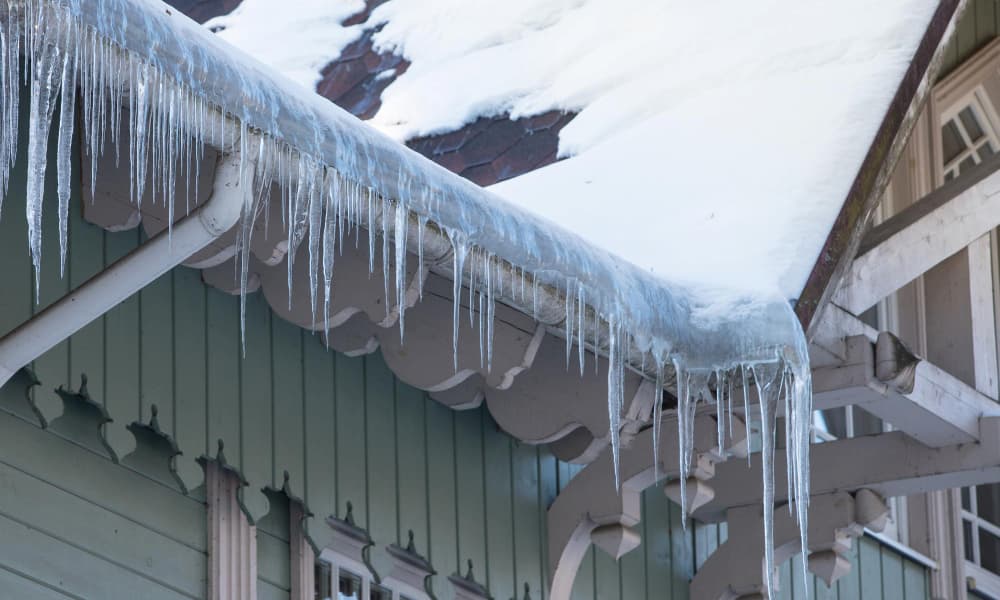
Ice dams pose a significant risk in Poughkeepsie, NY, particularly during snowstorms followed by frequent freeze-thaw cycles. The pattern is consistent: heat leaks from the home, warming sections of the roof, and melting snow.
When water has nowhere to drain, it backs up beneath shingles and into the roof system, leading to leaks and hidden moisture damage.
Here’s what to do when you see one forming and the prevention steps that actually work for Poughkeepsie homes and properties.
In This Guide
Quick Guide
 Attic heat melts roof snow, and water refreezes at cold eaves into an ice dam.
Air sealing, insulation, and ventilation help keep the roof cold and even.
R-30 is a common minimum, and R-38 is often preferred in colder climates.
Ice and water shield help stop backed-up water from leaking into the home.
New York code calls for ice barriers where ice backup is expected at the eaves.
What Is an Ice Dam?
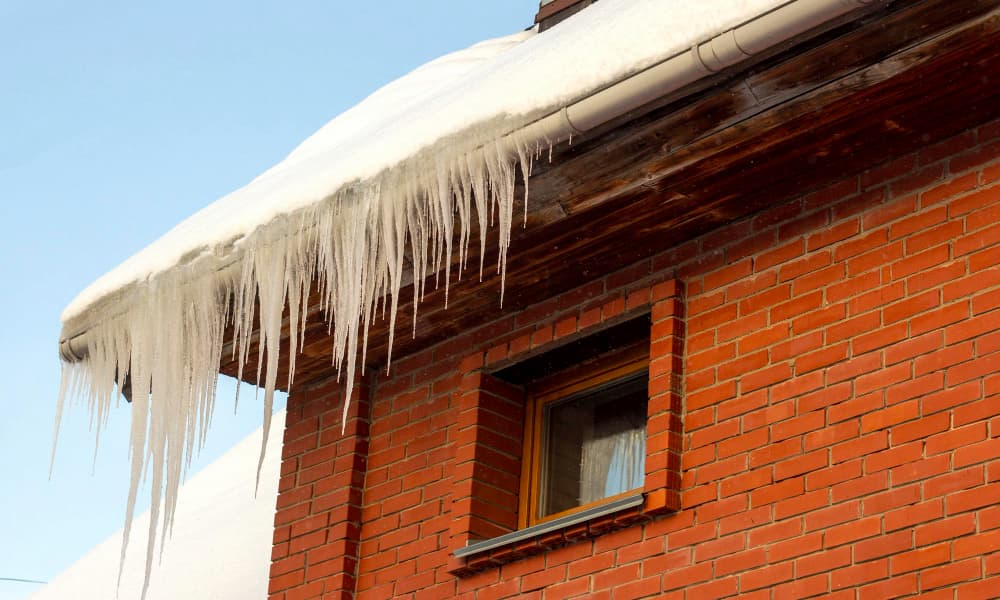
Ice dams happen when snow melts and refreezes at colder roof edges. Over time, that ice ridge blocks drainage, so meltwater pools behind it.
Here is the part many homeowners miss: the ice is not the main problem. The real problem is the water trapped behind it.
Once water pools, it can:
- Slip beneath shingles and underlayment
- Soak the roof decking and insulation
- Leak into ceilings and exterior walls
- Trigger rot, mold-friendly moisture conditions, and long-term structural deterioration
Repeated melt-freeze days increase the chance that water and ice work under shingles until moisture reaches the attic and interior finishes.
Real Causes of Ice Dam Formation
Heat Leaking Into the Attic
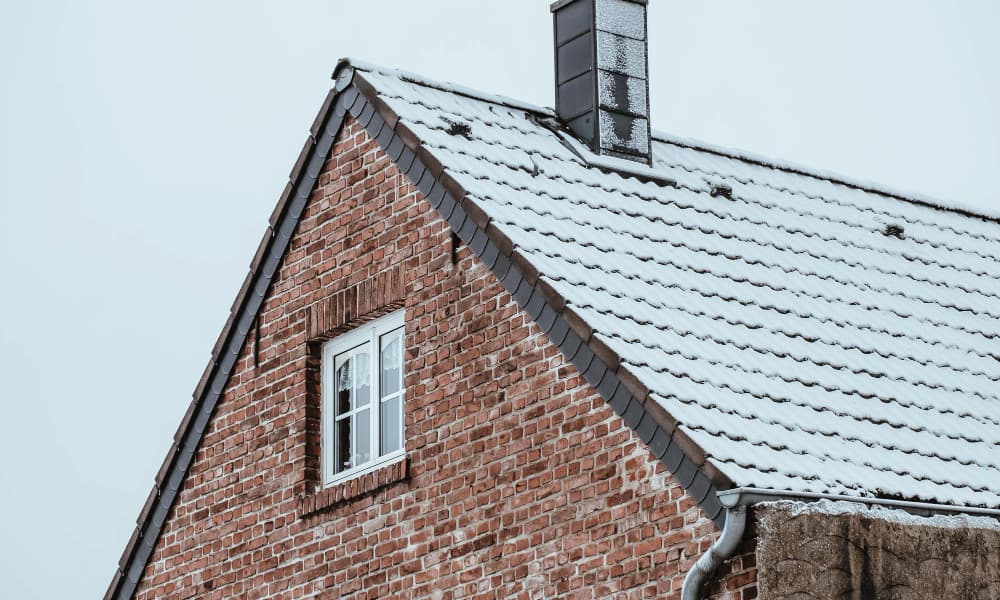
If warm indoor air is getting into the attic, it creates hot spots on the underside of the roof. Snow melts above those warmer areas first, even when outdoor temperatures are below freezing. Meltwater then travels down the roof to the colder eaves, where it refreezes and builds a dam.
Common heat-leak pathways include:
- Attic hatch or pull-down stairs that are not weatherstripped or insulated
- Recessed lights and electrical boxes below the attic
- Plumbing stacks and vent pipes penetrating the attic floor
- Wiring holes and top-plate gaps along exterior walls
- Open chases above kitchens and bathrooms
- Leaky or uninsulated ductwork running through the attic space
Not Enough Insulation
Insulation slows heat transfer from the living space into the attic and roof deck. When insulation levels are low, uneven, compressed, or missing in key areas, the roof warms unevenly and melts snow more readily.
What often goes wrong:
- Thin insulation coverage that allows heat to rise into the attic
- Gaps at eaves and corners, where it is hardest to install properly
- Compressed insulation (reduces effective R-value)
- Wind-washing at soffits when baffles are missing, pulling cold air through insulation, and reducing performance
Weak or Blocked Attic Ventilation
Ventilation does not replace air sealing, but it supports a more uniform, colder attic by exhausting warmer air and moisture.
Ventilation issues that commonly contribute to ice dams:
- Soffit vents blocked by insulation
- No baffles to maintain a clear air path at the eaves
- Insufficient intake or exhaust, leading to stagnant warm attic air
- Unbalanced systems (too much exhaust without enough intake, or vice versa)
Roof Design and Site Factors That Worsen the Problem
Even with decent insulation, some homes are more prone to ice dams due to geometry and exposure.
Common risk factors:
- Large overhangs that stay colder than the upper roof
- Complex rooflines (valleys, dormers, transitions) where snow collects and drainage concentrates
- North-facing eaves that receive less sun and refreeze faster
- Shaded roofs near trees or taller adjacent buildings
- Cathedral ceilings with limited space for insulation and ventilation
Drainage Issues That Make Backups More Likely
Ice dams are fundamentally about refreezing, but drainage problems can increase how much water gets trapped at the edge.
Examples:
- Clogged gutters that hold water and freeze more quickly
- Frozen downspouts that prevent meltwater from exiting
- Debris buildup at roof edges that traps slush and accelerates ice formation
Prevention That Works
Air Seal the Attic First
Attic air sealing is a major opportunity to reduce air leaks and help alleviate ice dam issues when combined with insulation upgrades. Without this step, adding insulation alone may not solve the problem because air can bypass insulation through gaps and cracks.
Focus areas typically include:
- Attic hatch or pull-down stairs
- Plumbing stacks and vent penetrations
- Wiring holes through the top plates
- Recessed lighting fixtures
- Open framing chases above kitchens and bathrooms
- Duct joints and seams in attic spaces
Increase Attic Insulation To Recommended Levels
Once air leaks are sealed, insulation becomes significantly more effective.
For homes in colder climates like the Hudson Valley, guidance commonly points to:
- Minimum target: R-30
- Preferred target: R-38 or higher
Common insulation upgrades may involve:
- Adding blown-in cellulose or fiberglass over existing batts
- Correcting thin or uneven coverage
- Installing insulation baffles near soffits to prevent airflow blockage
- Addressing compressed or moisture-damaged insulation
Improve Attic Ventilation
Ventilation supports a stable, colder attic environment by moving exterior air through the space and exhausting warmer air.
A balanced system typically includes:
- Soffit vents that draw in outside air
- Ridge vents or roof vents that allow warm air to escape
- Baffles to keep insulation from blocking intake airflow
Signs ventilation may need improvement:
- Frost buildup on the roof nails inside the attic
- Damp insulation
- Strong temperature differences across attic areas
- Blocked soffit vents
Strengthen Roof Edge Protection
Even well-insulated homes can experience ice dams during extreme winter conditions. That is where roofing materials and detailing provide an added layer of protection.
Preventive roof-edge measures include:
- Installing ice and water shield membranes at eaves and valleys
- Ensuring proper flashing at chimneys, skylights, and roof-to-wall transitions
- Confirming drip edge installation is correctly integrated with the underlayment
- Keeping gutters clean and pitched correctly
Maintain Gutters and Drainage Before Winter
Drainage does not prevent ice dams caused by heat loss, but it reduces how much water gets trapped at the roof edge.
Before winter:
- Remove leaves and debris from gutters
- Confirm downspouts are clear and discharge away from foundations
- Secure loose gutter sections
- Check for sagging areas where water can pool and freeze
Roofing Materials and Details That Help Prevent Ice Dam Leaks Long-Term
Ice and Water Shield at Eaves and Other High-Risk Areas
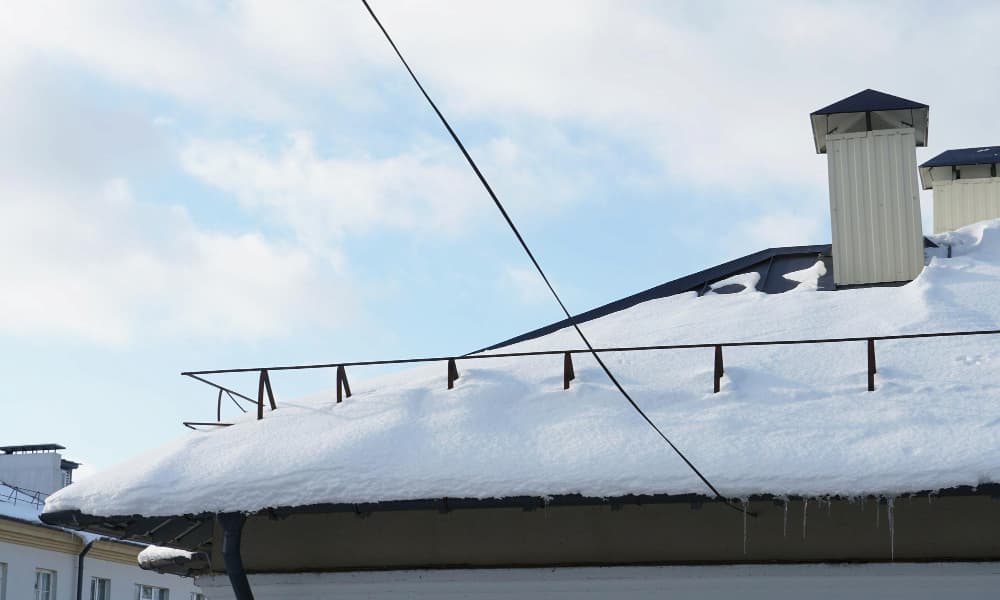
An ice and water shield is a self-adhering waterproof membrane installed beneath shingles in leak-prone areas. When water backs up behind an ice dam, this membrane helps prevent it from reaching the roof decking.
Common areas where ice and water shield are most valuable:
- Eaves and rakes (the roof edge where ice dams form)
- Valleys (where two roof planes meet and water concentrates)
- Around chimneys, skylights, and vents
- Roof-to-wall transitions (step flashing zones)
- Dormers and complex roof intersections
Underlayment for Improving Leak Resistance
Underlayment is the protective layer between the roof deck and shingles. In ice-dam conditions, underlayment becomes your backup defense if water gets past the shingles.
Long-term leak resistance improves when:
- Self-adhering membranes are used in the most vulnerable zones (especially eaves and valleys)
- Underlayment is properly overlapped and integrated at transitions
- Fastener placement avoids unnecessary penetrations in critical areas
Flashing Details for Winter Leaks
Many winter leaks attributed to ice dams are actually caused, or worsened, by weak flashing. When water backs up, it seeks out seams and transitions.
Key flashing areas that must be handled correctly:
- Chimney flashing and counterflashing
- Step flashing at roof-to-wall intersections
- Valley flashing or properly detailed valley systems
- Skylight flashing kits and curb transitions
- Pipe boots and vent penetrations
Common failure patterns that show up during ice dams:
- Gaps where step flashing should be layered correctly
- Sealant-dependent repairs that break down in cold weather
- Poorly integrated flashing that relies on shingles to do the waterproofing
Drip Edge Integration at the Roof Edge
A drip edge is a metal flashing installed along roof edges to direct water away from fascia and into gutters. During ice-dam conditions, proper edge detailing helps control where meltwater goes and reduces the chance that water curls back under the roof edge.
Long-term performance depends on:
- Correct placement at eaves and rakes
- Proper integration with underlayment layers at the roof edge
- Secure fastening and continuity at corners and transitions
Valley Design and Water Flow Management
Valleys move a lot of water. They also collect snow and concentrate meltwater in one channel. If that channel freezes, it increases backup risk quickly.
Better ice-dam leak resistance in valleys comes from:
- Strong underlayment protection in the valley zone
- Clean, well-defined drainage pathways
- Correct shingle and flashing integration so water stays on top of the system, not under it
Heat Cables as a Targeted Mitigation Tool
Heat cables can help create drainage channels through ice at trouble spots, especially:
- Along gutter lines
- In downspouts
- At roof edges where ice repeatedly forms despite improvements
They can be helpful when:
- A roof has chronic refreeze zones due to shade or geometry
- A property cannot be fully upgraded immediately (phased improvements)
Important limitations:
- Heat cables do not fix attic heat loss
- They work best as a targeted supplement, not the main plan
- They require safe installation and monitoring
Frequently Asked Questions (FAQs)
Can ice dams form on brand-new roofs?
Yes. A new roof can still ice-dam if attic air leaks, insulation gaps, or ventilation problems keep the roof deck warm. Fixing the attic conditions usually matters more than the age of the shingles.
Do solar panels increase ice dam risk?
They can. Panels may change how snow slides and where meltwater refreezes, especially at panel edges and roof eaves. If you notice ice building below panels, improving attic sealing and drainage paths can help limit backups.
Is interior humidity linked to ice dams?
Indirectly. High indoor humidity can increase attic moisture if air leaks exist, which can worsen attic conditions that contribute to melting and refreezing. Keeping humidity in a healthy range and sealing attic bypasses reduces the chance of moisture-related attic problems.
How do I know if my attic ventilation is unbalanced?
Common clues include uneven roof melt patterns, frosty nail tips or damp insulation in the attic, and persistent condensation during cold weather. A contractor can confirm balance by checking whether soffit intake is clear and whether exhaust ventilation is appropriately sized.
Should I file an insurance claim for ice dam damage?
It depends on your policy and the damage type. Document the issue promptly (photos, dates, repair notes) and contact your carrier to confirm coverage details. If you’re unsure, ask what evidence they need and whether emergency mitigation costs (like drying or temporary protection) are covered.
Schedule a Professional Roof and Attic Evaluation Before the Next Freeze
If you have experienced repeated ice dams, ceiling stains, heavy icicles, or uneven snow melt, it is time to look beyond surface symptoms.
Lyndsey Roofing, LLC provides experienced roof assessments for homeowners and property owners throughout Poughkeepsie, NY. Our team understands how local winter patterns impact roofing systems and can recommend practical, long-term solutions.